
Up to 390 more prisoners to be released early in Scotland as 40% figure introduced
Prisoners in Scotland serving less than four months will be released early under Scottish Government plans, Justice Secretary Angela Constance has confirmed
Hundreds more prisoners will be released early under SNP plans to alleviate overcrowding in jails that critics have said “betrays victims”.
Prosecutors have also been instructed not to oppose the bail of those accused of crimes unless they “represent a substantial risk” to the public, in direction set by the Lord Advocate that has been branded “deeply disappointing”.
Justice Secretary Angela Constance announced on Thursday those serving sentences under four years would now be eligible for release after serving just two-fifths of their sentence, rather than half. Those convicted of domestic abuse or sex crimes will be excluded.


Lord Advocate Dorothy Bain KC separately confirmed the Crown Office would be granting bail to all but “those who pose a substantial risk of reoffending and causing harm to a victim, witness or the public”.
The change in guidance means Scotland will now release short-term prisoners after just 40 per cent of their sentence is served.
An emergency Bill will be brought to the Scottish Parliament next month and, if it passes, will come into effect in February. It is expected this will lead to between 260 and 390 prisoners being released early.
Ms Constance said doing nothing to address chronic overcrowding issues would leave Scotland’s prisons in an “unsustainable position”, adding: “We cannot allow that to transpire.”
There had been fears long-term prisoners serving sentences of over four years, including rapists, child abusers and drug traffickers, would be released early. Love politics? Then sign up for The Steamie daily newsletter
However, the justice secretary stressed that would not be in the case, after a consultation found releasing long-term prisoners would “present significant practical difficulties”.
Speaking after her statement to Parliament, Ms Constance said: “I am prioritising actions that can deliver a sustained reduction to the prison population. Public safety remains paramount, which is why I am focusing on short-term prisoners only and with built-in exemptions.”

Ms Constance said the move was “necessary” to allow prisons to “function effectively”, but added she recognised the upset this may cause to victims and their families.
“We must ensure that we have a prison estate which houses those who pose a risk to the public and provides the full range of support needed for people to leave on a better path and never turn back,” she said.
In Scotland, bail allows an accused person to remain at home in the community while they wait for trial.

Ms Bain said: “I have also instructed that as a temporary measure Crown opposition to bail, in general, should be restricted to those who pose a substantial risk of reoffending and causing harm to a victim, witness or the public, which cannot be mitigated by imposition of proportionate bail conditions.”
Liam Kerr, the Scottish Conservatives’ justice spokesman, said Ms Bain’s “deeply disappointing” announcement would “accelerate the SNP’s plans to empty Scotland’s prisons”.
He said: “Her hand may have been forced by the nationalists’ failure to provide enough jail capacity but, either way, the SNP’s crusade to free criminals back onto our streets early undermines judicial sentencing, betrays victims and will inevitably lead to an increase in crimes being committed.”
Kate Wallace, chief executive of Victim Support Scotland said of the announcements: “Excluding domestic abuse and sexual offences provides an important safeguard pertinent to this profile of offending and the risk it can pose to individuals. However, we do seek clarity on whether a Governor’s veto, which played an important safeguarding role in emergency early release, will be applied.”
Ms Wallace added: "Going forward, robust communications plans implemented via the long-awaited and much-needed improved Victim Notification Scheme will be crucial in keeping victims safe and preventing more victims from being created. Given that only 2 per cent of the victims were informed about their prisoner being release as part of emergency early release, we are calling for urgent and swift action to ensure victims are informed.”
Earlier, First Minister John Swinney said Scotland’s jails were “absolutely bursting at the seams”. There are 8,322 people behind bars - well over the target operating capacity of 8,007,
During First Minister’s Questions, Mr Swinney said SNP ministers would take a “responsible approach”, taking into account the views and concerns of victims.
He said: “Scotland imprisons more offenders per head of population than most other European countries.
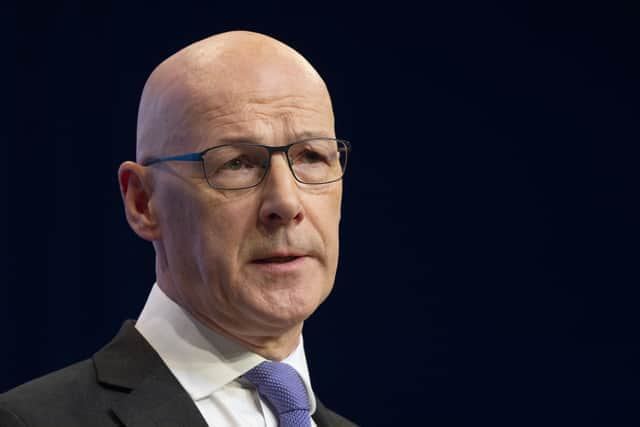
“We invest heavily already as a government on alternatives to custody to make sure we have a sustainable prison estate. But what we have got to ensure today for the prison officers who are running our prisons and for our prisoners, to whom we have legal obligations as well, is that they are living in a safe and stable environment.”
He said similar action was being taken elsewhere in the UK to deal with overcrowding in prisons. Earlier this year, England started to allow short-term prisoners to be released early after serving just 40 per cent of their sentence.
Over the summer, 477 short-term prisoners in Scotland were released early after serving half of their sentence to help free up space in overcrowded jails. A total of 57 of these prisoners were back behind bars within weeks, including 12 who were out on the streets for less than ten days.
Ms Constance said: “Short-term prisoners are those sentenced to less than four years in prison and are generally not subject to supervision on release. This approach would therefore result in relatively small changes to release dates, as well as avoiding some of the complexities highlighted in the consultation.”
Later this year MSPs will also be asked to approve plans to allow GPS technology to be used to monitor individuals who are released on a home detention curfew. However, the justice secretary was unable to rule out further rounds of emergency prisoner releases in the future.
Scottish Conservative leader Russell Findlay used First Minister’s Questions to accuse Mr Swinney of “trashing judicial independence” by releasing prisoners early.

He said Mr Swinney had a “stunning lack of self-awareness”, adding: “John Swinney talks about respecting judicial independence, but by releasing 500 prisoners early, he trashed judicial independence.” The Conservative leader added: “For far too long, the SNP’s justice system has sided with criminals and not victims.”
Mr Swinney responded by saying the accusations were “patently untrue”, adding: “Over the last decade, the average length of prison sentences had increased by 32 per cent.
“That statistic alone demonstrates that Russell Findlay is putting complete nonsense to me.”
He said ministers had an obligation to “ensure that we run a stable and safe prison system” and “must act”.
The Prison Officers’ Association welcomed the announcement, but added: “Prison overcrowding affects every prisoner and every prison officer. It impacts on every element of prison life, including access to healthcare, education, recreation and exercise.
“It prevents officers from developing the relationships with prisoners that are so important to the prison environment, as well as helping them end their offending behaviour.
“We cannot go on as we are as this is failing prisoners, staff, victims and wider society.”
The association said the “persistently high prisoner population” meant Scotland “needs a genuine debate about the purpose of prison and a radical rethink of sentencing policy if we are going to end the need for further emergency measures”.