
Doctors asked to help shape NHS future in 'long overdue' Scottish Government 'once-in-a-generation' project

The government is launching a ‘once-in-a-generation opportunity’ for doctors to shape the future of the NHS.
Doctors are being urged to help SNP ministers shape the future of Scotland’s medical workforce in a “long overdue” new project.
The Future Medical Workforce project will gather feedback from doctors, residents and senior clinicians to help shape reform in NHS training, recruitment and workforce planning over the next 15 to 20 years.
Described as a “once-in-a-generation opportunity”, doctors will be able to join a series of focus groups to share their thoughts on the pressures the profession is facing and how best to tackle the challenges of delivering care for a changing population.


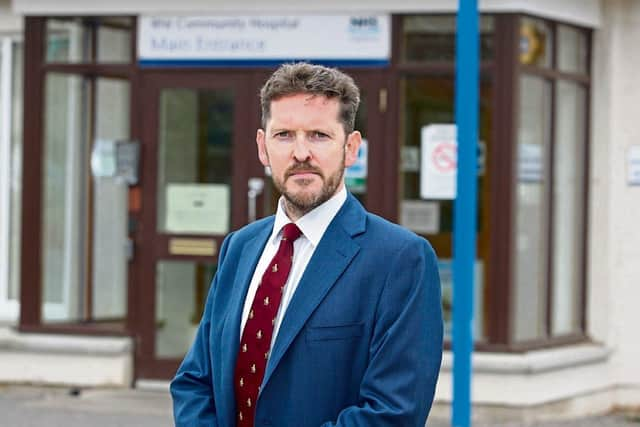
Dr Iain Kennedy, chair of BMA Scotland’s council, said the project must produce a clear plan for the future and not become another document “gathering dust on a shelf”.
He said: “A proper doctor workforce plan, which looks at levels of patient need and the doctors we require for the future, is long overdue.
“BMA Scotland has called consistently for this, so it is vital that the work underway does finally deliver - for the good of patients and ensuring we have an NHS in Scotland that is sustainable for generations to come.”
Dr Kennedy said there were “many complex issues” this project would need to cover, including retaining more doctors and ensuring “reward is returned to the kind of levels we saw before years of pay erosion set in”.
The Scottish Government has confirmed this project will not cover pay or doctors’ terms and conditions. However, Dr Kennedy said pay “needs to be factored into any overall plan that emerges”.
He said: “Further problems, such as the looming resident doctor unemployment crisis caused by training bottlenecks, must be addressed, as well as whole career paths for doctors across both primary and secondary care.
“We also need doctor vacancies and gaps in patient services across many parts of Scotland to be addressed.”
Dr Kennedy added: “It is welcome that the Scottish Government is finally engaging on this, but we need that to continue, the work to be done at pace and with the urgency that the doctor workforce crisis demands. And at the end of this process a clear, deliverable plan that acknowledges the scale of the problem and finally sets out how it will be addressed needs to be forthcoming.
“Then, it will be up to the Scottish Government to deliver - the plan must not be simply allowed to gather dust on a shelf. To do so would be not just letting doctors down, but patients who rely on the care the NHS provides day in, day out.”
A report will be produced on the back of the focus groups, which is due to be published in the autumn with a list of recommendations.
The project’s second phase will then begin in January 2026, focusing on reform, improving recruitment and redesigning medical education.
A research group has now been established to guide the methodology of this project, bringing together NHS Education for Scotland, the General Medical Council, the royal colleges, medical schools and senior clinical leaders.
Health Secretary Neil Gray said the project was a “once-in-a-generation opportunity” to shape the future of the medical workforce. He said it would create a “sustainable, fulfilling career path” for doctors working in Scotland.
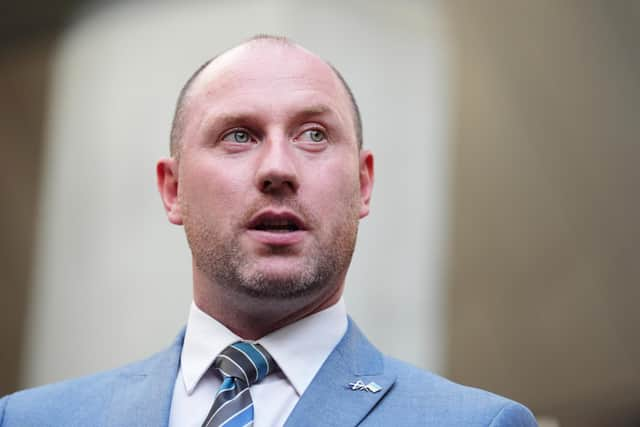
“We know the NHS faces major challenges, and it is vital that those living the reality of what it means to be a doctor today are at the heart of shaping what comes next,” he said.
“I strongly encourage doctors across Scotland to get involved in this work. Your voice matters and your insight will help ensure that the future of our health service is informed, inclusive and resilient.”
The launch of the project to help meet the demands of a changing population comes as hospitals are branded “death traps for the frail”. The claim was made as figures showed a quarter of a million falls were recorded in Scottish hospitals in the past five years.
Since 2019, 282,385 patient falls have been recorded. Statistics obtained by Scottish Labour from a Freedom of Information request also show nine out of Scotland’s 14 health boards recorded an increase in patient falls.
The highest increase was seen in NHS Orkney where patient falls increased by 75 per cent. Other high increases were seen in NHS Dumfries and Galloway (34 per cent), Borders (29 per cent) and NHS Forth Valley and NHS Highland (both 13 per cent).
The only health boards which recorded a reduction in patient falls were NHS Ayrshire and Arran, NHS Grampian, NHS Lothian and NHS Shetland.
The total number of falls in each health board since 2019 were:
- Ayrshire and Arran - 14,213
- Borders - 8,861
- Dumfries and Galloway - 11,179
- Fife - 15,563
- Forth Valley - 18,743
- Grampian - 31,065
- Greater Glasgow and Clyde - 71,870
- Highland - 13,250
- Lanarkshire - 25,203
- Lothian - 49,050
- Orkney - 1,003
- Shetland - 466
- Tayside - 20,516
- Western Isles - 1,403.
Standard hospital guidance says hospital wards should be clear from clutter and patients who are classed as a fall risk should have a clear route to a toilet. However, Scottish Labour said many hospitals were now overcrowded, staff were under-resourced, and a quarter of the NHS estate was built in the 1960s and 1970s.
Dame Jackie Baillie, Scottish Labour’s health spokeswoman, said: “Falls can be life-changing for older and more vulnerable patients. These figures should be a warning of how easily Scotland’s crumbling hospitals can become a death-trap for the frail.

“With long queues at A&E and out-of-date hospitals, hard-working NHS staff are already stretched to breaking point.
“The SNP must act now to ensure that patients don’t come to unnecessary harm because of the condition of the estate or overcrowding.”
Ms Baillie said her party would “modernise our hospitals” if Scottish Labour won next year’s Holyrood election.
The Scottish Government was contacted for comment.
Comments
Want to join the conversation? Please or to comment on this article.