
Disposable BBQ ban after devastating Cairngorms wildfire
The UK Government says disposable barbecues pose a ‘significant risk to the public’.
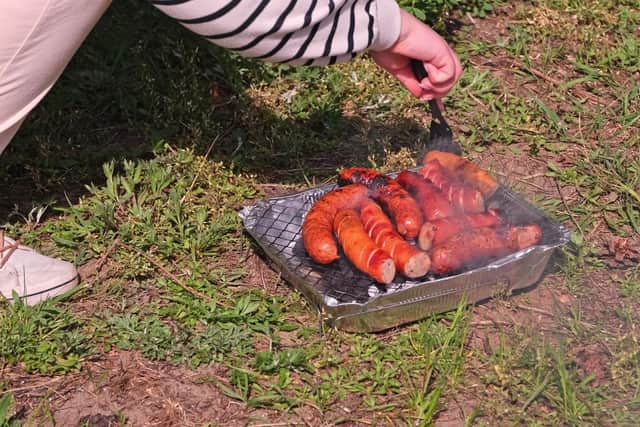
The sale of disposable barbeques has been temporarily banned following the devastating Cairngorms wildfire.
The UK Government says disposable barbeques pose a “significant risk to the public” and have been the cause of “a number of serious wildfires across the country over the summer months”.
Speaking to BBC Radio 5 Live, Prime Minister Andy Burnham said “it’s probable that some of them have been caused in that way”.

He said: “We’re going into a difficult weekend, please just think about the situation that we’re in.
“Britain is a tinderbox right now. Setting a fire in any outdoor setting of any kind is a risk to other people’s homes, it’s a risk to other people’s lives - please don’t do it.”
The UK Department for Business, Innovation, Science and Trade said disposable barbecues “cannot be considered a safe product” in the current conditions and now “must not be made available for sale either in store or online at the current time”
This comes as the Cairngorms wildfire, which began near Glenmore campsite almost a month ago, continues to rage.
Sandy McCook, chairman of Nethy Bridge and Vicinity Community Council, said the area will take “centuries” to recover from the wildfire. At its peak, the fire engulfed around six square kilometres of heather and woodland.
He said: “There is a modicum of good news from the forest, as the heat-sensing drones this morning could only identify six hotspots at approximately 50 degrees, which is a marked reduction in recent days when it was still over one hundred.

“The area had very clearly been devastated by this fire, which will take decades and centuries to recover.”
He added: “Damping down continues with spotters watching for any recurrence of the fire. There are areas where the trees have been completely burnt, exposing roots which are now several feet off the ground, as the mosses and needles have burnt away.”
The ban also comes as visitors to Scotland’s reservoirs are urged to “think carefully” about their behaviour as rangers have found abandoned campfires that are still alight, along with human waste.
Rubbish left behind by visitors included barbecue and camping equipment, along with incidents where people had hacked down trees for firewood.
Donna Mills, land strategy team leader at Scottish Water, said: “We are urging those people who have behaved in an anti-social way at any of our reservoirs to think about their actions and the impact they are having on the environment and local residents and to stop this behaviour immediately.
“We want everyone to be able to enjoy the amenities around the reservoirs and to do so in a responsible way.
“Nobody wants to encounter other people’s waste and nobody wants to see fires left unattended or not properly extinguished, with the obvious risk of fire spreading, especially during dry weather.
“Scottish Water has a small team of reservoir rangers who patrol the reservoirs to help visitors enjoy them and protect the natural habitat, and they urge the public to take away all their belongings and litter and leave no trace of their visit.
“But our rangers can’t be everywhere all the time and we really need visitors to hear our call and think carefully about their behaviour and how it impacts the environment and other people.”
A spokeswoman for the Scottish Government said: “The harm caused by wildfires across Scotland and the rest of the UK has been sadly all too evident this summer, and we welcome this measure to stop the scale of disposable barbeques across the UK given the risks they can pose to the environment, local communities and agricultural land, particularly during periods of warm and dry weather when the risk of wildfire is heightened.
“We ask that everyone follows the advice from the Scottish Fire and Rescue Service when outdoors, including always disposing of cigarettes and glass responsibly, leave no litter, and call 999 immediately if you spot a wildfire.”
Comments
Want to join the conversation? Please or to comment on this article.