
Covid vaccine saved half the number of lives per head in Scotland than England


Estimates suggest 25,386 lives were saved in Scotland by the vaccine up to March 2023, compared to 449,241 in England.
The Covid-19 vaccine saved half the number of lives per head in Scotland than it did in England, the official inquiry has said.
Estimates suggest 25,386 lives were saved in Scotland by the vaccine up to March 2023. In England, the number was 449,241.
England has roughly 10 times the population of Scotland. This means only 250,000 lives would have been saved if Scotland were the same size as England - nearly 200,000 less than the actual figure south of the border.
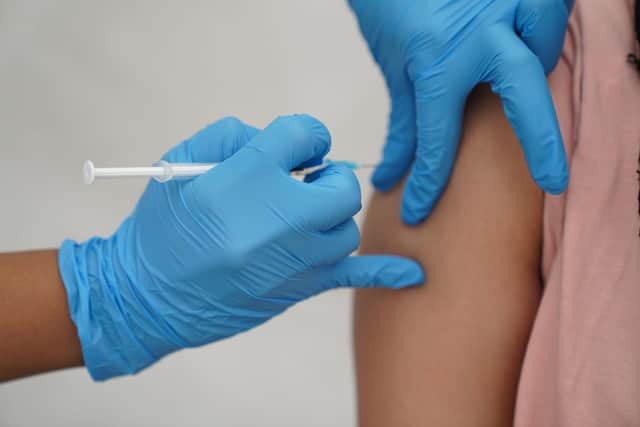
But this is likely because in the figures from The Lancet which were used in the report - the estimated death rate without the vaccine and the reported death rate from Covid were higher in England.
It means the estimated total number of deaths averted in England was higher per head of population.
Professor of Veterinary Epidemiology and Data Science at Edinburgh University Rowland Kao said: "The epidemic in Scotland was better controlled (studies have shown that there was better adherence to NPI's in Scotland, and it was generally viewed that the Scottish Government did better than Westminster in terms of messaging).
“That means that the vaccine had less to do - i.e. there was less virus circulating anyways, so the impact of the vaccines was therefore less.
“Also, vaccine uptake was similarly lower in England than in Scotland, particularly in younger age groups.
“Most of the preventable deaths would have been in the older generations who would have been well protected in both nations.
“But the younger generations may have been responsible for circulating virus - so again, since in England fewer younger people were vaccinated and potentially causing new cases (there is some evidence vaccination reduces transmission) then the vaccine would have done more of the heavy lifting in preventing deaths in England than in Scotland.
"So the short answer is that it’s likely that more deaths were prevented in England than in Scotland, at least in part because there were more deaths to prevent, than in Scotland."
The figures from The Lancet showed that England had 174,800 reported deaths, while Scotland had 10,527.
Dr Kim Marsh, Viral Respiratory Pathogens lead at Public Health Scotland, said: “The figures quoted in the Inquiry come from a modelling study published in The Lancet Respiratory Medicine (“Estimated number of lives directly saved by COVID‑19 vaccination programmes in the WHO European Region from December 2020 to March 2023: a retrospective surveillance study”), which estimates how many COVID‑19 deaths would have been expected in the absence of vaccination and compares these with the deaths that were actually reported.
“For both England and Scotland, the study shows a substantial reduction in reported deaths relative to expected deaths up to March 2023, and these reductions underpin the absolute estimates of lives saved (449,241 in England and 25,386 in Scotland).
“England’s much larger population means it has a higher number of expected deaths overall, so the absolute number of deaths averted is inevitably greater.
“The authors emphasise that the most meaningful comparison between countries is therefore the reduction in expected mortality, rather than raw totals or simple per‑capita figures.
“On this measure, England and Scotland show very similar impacts (72% and 71%, respectively), consistent with broadly comparable vaccination coverage.”
The report showed that by by July 2021, Scotland had a higher share of people who had received one vaccine. Some 89 per cent of the adult population had received one jab, while 86.8 per cent in England had.
By August 2021, 72 per cent of adults aged 18 and over had received two doses of the vaccine in England and Scotland, according to the report.
Some 12 per cent more of those from the wealthiest areas received a second dose of the vaccine in Scotland, compared to the poorest areas. The gap increased to 20 per cent when it came to third doses.
The report said: “As of May 2022, 81.2 per cent of those aged 12 and over in the least deprived areas had received their second dose of the vaccine, compared with 69.4 per cent in the most deprived areas.
“For the third dose, across those aged 16 and over, the figures widened further to 76.2% and 56.1% respectively.”
The report also showed a “trend of lower vaccine uptake in some ethnic minority groups across all ages” in Scotland.
It said: “As at 24 August 2021, uptake for the first dose across all age groups was highest in the ‘White’ ethnic groups.
“For those aged 50 or above, uptake was lowest in the ‘African’ ethnic groups. For those aged younger than 50, uptake was lowest in the ‘Caribbean or Black’ ethnic groups.
“In the 18 to 29 age group, 75.2 per cent of people in the ‘White’ ethnic groups and 53.1 per cent in the ‘Caribbean or Black’ ethnic groups had received one dose.
“Within each ethnic group there was a variation of uptake rates across age groups, generally with higher uptake at older ages. These trends were mirrored for second doses.”
The inquiry also praised the Scottish Government for “taking the task of routine vaccination away from GPs”, saying there were “wider health benefits“ from the move
It added that “the data available to the Inquiry suggest that Scotland did not fall behind uptake in other nations because of this approach”.
Comments
Want to join the conversation? Please or to comment on this article.