
Code-red patients waiting up to 18 hours for Scottish ambulances to arrive
Since January 2024 one patient in that category waited over 17 hours for an ambulance in Lothian, while another waited 18 hours in the Highlands.
Some code-red patients are waiting up to 18 hours for ambulances to arrive, it has been revealed, in delays that have been branded “scandalous”.
Freedom of Information requests from the Scottish Conservatives show that since January last year, one patient in that category waited over 17 hours for an ambulance in Lothian. Another waited 18 hours in the Highlands.
Code-red patients are those deemed to be at risk of cardiac arrest or at risk of needing resuscitation.
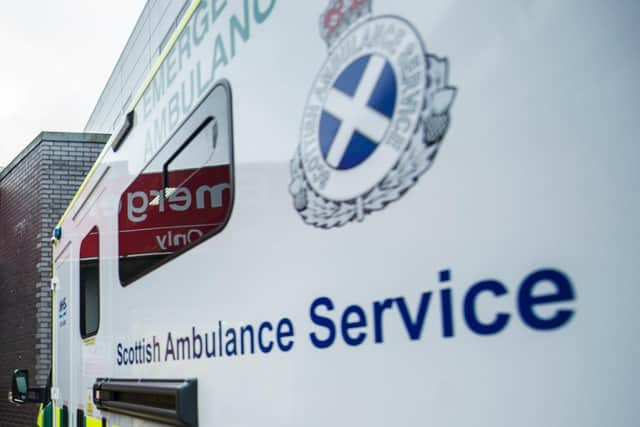

The figures also show one code-purple patient – those who are deemed the most critically ill and most at risk of cardiac arrest – was forced to wait over four hours for an ambulance in Glasgow in the past year.
The Scottish Ambulance Service’s (SAS) target median response time for code-purple cases is seven minutes.
Scottish Conservative shadow health secretary Dr Sandesh Gulhane described the waiting times as “scandalous” and accused the SNP of putting patients’ lives at risk due to their “chronic mismanagement” of the service.
He said: “These terrifying figures expose how patients’ lives are being jeopardised because our ambulance service is dangerously overstretched after years of chronic SNP mismanagement.
“It’s scandalous that patients with potentially life-threatening conditions can’t count on getting an ambulance in their hour of need – with some waiting close to a day before paramedics arrive. That’s an ‘emergency’ service in name only.
“Everywhere you look in Scotland’s NHS, one SNP failure is interlinked with another. The crisis in A&E [accident-and-emergency] led to an estimated 800 avoidable deaths last year, and that, along with ministers’ failure to tackle delayed discharge, explains the ambulance-stacking outside hospitals, which underpins these intolerable response times.
“Dedicated frontline staff are working tirelessly to keep patients safe, but they are being left with one arm tied behind their back by the SNP.”
Code purple is the most serious ambulance category and covers critically ill patients. It covers those circumstances where a patient is identified as having a 10 per cent or more chance of having a cardiac arrest.
Code red is the second most serious ambulance category and covers those at risk of cardiac arrest.
It covers where a patient is identified as having a likelihood of cardiac arrest between 1 per cent and 9.9 per cent, or having a need for resuscitation interventions such as airway management above 2 per cent.
Between January 2024 and August 2025, the slowest maximum ambulance response time for a code red was in NHS Highland at 1,124 minutes. This translates to over 18.7 hours.
The second slowest was in NHS Lothian at 1,035 minutes - some 17.2 hours.
The slowest maximum ambulance response time for a code purple was in NHS Greater Glasgow and Clyde at 268 minutes. This is 4.4 hours.
The second slowest was in NHS Lanarkshire at 247 minutes - some 4.1 hours.
The SAS’s median response time target for code purple calls is seven minutes. In addition, the ambulance service’s median response time target for code red calls is eight minutes, both of which are a minute longer than in 2019-20.
It comes as figures last month showed the number of paramedics in the SAS had increased by 62 per cent in the past decade.
Overall workforce levels are at a record high, with the number of newly qualified medics rising from 1,331 in March 2015 to 2,156 in March 2025. More than 450 have joined since 2020.
The NHS could be one of the key topics when it comes to next year’s Holyrood election.
Scottish Labour has regularly pointed out that one in six Scots are on an NHS waiting list. First Minister John Swinney announced he would launch walk-in GP centres at SNP conference.

In the summer it emerged the number of patients in Scotland waiting more than 78 weeks for treatment had rocketed to more than 38,000.
In England, which has a population ten times the size of Scotland, the figure was just 1,154. This means 33 times more people in Scotland are being forced to endure long delays north of the Border.
Health Secretary Neil Gray said: “Ambulance crews responded to 470 life-threatening incidents last week, achieving a median response time of seven minutes and 56 seconds. This is a testament to their dedication and efficiency.
“But we are determined to support frontline services and reduce any delays for patients. That is why we have supported the Scottish Ambulance Service (SAS) with the recruitment of 241 frontline staff last year, with SAS planning to recruit a further 456 this year.
“We know there are specific challenges, not unique to Scotland, and are in regular close contact with the ambulance service and health boards to help manage pressures and ensure they are taking appropriate actions to reduce delays, including looking at improving patient flow at hospital sites.”
A SAS spokesperson said: “It is profoundly disappointing when statistics are misrepresented in this manner. Our latest statistics show our median response time for purple calls is seven minutes and 56 seconds and for red calls nine minutes and eight seconds across Scotland.
“We measure response times from the moment a caller contacts us, and the longer response times often relate to incidents where the patient’s condition was assessed at a lower category and later upgraded as the condition has changed. It is alarmist to extrapolate the total time shown in the figures in this manner and disrespectful to hard-working teams who care for these patients.”
Comments
Want to join the conversation? Please or to comment on this article.