
Calls to scrap oil and gas windfall tax as EnQuest announces it is leaving the North Sea

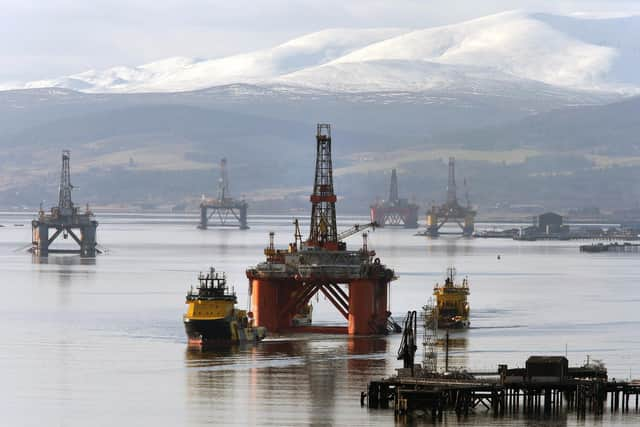
EnQuest is selling its North Sea assets as the basin is ‘high tax and low return’.
The UK government has been urged to scrap the windfall tax after another major energy company announced it is leaving the North Sea.
EnQuest is selling its entire North Sea assets for $960 million to focus on markets in Malaysia instead, branding the basin “high-tax and low-return”.
Russell Borthwick, chief executive of Aberdeen and Grampian Chamber of Commerce, said this must be a “wake-up call” for the UK government.

He said: “This is exactly what we have warned would happen all along. The UK’s punitive tax regime is driving investment, jobs and economic opportunity out of the North Sea and into other parts of the world.
“EnQuest could hardly be clearer about its reasons for leaving. It is moving capital away from what it describes as a ‘high-tax, low-return basin’ to invest in countries where it sees greater opportunities for growth.
“This is a growing trend and should be a wake-up call for the UK Government.
“We have repeatedly warned that maintaining the energy profits levy until 2030 would have devastating consequences for our domestic energy industry. Today’s announcement is further evidence of the damage being done.”
The energy profits levy, also known as the windfall tax, was introduced after oil and gas companies’ profits soared following the illegal Russian invasion of Ukraine. Essentially, it is a tax on profits the companies were not directly responsible for.
It was introduced in May 2022 by former chancellor Rishi Sunak to help fund support for those struggling with the cost of energy. It was initially set at 25 per cent until the end of 2025.
However, both the previous Conservative government and the current Labour government increased and extended the windfall tax and it now stands at 38 per cent until the end of March 2030.
At the moment, the levy will only change if oil and gas prices drop below a certain level for six months.
Aberdeen and Grampian Chamber of Commerce said the tax needs to be permanently replaced by the next financial year.

Mr Borthwick said: “The Prime Minister has spoken about taking a pragmatic approach to the North Sea.
“Now is the time to turn those words into action. We need an early end to the energy profits levy and the introduction of a permanent, predictable replacement regime from April 2027.
“Britain still has enormous energy resources, world-class companies and a highly-skilled workforce, but none of that can be taken for granted.
“Unless we restore confidence and competitiveness, more investment will go overseas, and the jobs and economic benefits will go with it.”
Several political parties are also re-emphasising their calls to scrap the windfall tax on the back of EnQuest’s sale.
Dawn Black MSP from the SNP said: “The Labour UK Government is taxing Scotland’s energy industry to death right before our eyes - we need decisive action to safeguard jobs, energy security, and confidence in the North Sea.
“The very week the Labour Party is talking about promising more jobs for young people, their tax on Scotland’s energy is costing thousands of jobs in one of our critical industries - Andy Burnham promised to reindustrialise the UK, but in Scotland he is dismantling our industries.
“The energy profits levy was introduced as a temporary basis on profits yet now it is a continued measure propping up the Treasury.”
She said trade unions, oil and gas bosses and those in the renewables industries are “speaking with one voice” on this issue, and added: “Westminster must finally listen - end the supertax on Scotland’s energy and drive investment in the North Sea.”
The Conservatives are also echoing this call. The announcement came just hours before the Conservatives are due to lead an opposition day debate on the future of North Sea drilling in the House of Commons.
They are hoping they can pressure the Labour government into approving Rosebank, the largest untapped oilfield in the North Sea. If this gets approval, it could produce up to 500 million barrels of oil. Climate campaigners say it would be a “catastrophic” act of vandalism to give the oilfield off the coast of Shetland approval.
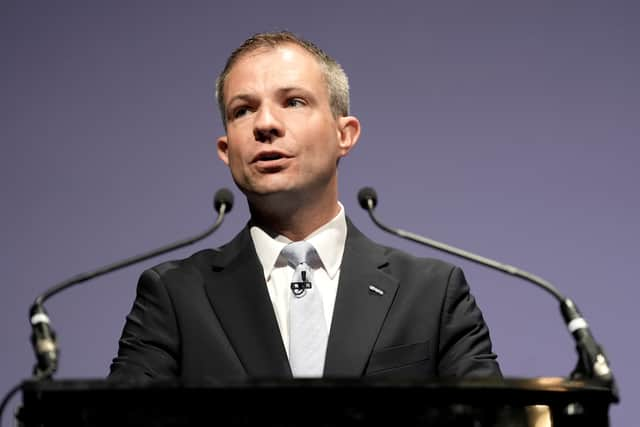
Shadow Energy Secretary Andrew Bowie said: “The devastating news that EnQuest is withdrawing from the UK is the latest sign that this government’s policies on oil and gas are hanging a ‘closed for business’ sign over the North Sea.
“In the midst of an energy crisis, this Labour government is choosing to ban licences and maintain an extended and increased windfall tax.
“We need change and we need it now.
“Jobs are being lost, revenue surrendered and our energy security undermined. We need to open the North Sea, abolish the windfall tax, scrap the ban on licences and get Britain drilling.”
EnQuest has sold its North Sea assets to Neo Next+. John Knight, the executive chair of Neo Next+, said: “This transaction is another important step in Neo Next+’s strategy of ‘resilience, yield and growth’.
“The addition of EnQuest’s UK oil and gas business further strengthens our scale and resilience in the UK North Sea, while adding production, reserves and cash flow to our portfolio.
“Neo Next+ remains committed to being a safe, responsible and efficient operator and to playing a leading role in the continued consolidation of the UK continental shelf.”
A spokesperson for the UK Government said: “The North Sea remains a vital national asset.
“Oil and gas will continue to play an important role in our energy system for decades to come, as we continue our transition to clean power to protect jobs and tackle the climate crisis.
“We’re giving the sector and its investors the long-term certainty to plan, invest and support jobs with plans to replace the energy profits levy when it ends by 2030, or earlier if its price floor is triggered.”
Comments
Want to join the conversation? Please or to comment on this article.