
Exclusive:Build homes and schools near green projects to make them 'attractive', urges City of London boss Alastair King
Alastair King, the lord mayor of the City of London, said there had to be a ‘pull factor’

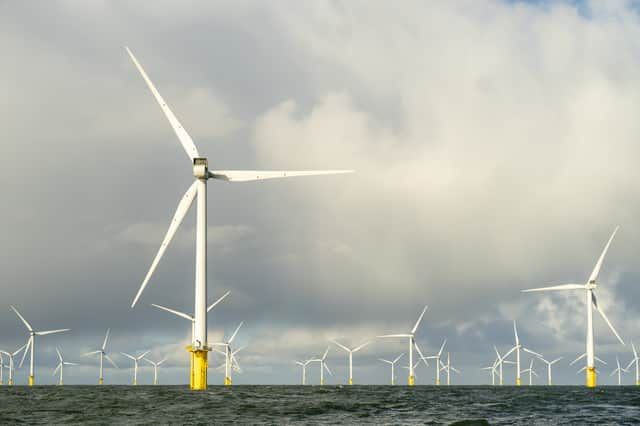
More homes, hospitals and schools should be built near green energy projects in rural Scotland to make them “attractive”, the head of the governing body for London's financial district has said.
Alastair King, the lord mayor of the City of London, said there had to be a "pull factor" to encourage workers to move to such areas and help fuel the renewables transition.
It comes after Andrew Bailey, the governor of the Bank of England, insisted the shift to renewable energy must aspire to the “pace of progress” set during the first North Sea oil boom.

Speaking to The Scotsman, Mr King said "mobility of workforce" was a challenge, adding: "The workforce isn't necessarily in the right place for where the jobs might be within Scotland."
He added: "You've got to be able to have a pull factor. You've got to build the infrastructure in relation to the schools and the hospitals and all the rest of it that are nearby to where the new jobs are going to be, because that's the way people will come there."
Mr King highlighted the need to "make it an attractive destination", and pointed to the way Aberdeen expanded during the oil boom.

"They managed to do that, did it very well, built the most extraordinary eco-system around it," he said. "We've got the same sort of opportunity now."
Mr King added: "We've done it before - look at Westhill just outside Aberdeen, look at the way Inverurie was one of the fastest growing places in the country at one stage, just a few years ago. So it has been done before."
Asked if he would like to see new towns built, he said: "I'd like to see a readiness to invest into new houses, but also the infrastructure there, the schools, the hospitals, the caring facilities. That's the way in which you encourage people to come to other parts of the country."
Elsewhere, Mr King also called for reform of the "clunky" planning system, which he argued was holding back developments, as well as greater incentives for investment.
He made the comments while attending last week’s Scotland’s Global Investment Summit, which was hosted on the Royal Bank of Scotland campus in Edinburgh.
Scottish Conservative rural affairs spokesman Tim Eagle said: “These stark comments must be taken on board by out-of-touch SNP ministers who have abandoned rural Scotland during their 18 years in power.
“While we firmly believe that local communities must have the final say over major energy projects, there is no chance of people taking on these jobs if the services are not there to accompany them.
“For too long the SNP have centralised services like healthcare and schools away from rural areas and simply have not delivered the homes these areas need.
“Community oversight is key to making these projects a success to ensure they boost Scotland’s economy, which the SNP have allowed to stagnate.”
Mr Bailey told the investment summit it was vital to match the “efficiency of construction” seen in the early 1970s as energy giants made major investments in oil and gas.

Speaking at a dinner at Edinburgh’s Signet Library on Monday evening, he reflected on a visit he made to Flotta oil terminal, telling the audience how a fact that “stuck” in his mind was how the terminal received planning consent for its first phase in January 1974, and was operational by summer 1976.
“That pace of progress feels like an achievement that we must aspire to in terms of efficiency of construction if we are to exploit this generation’s white heat of technology moment,” he said. “There are big plans to emulate the discovery of oil around Orkney in the 1970s with the development of renewables.”
A Scottish Government spokesperson said: “Scotland’s enormous renewables capabilities offer an unprecedented opportunity to create jobs and deliver economic growth across our local, regional and national economies for decades to come.
“We are already working alongside our public and private sector partners to deliver on this enormous potential, with the scale of private and inward investment into a range of exciting projects an indication of confidence in the skills and talent available.
“While many of the rural locations proposed to host renewable energy projects in the coming years are already home to established and skilled communities, we are committed to helping ensure that appropriate support and investment is provided to supporting infrastructure. Our next Infrastructure Investment Plan, setting out the foundations for the Scottish Government’s infrastructure investment over the next 25 years, will take account of expected demographic changes and be clear on the types of assets we need to invest in.
“It will also provide a long-term place based approach to infrastructure planning and recognise that both public and private investment will be required to deliver on our infrastructure ambitions.”
Comments
Want to join the conversation? Please or to comment on this article.