
Angela Rayner: Why did she not pay enough stamp duty? Who is her son? What is stamp duty?


Deputy First Minister Angela Rayner has made a detailed statement referring to details about her family, in explaining why she didn’t pay enough stamp duty on a second home.
Angela Rayner has admitted she did not pay enough stamp duty on her second home and has considered resigning.
The Deputy Prime Minister said she had been “in shock” and “devastated” over the fallout from her property arrangements, saying she has tried to “uphold the high standards” of office.
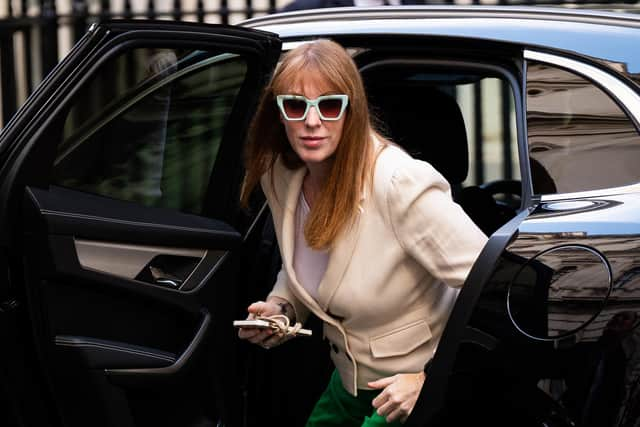
Ms Rayner confirmed she has referred herself to the independent adviser on ministerial standards after receiving what she described as inaccurate tax advice.
The unpaid bill could run to as much as £40,000, experts have said.
Here is what Ms Rayner has admitted to around her tax affairs, why she didn’t speak on the matter earlier, and what the reaction has been.
What has Angela Rayner said?
Ms Rayner, who is also the UK housing secretary, said she had received inaccurate tax advice before buying a flat in Hove in May.
Ms Rayner has been under intense pressure over her tax affairs after media reports about her purchase of the property.
She was reported to have saved £40,000 in stamp duty on the flat because she removed her name from the deeds of a family property in her Ashton-under-Lyne constituency, meaning the Hove property is the only property she owns.
In a statement on Wednesday, she said she had taken legal advice when she bought the south coast flat, which suggested she was “liable to pay standard stamp duty” but had then sought “further advice from a leading tax counsel” following headlines about the arrangement.
She learned that the initial advice had been inaccurate and that she was liable to pay additional stamp duty.
That is because she had put her stake in her constituency home in Ashton into a trust set up in 2020 for her disabled son.
Tax experts said the Hove property could not be treated as her only residence because of the nature of the trust.
In the statement, Ms Rayner said: “I have now been advised that although I did not own any other property at the time of the purchase, the application of complex deeming provisions which relate to my son’s trust gives rise to additional stamp duty liabilities.

“I acknowledge that due to my reliance on advice from lawyers which did not properly take account of these provisions, I did not pay the appropriate stamp duty at the time of the purchase. I am working with expert lawyers and with HMRC to resolve the matter and pay what is due.
“The arrangements I have set out reflect the reality that family life is rarely straightforward, particularly when dealing with disability, divorce and the complexities of ensuring your children’s long-term security. Every decision I have made has been guided by what I believe to be in my children’s best interests.
“I deeply regret the error that has been made. I am committed to resolving this matter fully and providing the transparency that public service demands.
“It is for that reason I have today referred myself to the Independent Adviser on Ministerial Standards, and will provide him with my fullest co-operation and access to all the information he requires.”
Why did Angela Rayner not speak earlier?
Ms Rayner had been prevented from disclosing information about her property arrangements by a court order, but applied to the court and was given permission to discuss the matter publicly on Tuesday night. The confidentiality order is in relation to Ms Rayner’s own son.
Who is Angela Rayner’s son?
Ms Rayner has two sons with her former husband Mark. She also has one from an earlier relationship when she was 16.
In a detailed statement on how Ms Rayner’s son related to the property in question, the housing secretary said: “A court-instructed trust was established in 2020 following a deeply personal and distressing incident involving my son as a premature baby. He was left with life-long disabilities, and the trust was established to manage the award on his behalf – a standard practice in circumstances like ours.
“To ensure he continued to have stability in the family home, which had been adapted for his needs, we agreed that our interest in the family home would be transferred to this court-instructed trust of which he is the sole beneficiary.
“Some of the interest in our family home was transferred to the trust in 2023. In January 2025, I sold the remaining interest in the property to my son’s trust. This will give him the security of knowing the home is his, allowing him to continue to live in the home he feels safe in and grew up in. We transferred the property because it was in the best interests of our child. I acted as any parent would.”
Will she quit as Deputy Prime Minister?
Asked whether she had considered resigning, Ms Rayner told Sky’s Electoral Dysfunction podcast: “I’ve been in shock, really, because I thought I’d done everything properly, and I relied on the advice that I received, and I’m devastated because I’ve always upheld the rules and always have felt proud to do that.
“That it is devastating for me and the fact that the reason why those confidential clauses were in place was to protect my son, who, through no fault of his own, he’s vulnerable, he’s got this life-changing, life-long conditions and I don’t want him or anything to do with his day-to-day life, to be subjected to that level of scrutiny.”
Pressed again on whether she had considered standing down, she said she had “spoken to my family about it” and “the number one priority for me and my ex-husband has always been to support our children and do the best thing for our children”.
What is stamp duty?
Stamp duty is a “confusing mess”, according to one tax expert, after Ms Rayner disclosed she had underpaid the tax on a seaside flat.
Housing market experts emphasised the importance of home-buyers taking specialist advice and double-checking paperwork when understanding how much they owe.
Stamp duty applies in England and Northern Ireland. Scotland and Wales apply separate property taxes.
The tax applies in “slabs”, with home buyers paying increasing portions of the property price when they purchase a residential property, such as a house or flat.
For example, the current “nil rate” band for a home-mover purchasing a property as their only home is £125,000, having recently been reduced from a higher threshold of £250,000 from April this year.
Home-buyers usually have to pay 5 per cent on top of stamp duty rates if buying a new residential property means that they will own more than one, although in some cases buyers may not have to pay the extra 5 per cent if they are replacing their main home and selling their previous one.
Posting on X, Dan Neidle, founder of Tax Policy Associates, said that in situations where people are buying a house and “everything is simple, you can ask your conveyancer how much stamp duty to pay”.
But he said that in complex situations “this is a very bad idea”.
Mr Neidle added: “The bigger point: stamp duty is a confusing mess. The tax shouldn’t exist. The second home surcharge is daft.
“Why are we taxing someone who buys two £500k homes £55k (£15k + £40k), But someone who buys one £1m home £43k? Where’s the logic?”
What has Prime Minister Sir Keir Starmer said?
The Prime Minister has backed Ms Rayner after she admitted she underpaid stamp duty on a seaside flat she bought.
Sir Keir said he was “very proud to sit alongside” his deputy at Wednesday’s Prime Minister’s Questions and that her move to refer herself to the independent ethics adviser was “the right thing to do”.
Sir Keir told MPs: “She has explained her personal circumstances in detail. She’s gone over and above in setting out the details, including Mr Speaker, yesterday afternoon, asking a court to lift a confidentiality order in relation to her own son.
“I know from speaking at length to the Deputy Prime Minister just how difficult that decision was for her. But she did it to ensure that all information is in the public domain.
“She has now referred herself to the independent adviser. That is the right thing to do.
“But I can be clear, I am very proud to sit alongside a Deputy Prime Minister, who is building 1.5 million homes, who is bringing the biggest upgrade to workers’ rights for generations, and who has come from a working-class background to become Deputy Prime Minister.”
What have others said about Angela Rayner?
Conservative leader Kemi Badenoch said: “I remember when the Prime Minister said tax evasion is a criminal offence, and should be treated as all other fraud. If he had a backbone, he would sack her.”

Reform UK deputy leader Richard Tice told Sky News: “She was so vocal in attacking opposing politicians when she was in opposition that she can’t stand up and say ‘I’m the biggest hypocrite in the land’. She has to offer her resignation to the Prime Minister.”
Here is Angela Rayner’s statement in full
“Following the substantial scrutiny surrounding my living arrangements, I wanted to set out the facts as openly and transparently as I can.
“Until now, an undertaking in a court order prevented me from disclosing information about certain aspects of my personal life. In the interests of public transparency, I applied to the court and I was last night released from this undertaking.
“Family life can be complicated, and it is no secret that, like many families across the country, my domestic arrangements reflect these complexities. Throughout my career, I have always tried to be the best mum to my children, while managing the demanding realities of public service.
“There has been a lot of speculation in recent days about my domestic arrangements and in particular the home I share with my ex-husband and my family. While I do not find it easy to publicly discuss personal and sometimes distressing family matters, I have always taken my responsibility as an MP and Deputy Prime Minister seriously and tried to be as open as possible while protecting my family. To address the allegations made against me I have now taken the difficult decision to explain why my arrangements are as they are.
“In 2023 my ex-husband and I divorced. As parents who have been through divorce will understand, the top priority for both of us during that process was the wellbeing of our children and helping them navigate this change. To provide maximum stability during this transition, we agreed to a nesting arrangement where the children remain in the family home full-time while we alternate living there. We also wanted to ensure that our child, who has special educational needs, was provided for as part of the divorce settlement.
“A court-instructed trust was established in 2020 following a deeply personal and distressing incident involving my son as a premature baby. He was left with life-long disabilities, and the trust was established to manage the award on his behalf – a standard practice in circumstances like ours.
“To ensure he continued to have stability in the family home, which had been adapted for his needs, we agreed that our interest in the family home would be transferred to this court-instructed trust of which he is the sole beneficiary.
“Some of the interest in our family home was transferred to the trust in 2023. In January 2025, I sold the remaining interest in the property to my son’s trust. This will give him the security of knowing the home is his, allowing him to continue to live in the home he feels safe in and grew up in. We transferred the property because it was in the best interests of our child. I acted as any parent would.
“The sale of the property in Ashton-under-Lyne to the trust has not altered my family life. It remains my family home, as it has been for over a decade. It contains the majority of my possessions and it is where I am registered for most official and financial purposes ranging from credit cards to the dentist to the electoral roll. But most importantly, it is where my children live and have gone to school and now college, and where I regularly live while caring for them.
“After I sold my stake to the trust, I bought a property in Hove in May 2025 . Like many people, I used the lump sum from selling my stake in my Ashton home, which was the only property I owned and where my savings were, for the deposit on my new one. I obtained a mortgage to finance the rest.
“When purchasing the property my understanding, on advice from lawyers, was that my circumstances meant I was liable for the standard rate of stamp duty.
“However, given the recent allegations in the press I have subsequently sought further advice from a leading tax counsel to review that position and to ensure I am fully compliant with all tax provisions. I have now been advised that although I did not own any other property at the time of the purchase, the application of complex deeming provisions which relate to my son’s trust gives rise to additional stamp duty liabilities. I acknowledge that due to my reliance on advice from lawyers which did not properly take account of these provisions, I did not pay the appropriate stamp duty at the time of the purchase. I am working with expert lawyers and with HMRC to resolve the matter and pay what is due.
“The arrangements I have set out reflect the reality that family life is rarely straightforward, particularly when dealing with disability, divorce, and the complexities of ensuring your children’s long term security. Every decision I have made has been guided by what I believe to be in my children’s best interests.
“I deeply regret the error that has been made. I am committed to resolving this matter fully and providing the transparency that public service demands. It is for that reason I have today referred myself to the Independent Adviser on Ministerial Standards, and will provide him with my fullest cooperation and access to all the information he requires.”
Comments
Want to join the conversation? Please or to comment on this article.