
Unanswered questions over what Andy Burnham as prime minister means for Scotland
Andy Burnham does not yet have a position on oil and gas - one of many mysteries around what his leadership could mean for Scotland.
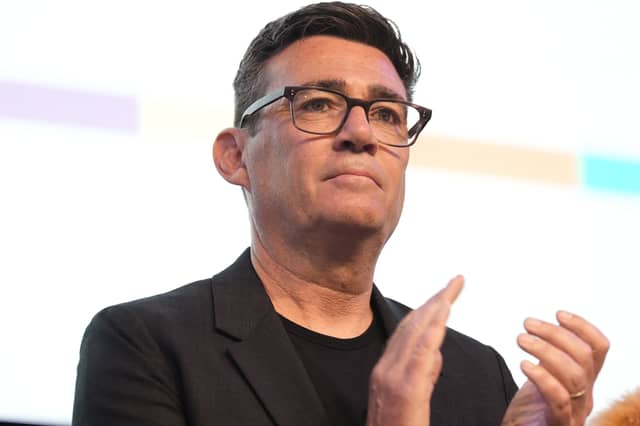


Andy Burnham will need to quickly draw up a genuine and positive vision for Scotland - or Labour risks continuing the perception of failing to deliver promises made from Westminster.
Less than a month ago, Mr Burnham said he did not have an opinion on the future of the North Sea, but has been embraced by his Labour colleagues north of the Border over his apparent ability to face down the threat from Nigel Farage’s right-wing Reform UK party.

It is fair to say that we do not really know what Mr Burnham truly stands for and what he will prioritise in government. This is pretty wild given that it seems almost certain that he is poised to waltz into Downing Street unopposed in less than a month.
What we do know is that he can beat Reform UK and is more popular than Keir Starmer - not that the bar was particularly high on that front.
One thing we should know about Mr Burnham is that he has lived and breathed devolution during his time in Manchester. But if anything, this would signal a thirst for Holyrood to move power out into the regions and cities of Scotland, rather than wanting more powers to be devolved to the Scottish Parliament.
READ MORE: Why Andy Burnham as PM would not be a silver bullet to take away Scottish Labour's troubles
Most Scots will have first really seen Mr Burnham in action during the pandemic - after he was embroiled in a stand-off with then first minister Nicola Sturgeon over travel restrictions.
Ironically, like Ms Sturgeon, he was able to carve out a reputation during the pandemic of standing up for his community against perceived unfairness from the UK Tory government at Westminster.
Without cancelling Labour’s manifesto commitment not to raise taxes, it looks likely Mr Burnham will face some of the same barriers Sir Keir did in terms of unlocking money to properly fund public services, including in Scotland.

Mr Burnham’s political legacy from Manchester is already having an impact in Scotland, with one of the SNP’s flagship election vows to cap bus fares at £2. Mr Burnham introduced the same policy in greater Manchester in 2022, to great acclaim.
An immediate issue Mr Burnham will face, which will have implications across the UK, is the row over defence spending that arguably kickstarted the beginning of the end of Sir Keir’s government.
He has suggested a long-term approach to defence and security and would cut the UK’s welfare bill in order to shift money to defence, insisting he is “not squeamish” about potentially cutting social security.
On oil and gas, Scottish Labour and Mr Sarwar insist that the UK party should keep to its pledge to end fossil fuel licensing in the North Sea. They believe that approving the environmental consents for the controversial Rosebank and Jackdaw projects would not go against that commitment.
Worryingly, just one month ago, Mr Burnham told the BBC that he has “not completely made a view on the North Sea issue”, adding: “I am listening to what people are saying about it.”

The PM in waiting acknowledged that “the country needs an industrial base”, but warned “I don’t think it’s in our interest to focus on time-limited industries.”
Given his impending government potentially taking office in just four weeks time, you would hope Mr Burnham will have formed a position on the future of the North Sea and host of other key issues impacting Scotland, before he enters Downing Street.
The Scottish Secretary, Douglas Alexander, who has largely been anonymous in the tussle for power over the last few months, has now stated he will back Mr Burnham as the next prime minister.

Mr Alexander, who has a long history of working with Mr Burnham inside and outside of government, said Labour’s newest MP is “one of the most experienced political leaders in Britain today” and has “proved himself as a winner”.
The Scottish Secretary has faced criticism for failing to do enough to shout about Scotland within the UK government, while John Swinney has accused him of having “soured” the relationship between Scotland’s two governments.
If Mr Burnham does decide to keep the Scottish Secretary in post, pressure will be on Mr Alexander to begin delivering for Scotland - something Scottish Labour MPs have warned has been lacking.
On the economy, Mr Burnham has suggested he would like to reconsider Rachel Reeves’ controversial increase in National Insurance contributions paid by employers, suggesting it was the “wrong decision”.

A senior Scottish Labour source said that if Mr Burnham does become prime minister, he will need to “make a case for what a government looks like and what he will do for Scotland”.
While we know that Mr Sarwar and Mr Burnham are close, the current Scottish Labour leader has remained coy about fully endorsing him before he knows the full lay of the land.
“Andy is someone that I’ve always had a very good relationship with”, Mr Sarwar told journalists in Glasgow.
He added that what Mr Burnham has achieved as a regional mayor, there should be a need to “replicate some of that here in Scotland”.
But it feels, as things stand, that Mr Sarwar is also largely in the dark about what a Burnham government could do for Scotland.
What will give the Labour movement hope north of the Border is the potential to have someone in government who can take on Reform and win. Given the dire polling in recent months at a UK level and for Scottish Labour, this hope will be worth clinging to.
The Labour party does not generally turf leaders out of office at the drop of a hat - a culture that has become synonymous with the Tories at Westminster over the last decade.
For Labour to take the word of a man who is yet to set out what his government will do or look like without question, illustrates just how seriously they are taking that threat from Reform.
If Mr Burnham cannot turn around the Labour movement’s fortunes in Scotland, given the dire situation the party has faced under the deeply unpopular leadership of Sir Keir, then it is probably fair to argue that no-one will be able to.
Comments
Want to join the conversation? Please or to comment on this article.