
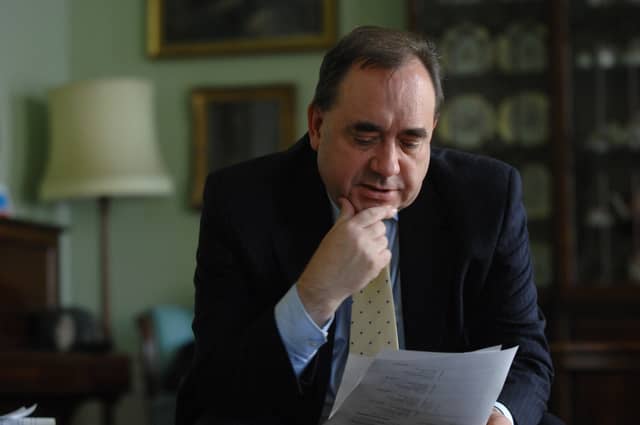


He was the fierce campaigner and master tactician who succeeded in reshaping Scottish politics beyond recognition.
Loved and loathed in equal measure, but few could deny Alex Salmond’s immense impact both north – and south – of the border.
History will remember Mr Salmond, who died on Saturday aged 69, as the leader who took the SNP to the brink of achieving the party’s dream of independence in 2014 – arguably no one has done as much as Mr Salmond to advance the nationalist cause.
Graduating with a degree in economics and history, he worked as an economist for both the Government Economic Service and the Royal Bank of Scotland before being elected as an MP for the Banff and Buchan constituency in 1987.
His election at Westminster followed a turbulent period for the SNP, which saw its number of seats fall from 11 to two in the 1979 general election.
As a young and brash newcomer, Mr Salmond played a role in the breakaway faction of the SNP known as the “79 Group” that sought to take a more left-wing stance.
His brief expulsion as a result did not hinder his advancement within the party in the long term, with his election to leader coming in 1990.
With the creation of the Scottish Parliament in 1999, he went on to serve as leader of the opposition at Holyrood, while retaining his seat at Westminster.
He stood down as SNP leader in 2000 and left the Scottish Parliament in 2001.
Returning as leader in 2004, he guided his party to a narrow Scottish election win in 2007 and then led a minority government as he became Scotland’s first SNP First Minister – a feat many thought was unachievable.
That success was superseded in the 2011 election, when Mr Salmond led his party to an unprecedented victory, with a crushing defeat of its main rival and pre-election poll leaders, Labour.
Despite attempts by some in the Yes camp to move the focus away from him, Mr Salmond was seen across the UK – and the wider world – as synonymous with the Scottish independence movement during the campaign leading up to the 2014 vote.
As the September 18 vote drew closer, the polls narrowed, and Yes Scotland appeared to have the momentum. Many wondered whether the first minister could become the ultimate Scottish political history-maker.
But the result – a 55 per cent to 45 per cent vote to stay in the UK – led to his resignation on September 19.
Here we remember Mr Salmond’s rise to the height of Scottish politics to his eventual resignation as First Minister.
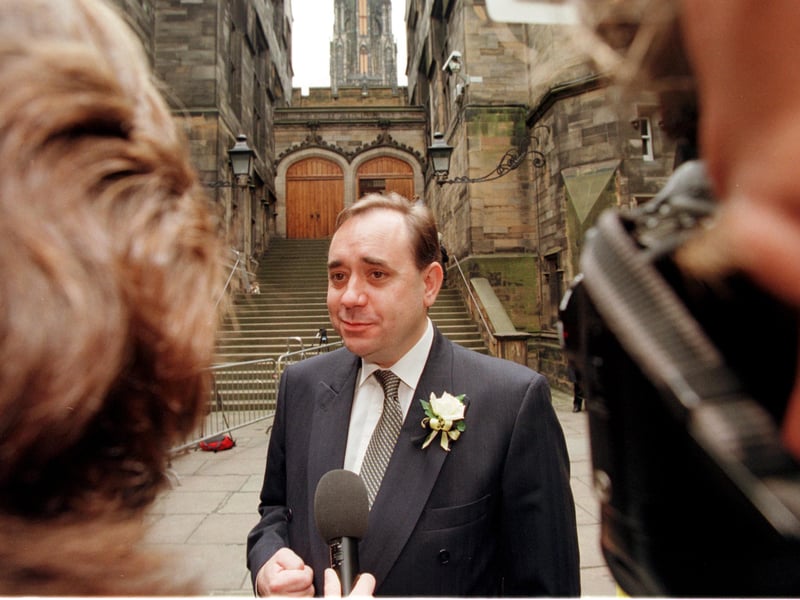
5. Parliament is opened, as Alex Salmond attends
Alex Salmond arrives for the opening day of the Scottish Parliament in 1999 | TSPL
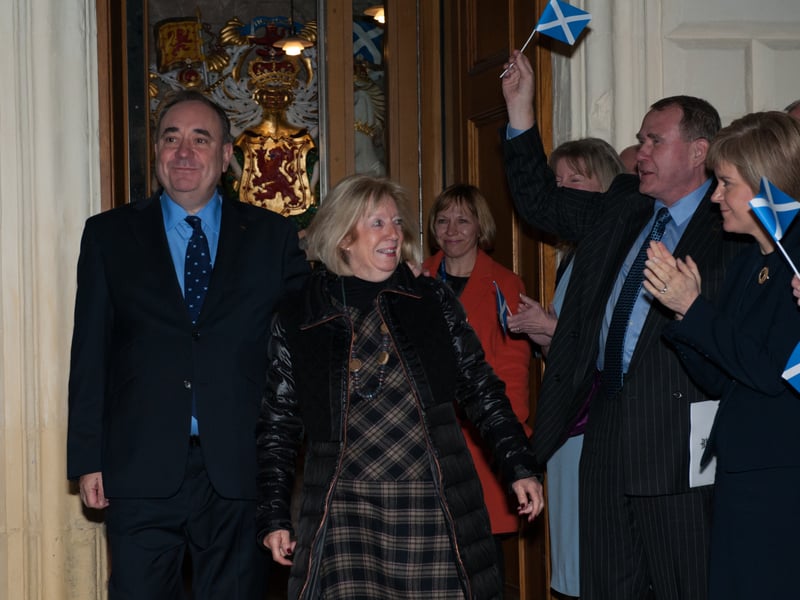
6. Alex Salmond clapped out following his resignation
Alex Salmond departs the Scottish Parliament following his resignation as First Minister in 2014. Mr Salmond, accompanied by his wife Moira, is clapped out by colleagues, including his successor Nicola Sturgeon. Picture: Andy O'Brien | JPLicence
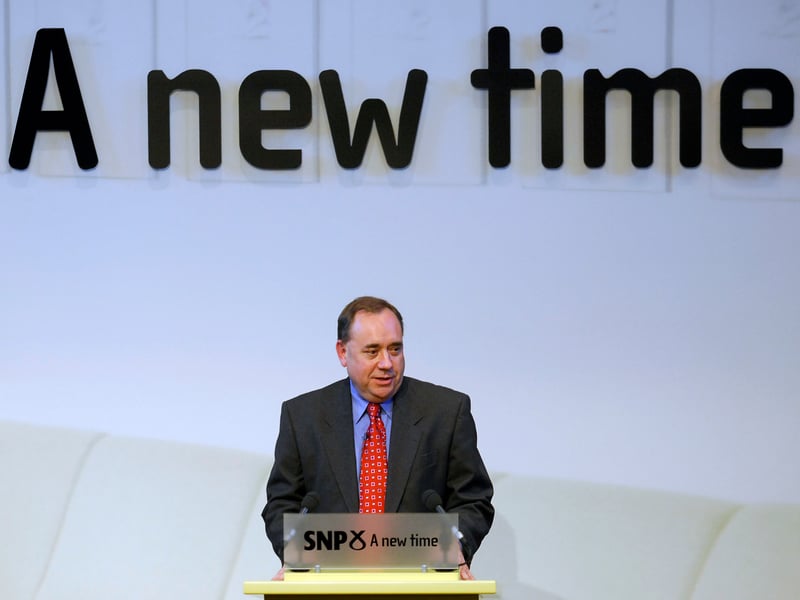
7. 'A new time' - the SNP triumphs in 2007
Alex Salmond makes his first speech, at The Hub on the Royal Mile in Edinburgh, after the announcement the SNP have defeated the Scottish Labour party in the 2007 election. Picture: Jane Barlow/NationalWorld | TSPL
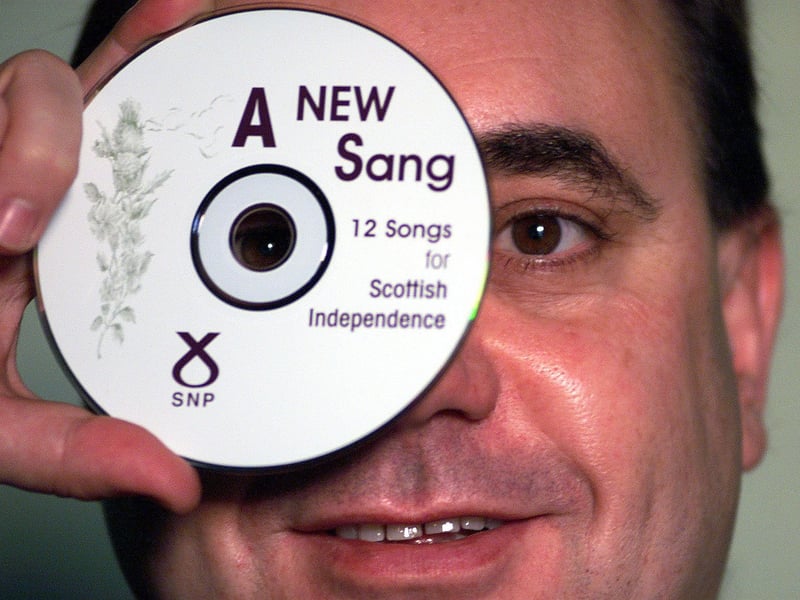
8. 'A New Sang' features songs dedicated to independence
SNP leader Alex Salmond helps launch the "A New Sang" CD, featuring 12 songs dedicated to Scottish independence, at the party's offices on North Charlotte Street in 1999 | TSPL