
'Accountants are making clinical decisions': Diabetes patients slam NHS service

Patients trying to access technology for type one diabetes say they are not getting the support they need.
Patients say accountants are making clinical decisions at a Scottish health board because of difficulties accessing the technology they want.
Adult diabetes patients at NHS Lothian say they are not able to get the closed loop sensor systems they want on the NHS and are instead left on long waiting lists and being offered cheaper alternatives that are not as accurate.
Hybrid closed loop systems link continuous glucose monitoring with an automatic insulin pump - it continually monitors blood sugar levels and then automatically adjusts the amount of insulin being given through the pump.
Shelley Murray, 25, from Musselburgh, was diagnosed with type one diabetes when she was just four years old.
She said: “I am continuing to push to get seen, but the only option I have at the moment is a system which I have tried before and I don’t want to risk trying it again.


“That system would tell me my blood sugar was really high but then I did a finger prick and I was nowhere near that - if I had let the insulin pump correct me, it could have killed me.
“I know it works for some people but I don’t want to try it again, but due to the expense I can’t get the system I want.”
Ms Murray says she has to wake up four times a night to manually check her blood sugar levels, and says having an automatic pump would “take away a lot of stress” and make her less tired during the day.
However she said when she has asked clinicians for this she is told it is “too expensive”.
She added: “I feel like admin staff are in charge of the decisions.
“We are battling to get life-changing technology and being told it is too expensive, but it will save money in the long-term by reducing complications.
“It can save someone’s life but people are not getting access.
“The focus is on the complications of diabetes rather than preventing the complications - if that was shifted it would massively benefit everyone.”
Stephen Nixon, 48, from Portobello, was diagnosed with type one diabetes in 2019, and his 11-year-old son Lewis was diagnosed a year later.
Full closed loop systems are offered to children like Lewis, but Mr Nixon said he was left facing a long waiting list.
He said: “This is as close to a cure until we get a cure.
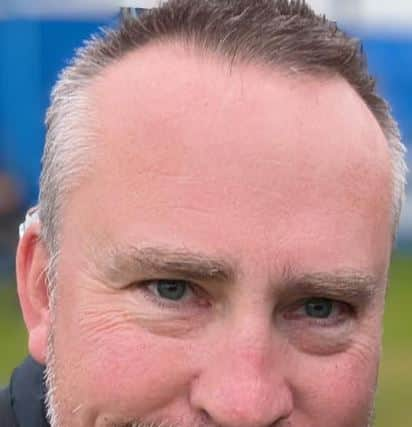
“I have asked where I am on the waiting list but I don’t know how long it is and there is no visibility.
“I believe NHS Lothian accountants are making the clinical decisions.”
Mr Nixon also worries his son will be offered a lesser technology when his pump needs to be renewed in a year’s time, saying “it is robbing Peter to pay Paul”.
He now pays £160 a month to get one of these systems privately, and says he has had to make “a lot of sacrifices” to afford this.
Mr Nixon added: “NHS Lothian is not very transparent and when you ask questions you are told different things which are difficult to understand.
“NHS England has a five-year plan and funding from the government, but in Scotland there are just guidelines which are not regulated.
“I want the NHS here to start funding this properly but I feel like they are waiting for cheaper options to come along - they are not giving people what is best for them and that is not right.”
Both Ms Murray and Mr Nixon are part of a campaign group that recently visited the Scottish Parliament to attend a debate on diabetes technology, hosted by Lothians MSP Foysol Choudhury.
Mr Choudhury said: “Behind every data point is a person whose life could be transformed with better access to the tools they need.

“This is about ensuring that every person, no matter their postcode or pay cheque, can manage their condition with hope and dignity.
“Managing type one diabetes is a relentless challenge, requiring lifelong insulin therapy and up to 180 daily health decisions to keep blood glucose levels in check.
“Without access to advanced diabetes technology, individuals face an increased risk of serious complications such as seizures, heart disease, blindness, kidney failure and even death - the physical and mental toll is immense.
“Providing access to modern technologies can significantly ease this burden and improve the quality of life for those with type one diabetes.”
Michelle Carr, chief officer of acute services at NHS Lothian, said the health board is under “significant financial pressure” and therefore prioritises pregnant women, children under the age of 18 and those assessed as a priority for closed loop systems.
She said: “We do this because the clinical evidence shows that these specific groups benefit the most from this technology.
“Dur to additional technology support from the Scottish Government, we have been able to offer this technology to a wider group of patients out with this criteria, with a continued focus on clinical need.
“Despite this and the challenges of providing services for the second largest residential population in Scotland, we are actively working to address the high numbers on our waiting list for insulin pumps.”
She added: “We have redesigned our services to enhance support for our patients, particularly those at most risk and those with complex needs.
“We remain committed to prioritising patient care and delivering the best outcomes.”
Comments
Want to join the conversation? Please or to comment on this article.