
Scotsman Obituaries: Prof John MacKenzie, influential historian of empire
Professor John M MacKenzie, historian of empire. Born: 2 October 1943 in Northenden, Manchester. Died: 18 September 2026 in Alyth, Perthshire, aged 82
John MacKenzie was one of the foremost British historians of empire, a man of striking originality and deep knowledge. Originally an historian of southern Africa, he developed into a pioneer of the study of European popular and cultural imperialism as well as aspects of environmental history. He was widely regarded as the most influential historian in this field in the past 50 years.
He retired as Professor of Imperial History at Lancaster University in 2002, although his research and writing continued until recently. Most of his interests and enthusiasms can be traced to his early years growing up beside the Clyde, in the straitened conditions after the War, and the two years (1954-56) as a child he spent in Northern Rhodesia (Zambia), where his father worked in the colonial government’s Public Works Department. He regarded this experience as life-changing, for developing a love for both Africa and travel, especially by sea. Most importantly, “I had experienced colonialism in its declining years… dominating and discriminating against other peoples... but it would be some years before I would be able to build on the insights I had gained”.
From Glasgow University he went to UBC Vancouver to complete his Ph.D on pre-1914 labour migration in south-central Africa which got him his first permanent job at Lancaster in 1968. While seconded to the University of Rhodesia in 1973-74, undertaking intensive oral history fieldwork, he saw first-hand the nature of the Ian Smith’s government and its racial policies. After writing an article critical of the white regime he was hauled in by the security police and given a talking to. He continued to get permission to research in “disturbed” areas of the country although not without risk: one African research colleague was killed while out in the bush.
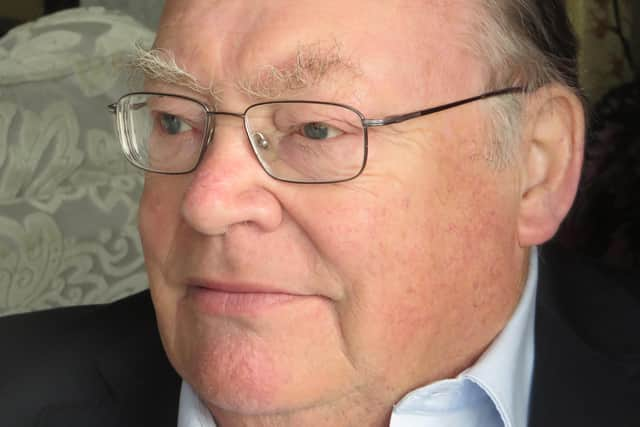

With the guerrilla insurgency preventing further fieldwork, and then Robert Mugabe’s assumption of power, his research shifted. His oral interviewing, and his early work as a Roman archaeologist in Scotland associated with the Hunterian Museum, led him to a greater appreciation of the value of historical evidence other than documents and archives.
Some historians found this approach hard to accept when MacKenzie developed his study of a wide range of British cultural sources and artefacts, including everyday ephemera, for his first book Propaganda and Empire: The manipulation of British public opinion 1880-1960 (1984) and Imperialism and Popular Culture (1986). These pioneering works revealed the extent to which the empire suffused popular opinion and politics in Britain, an idea which the historical establishment had traditionally rejected. MacKenzie’s views have been validated by the MUP Studies in Imperialism series he founded and edited from 1984, which explores the cultural history of empire and its effects on the dominant as well as subordinate societies. It remains the most important and influential series in its field, celebrated in Writing Imperial Histories edited by Andrew Thompson in 2013.
MacKenzie grew up in a tenement flat opposite the great civic museum at Kelvingrove, which became his playground. The arts remained central to his life. It was no surprise he was attracted to writing Orientalism: History, Theory and the Arts (1995), taking issue with Edward Said’s uniformly negative view of Western depictions of Oriental cultures and societies, and attracting the hostility of the post-colonial school for whom Said could do no wrong.
With his expertise in the visual arts he was appointed historical adviser to exhibitions on David Livingstone at the NPG, London, and RSA, Edinburgh (1997), The Victorian Vision at the V&A (2001), and an academic advisor for the British Museum Orientalism exhibition in 2019 which very much validated MacKenzie’s original contribution to the field. But his restless and enquiring mind was always alive to new elements of the imperial phenomenon.
Influenced by his fieldwork in Zimbabwe, The Empire of Nature (1988) was an important early contribution to the growing interest in the environmental history of empire, examining the role of imperial hunting, conservation and the part animals played in the expansion of empire in Africa and India.
As an imperial polymath he engaged with many other fields of study, extending to architecture, museums, sport, missionaries, transport, newspapers, and so much more. His inaugural professorial lecture at Lancaster, “Scotland and the British Empire”, (1991) led to work on the Scottish diaspora, an association with the Research Institute of Irish and Scottish Studies at Aberdeen University, and the publication of The Scots in South Africa (2007) and later works.
In 2016 a festschrift conference led to the publication of The MacKenzie Moment and Imperial History. Essays in Honour of John M MacKenzie (Barczewski and Farr, 2019). He was elected a FRSE, held honorary professorships at five Scottish universities, and in 2021 he received an honorary doctorate from Aix-Marseilles University in recognition of his pioneering research and its influence on the writing of French and European imperial history.
In recent years MacKenzie wrote two complementary synoptic works on the built environment of the empire and British imperial culture, but his final work was editing his father’s hand-written memoir (2024).
It was a touching tribute to his parents. Alexander had been brought up in some hardship in Inverness and met his wife Hannah in Manchester when he was travelling the country looking for work in the early 1930s. He rose from stonemason to consultant engineers’ inspector of works on some of Scotland’s major infrastructure projects.
MacKenzie took his example to heart and worked long hours in university administration at Lancaster as Dean of Arts and in other senior roles in parallel with his teaching and academic research. Altogether he published 30 authored and edited books and hundreds of articles and conference papers delivered in venues throughout the world.
Outside university, he became a magistrate on the Lancaster bench, and a governor of five schools and colleges. He died of pancreatic cancer at home with his partner of 45 years, the present writer, by his side. His family and many friends will miss his warm-hearted fun-loving dynamic personality and the kindliness that marked the man.
Obituaries
If you would like to submit an obituary (800-1000 words preferred, with non-copyright image), contact [email protected]