
Scotsman Obituaries: David Gerrard, designer who made his mark across Scotland and beyond
David Gerrard, designer. Born: 13 December 1942 in Birmingham. Died: 22 March 2025, aged 82.
David Gerrard, designer, dedicated consumer of art and culture, world traveller, raconteur, impeccable dresser, pun enthusiast, charismatic baritone-voiced Brummie, loving husband, friend, father, father-in-law, uncle and grandfather died in March. Today would have been his 83rd birthday.
David was born in Birmingham in December 1942, an only child to Frank and Winnifred Gerrard. Frank was a police inspector in King's Norton, a south-west suburb of the city. The family lived in Witton, near the Aston Villa football ground, but heavy bombing in 1943 sent David and his mother to stay with family in Wales.
The family later moved back to King's Norton, where Winnie ran her own women’s boutique on the village green. The family were involved in local parish life and David grew up with loving aunts, uncles, grandparents and friends all living very close by.
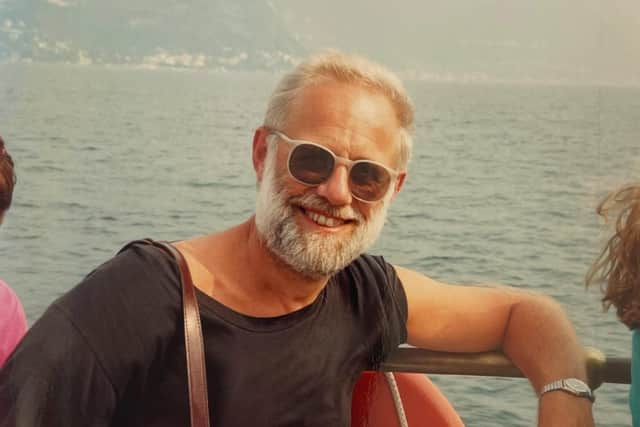

David attended Brunnaker Primary School until 1953, and then King Edward's School for Boys in Edgbaston until 1961. His school years were relatively non-academic but his interest in art and design blossomed. He also played rugby and attended the RAF Air Cadets.
David was accepted for the Royal College of Art’s Industrial Design course but instead pursued a Diploma in Industrial & Product Design at Birmingham College of Arts & Crafts. While there he took a placement at tableware manufacturer WMF in Geislingen, Germany. Over three years he developed his design skills, eye for detail and a lifelong belief that design has a social responsibility.
Following college in 1962 David moved to the YMCA in Watford, which had been built in the manner of a university halls of residence, offering affordable lodgings for “professional young men”. Dear lifelong friendships were made and he pursued early career opportunities working for Cox & Co of Watford, manufacturers of car seats and tubular metal furniture, later moving to Ogle Design in Letchworth under the industrial designer Tom Karen, a job which, the story goes, he apparently simultaneously resigned and got sacked from on the same day.
In 1967, David moved to Edinburgh to take up a job with the architectural practice Robert Matthew, Johnson Marshal and Partners. RMJM as they were fondly known, had set up a small design group within their very large architectural practice in Edinburgh under the leadership of Harold Medd. While at RMJM David worked on significant Scottish projects, including the new University at Stirling, the interior of the Royal Commonwealth Pool opened in 1970 by Princess Anne – later listed in 1996 and awarded a RIBA Award – and departure desks and lounges of Edinburgh Airport.
In 1973 David met Catherine, an art teacher and painter who had recently returned from Libya. He had been accepted for a job as a product designer at the Pakistan Design Institute, a joint venture development project between the Governments of Switzerland and Pakistan. The couple married in April 1974, honeymooned in Venice and moved to Karachi in July for two years.
David trained Pakistanis in product design as there was no design education available in the country at that time. He also facilitated a programme delivering contract design services to enterprise.
An enviable ex-pat lifestyle was enjoyed, lifelong friendships were made and together he and Catherine visited the tribal valleys north of Peshawar, Sind, the Punjab, Khyber Pakhtunkhwa, India, Nepal and Kashmir, Sri Lanka, Singapore and Thailand.
In 1976, David and Catherine embarked on an unforgettable road trip from Karachi to the UK, a nine-week journey which took them through the Khyber Pass, Afghanistan, Iran and Turkey, enabling time to visit the wonders of Kabul, Isfahan, Shiraz, Persepolis, Herat and Istanbul before travelling through Greece via Dephi to Athens, Rome, Geneva and then back to London, Kings Norton and Edinburgh. Their Renault 16, a car David had always wanted, was a bit rusty by then, but it got them home and that journey was one which would shape the rest of their lives.
On their return from Karachi, David took a one-semester teaching post in Halifax, Nova Scotia, before returning to Edinburgh and setting up in private design partnership with Harold Medd. Gerrard & Medd went into private practice in 1977, in an office in St Vincent Street. As a small practice they were very active, well known and respected in the design community in Edinburgh and beyond.
Gerrard & Medd’s portfolio in the Seventies, Eighties and Nineties included working with Nuclear Enterprises on the design of medical instruments, former employer RMJM on the interior of the Scottish National Gallery of Modern Art, Carron Phoenix sinks, British Airports Authority designing check-in desks for Aberdeen, Sumburgh, Edinburgh, Heathrow and Gatwick airports, Glasgow Royal Concert Hall interior, the exhibition and showroom design for United Distillers, Edinburgh University, Armitage Shanks, Bank of Scotland and many more.
Gerrard & Medd had a strong professional reputation and were trusted to deliver creative solutions ranging from products and interiors to furniture and exhibition design.
During the 1990s, in his role as Chairman of the Chartered Society of Designers in Scotland, David worked on a number of collaborations in Eastern Europe and the former USSR; with the Romanian Chamber of Commerce in Bucharest for the international Design for Transformation movement in Cluj-Napoca, Braila and Galati; in Moldova providing consultancy for the European Bank of Reconstruction; and in Chisinau and Bratislava producing assessment and proposals for the Slovak Design Centre Know-How Fund.
He also launched a student exchange programme with The Scottish Development Agency and Georgia’s Society of Designers in Tbilisi which saw Scottish design students visit Georgia, and Georgian artists and designers came to Edinburgh and Glasgow Schools of Art.
Always passionate about design and sharing knowledge, David lectured in art schools in Glasgow, Edinburgh, London and Dundee, where students and staff enjoyed his company and working with him. His friendly eloquence, repartee and sense of humour were a great asset, socially and professionally.
Retirement came in 2007, allowing him and Catherine to pick up their love for travel again, making trips all over the world to visit friends from their Watford, Karachi and Nova Scotia days, decades-long friendships remained dear.
In Edinburgh, David volunteered at The Citizens Advice Bureau, and served as an independent custody volunteer for Police Scotland, visiting police stations to ensure the fair treatment of detainees, a testament to his sense of justice and compassion.
In his later years, David continued to indulge his love for travel, music and the arts, keeping close the friendships that had enriched his life, and he treasured time spent with family. After the untimely death of Catherine in 2020, although bereft, his passion for design and an undiminished curiosity about the world prevailed, and in 2024 he made one last trip to see the Islamic and National Museums of Qatar, a testament to his unrelenting desire to learn and explore.
He leaves behind a rich legacy of stories, high class design, infectious charisma and an endless collection of puns that will continue to bring smiles to those who knew him.
David is survived by his daughters Sophie and Lottie, and grandchildren Marnie, Joni and Finn.