
Scotsman Obituaries: Ally Van Tillo, activist and founder of the UK Aids Memorial Quilt
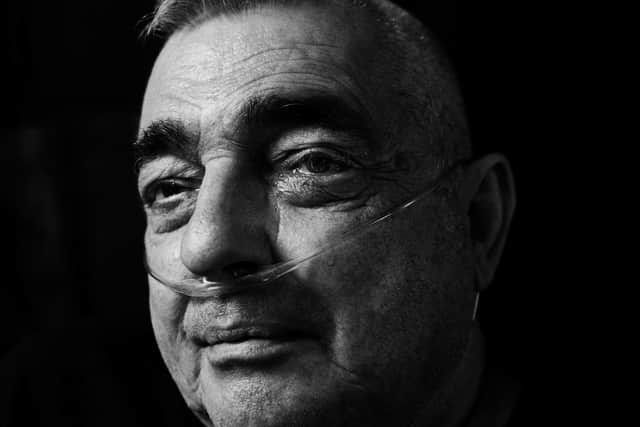
Ally Van Tillo, bar owner, activist and founder of the UK Aids Memorial Quilt. Born: Alastair John Hume, 27 July 1959 in Gourock. Died: 30 August 2026 in Edinburgh, aged 67.
All his life, Ally Van Tillo insisted he had done nothing out of the ordinary. There were hundreds like him, he said, doing the same work in their own communities. He had simply seen it early, because he was running a gay bar and his customers were dying. What he built out of that is the UK Aids Memorial Quilt, a collection commemorating more than 600 people and the closest thing to a national record of a generation it preferred not to name.
Ally was adopted as a baby, and the family moved from Glasgow to Edinburgh. His adoptive mother was a remarkable woman, creative and progressive, who raised him to be exactly who he was and helped him come out as a teenager. That early permission to be himself stayed with him. In the early 1980s he bought Key West, a gay bar in Edinburgh, which put him at the centre of the city's gay community just as HIV reached it. He had heard of GRID (Gay-Related Immune Deficiency as it was then known) as a New York problem. It arrived in person the afternoon a friend and co-worker came in to tell him he had Aids and did not know what to do.
Ally took that home. The conversations that followed in his kitchen in Dunfermline, with his partner at the time, the lawyer and campaigner Derek Ogg, and others including Edward McGough, led to two of Scotland's first organised responses to the pandemic: Scottish Aids Monitor, and the Milestone Venture Trust, which raised funds for a hospice for people with HIV and Aids and opened Milestone House in 1991. The same circle launched Scots Men, a newspaper for gay men which made Channel 4 News with its first issue by reporting that the virus was spreading among Edinburgh’s straight heroin users too.

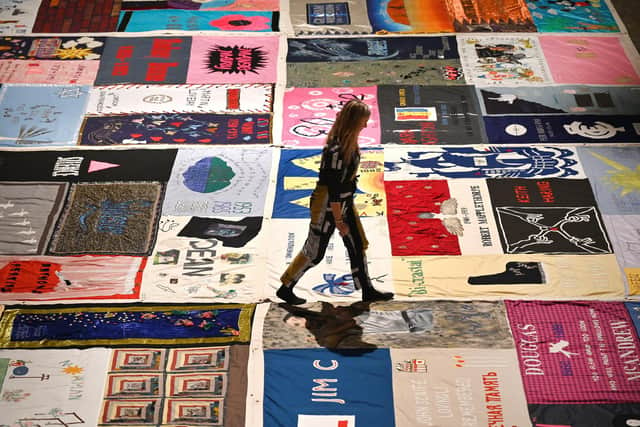
Alongside all of this came the work he is most remembered for, the UK Aids Memorial Quilt, which helped shift public attitudes and pushed those in power to take the pandemic, and the people affected by it, seriously. The Quilt was started in San Francisco in 1985 by the activist Cleve Jones. People sewed fabric panels the size of a burial plot, 6ft x 3ft, for those they had lost to Aids. Shown together, they made the scale of the loss impossible to ignore.
Ally set about creating a British version in the late 1980s. He travelled to San Francisco to learn how the project was run, then opened a workshop, store and education space in Leith, gathering panels from across the country. He knew exactly what the Quilt could do: “It doesn't talk about sex or drugs,” he said at the time. “It talks about people.”
Ally tested positive for HIV in March 1990 and decided to go public at a time almost nobody else was open about it. He knew that a pandemic which stayed anonymous remained easy to ignore. Silence let people believe HIV happened elsewhere, to other kinds of people, and it left the dead unnamed. So, he put his own name to it, giving interviews and going on TV shows, including Kilroy, a programme that made its name from confrontation. He was seated before an audience whose objections to him were religious. “Nobody was really willing to be open about it,” he said. “It had to be done.”
In 1992, at a Quilt display in Birmingham, he met Ian, who was also living openly with HIV. They instantly fell in love, and Ian left Birmingham for Edinburgh within months, joining Ally in the work. For three years the two of them were on the road for as much as seven months of the year, putting the Quilt on display around the country and raising money for HIV charities. It built towards a display of the full UK collection in Hyde Park in June 1994. Speaking there, Ally said: “We remember our friends, but we can't forget about the living… It is a monument which cannot be ignored. We are all people living with Aids, every single one of us.”
In 1995, Ian's health was failing and Ally stepped away from the Quilt to care for him through what everyone expected to be his last months. In 1996, combination therapy arrived and gave them back a full and active life. Ally went back to running bars, still open about his status, and began campaigning with Scot-Pep in support of sex workers in Edinburgh. He and Ian later married, both taking the surname Van Tillo.
In his last years, and in failing health, Ally never stopped campaigning for people on the margins. In the attacks on trans people and the imported culture-war politics of recent years he saw the machinery that produced Section 28 and the tabloid cruelty of the 1980s running again. “Everything we went through with Aids in the Eighties and Clause 28, you are revisiting now,” he told the filmmaker David McLean in an interview recorded for the 2025 Edinburgh Art Festival. “It's happening again. Get ready. We're going to have to fight once more.”
Nearly 40 years on, the Quilt has lost none of its force. While medical advances have transformed HIV and Aids, access to treatment still varies and stigma remains a daily reality for many people living with HIV today. The Quilt has always held space for everyone affected by HIV, whatever their status. It is still shown to say what it always said: these are people, and they matter.
Part of the largest community art project in the world, the Quilt is now recognised as an important social artefact in its own right. In 2025 the full collection was laid out in the Turbine Hall at Tate Modern, where 70,000 people saw it in five days.
This month the Quilt is back in Scotland for its first ever full display at Tramway in Glasgow, running until 4 October. Ally called this a homecoming and said: “Queer history has largely been lost because so many had lived in shame and shadows. The Aids Memorial Quilt is alive: let's ensure no more of our history is allowed to disappear.”
The Glasgow display will now be a tribute to Ally – a place for those who knew him, and those who benefited from his work, to come together and remember him. He might have objected to that, having never sought any credit. He always said the Quilt belonged to the panel makers and the volunteers who made it with him: a work of collective grief, of activism, and above all of love.
But he was overruled. Two days before he died, the Sisters of Perpetual Indulgence came to his front room and canonised him.
Ally Van Tillo died at home, surrounded by his family. He is survived by his husband, Ian Van Tillo, their partner Tobias Allen, and his sister, Vivienne Skey.
Obituaries
If you would like to submit an obituary (800-1000 words preferred, with non-copyright image), contact [email protected]