
Obituary: Sir Jack Stewart-Clark, politician and businessman who restored Dundas Castle
Sir Jack Stewart-Clark. Born: September 17, 1929. Died: June 22, 2026, aged 96
Sir Jack Stewart-Clark’s life was truly well-lived, embodying a precious gift of hope and strength. To remain in the hearts of those we leave behind is to achieve a form of immortality. He has left a legacy of cherished memories and a remarkable example of unwavering love and strength, with family always at the core.
His remarkable career spanned various sectors, including business, politics, charity, restoration, and hospitality, highlighting his wide-ranging talents. Born into a lineage of industrious individuals, Sir Jack drew inspiration from his great-grandfather, Sir John Stewart-Clark, a thread manufacturer, philanthropist, and politician. He viewed his great-grandfather as a guiding light through life’s challenges, likening his influence to a guardian who led from the wilderness to brighter horizons.
Following in his father’s footsteps, Sir Jack received his education at Eton. After completing his studies, he joined the Coldstream Guards, serving in the 1st Battalion and being stationed in Tripoli, North Africa. Upon returning from this brief military service, he attended Balliol College, Oxford University. His future manager at the family firm, J&P Coats Ltd, advised him against pursuing a degree in Business, instead encouraging him to select a subject that would enhance his reading, writing, and maturity. Heeding this advice, he chose to study history. Just before his finals, Sir Jack was invited to join J&P Coats, which led him to international postings in Uruguay, Canada and various countries across Europe, including the Netherlands, where he met his wife, Lydia Loudon.


For over 16 years Jack represented J&P Coats in locations throughout, Canada, Europe and Pakistan. With a keen interest in culture, he embraced learning local languages and customs, perhaps preparing him for his future in international politics.
After their wedding in 1958, Jack and Lydia made a brief return to Scotland, where he began his political journey by contesting the general election in the Aberdeen North constituency – a “hopeless” task as it was a secure Labour s. Although British law permitted Jack to run for parliament, it prohibited him from voting in the election since he was living abroad. During this period, his articulate speeches caught the attention of Harold Macmillan, who remarked: “We’ll be seeing more of that young man.” At a later Conservative conference, Jack expressed his gratitude to Macmillan with a vote of thanks.
They returned to the Netherlands, where Jack served at J&P Coats for a further five years after six years in Pakistan. He was later invited to join Philips as Managing Director of Philips Electrical, overseeing the company’s consumer goods division in the UK, which prompted their move to East Sussex. After five successful years, he was promoted to become Managing Director of Pye of Cambridge, a public limited company predominantly owned by Philips, with Lord Thornycroft serving as the external chairman.
In June 1979, the first-ever elections for the European Parliament were held. At that time, Lord Thornycroft, who was also the chairman of the Conservative Party, encouraged Jack to run for a seat. This led Jack to decide to compete for a position as a Member of the European Parliament (MEP) representing East Sussex. He achieved an impressive victory, winning by a majority of 86,000 votes.
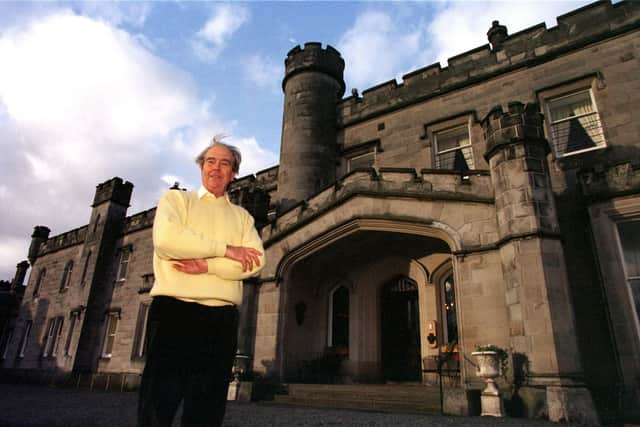
During his five years as a member for East Sussex and later West Kent he chaired the European Parliament’s delegations to Canada and served as treasurer of his group for 12 years. He specialised in Japanese relations and contributed to the Economic Affairs Committee, focusing on European competition, even authoring a book on European Competition Law. In his final decade in politics, Sir Jack dedicated his efforts to social affairs, addressing issues like drug abuse and media influence.
His commitment to Scotland led him to secure Objective One status for regional development in Northern Scotland, bringing in millions of euros in funding.
He was a member of the European Parliament for 20 years, serving as Vice President from 1990 to 1995. During this time, he was deeply impacted by the Bosnian War, which led him to focus on conflict resolution and practical support, including providing educational resources for young people in the province of Siroki Brijeg.
On one of his trips, he encountered a Bosnian monk, Father Jozo Zovko, who had been the parish priest in Medjugorje, the location where the Virgin Mary is said to have appeared to four young girls. His interactions with this brave priest, who had recently suffered torture during the war, were profoundly significant for him and reinforced his Christian faith.
Following the loss of his mother in 1999, he and his wife returned to Scotland to manage Dundas Castle and its estate. Since 1946, the castle had been occupied by the RAF as the headquarters for their Balloon Barrage Operations and had fallen into a state of severe disrepair. His parents had been unable to restore the castle. Thus, they initiated the restoration process, greatly aided by his wife's skills as an interior designer.
The couple soon transformed the castle into the thriving wedding venue it is today, achieving a five-star status and winning numerous prestigious awards, including being voted the best wedding venue in Scotland for two consecutive years. Sir Jack served as the chairman of the company for over 25 years.
Art and music played a significant role in his life, as he was a loyal ambassador of the Edinburgh Festival since its inception in 1947.
Sir Jack was a devoted family man, at the centre of it all, often describing himself as “the luckiest man in the world” for having married Lydia, believing that their marriage “had always been divinely protected”. They were married for 67 years. In turn, Lydia referred to Jack as her “anchor in life”. The family crest contains the very same motif, with the motto “Sure and Steadfast” Jack is outlived by his five children; Daphne, Alexander, Nadia, Zarina and Natalie, their six grandchildren and four great grandchildren.
Obituaries
If you would like to submit an obituary (800-1000 words preferred, with non-copyright image), contact [email protected]