
Obituary: John Wilson, political thinker and social policy advisor
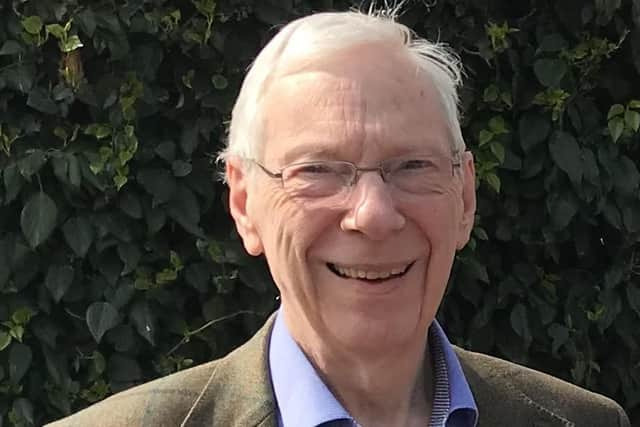
Dr John Robert Swainson Wilson. Born: 9 June, 1944 in Ballymena, Co. Antrim. Died: 28 September, 2025 in Edinburgh, aged 81
When John Wilson was still in his twenties, Cambridge University Press published his Emotion and Object, described by a reviewer in a well-regarded academic journal as “the best-written philosophy book I have read in the last decade”. But rather than pursuing a career as a university philosopher, Wilson aspired to apply his intellectual talents in more practical ways.
Having worked in a variety of roles, as politics lecturer, social rights campaigner and political researcher, his greatest sense of fulfilment came when, in the latter 1990s, he was commissioned by the Labour Party thinktank, the London-based John Smith Institute (JSI) to organise, and publish the proceedings of a series of ‘Downing Street seminars’, remembered by former Prime Minister Gordon Brown, at the time Chancellor of the Exchequer, as “well-received” and of lasting value. Responding to the news that Wilson had died, Brown paid tribute to him as “a profound and creative thinker from whom I learned so much. I called him our resident philosopher when I was at the Treasury”.
In his late seventies, and until ill-health deprived him of the necessary energy, Wilson was planning further work on the seminars in pursuit of a project he had once described in an unpublished note as “Towards a New Philosophy of the Left”. He thought the time had come for politicians to think more about “the philosophical bedrock”, and the unarticulated “assumptions… about the individual and society” that underlie political views. Philosophy, he acknowledged, “does not figure largely in the responses with which canvassers are greeted on the doorstep… [but] time spent in reflection on fundamental things may, by a kind of permeative process, add new shades and tones to the palette of political debate, and ultimately, in ways which cannot wholly be predicted, yield electoral dividends”.

Two of the JSI publications from his Downing Street years indicate the direction in which Wilson sought to lead such discourse. First his own long essay, Equality in Four Dimensions: the Moral Basis for a Politics of the Left (2000); and, second, his tightly argued ‘Response to Dworkin’ in Why Equality? What is Equality (1998), edited by JSI director, Wilfrid (now Baron) Stevenson. Ronald Dworkin, the internationally distinguished jurist and political philosopher, had made the opening contribution to a seminar on equality, in which participants included distinguished journalists, leading academics and MPs, and which was introduced by Chancellor Brown.
Nearly 30 years earlier, in his conclusion to Emotion and Object, Wilson had reasserted Descartes’ view that philosophy is not “a distinct discipline” but rather “part of a general inquiry into the nature of reality”. Specialisation and “isolation from the mainstream of scientific investigation” meant, Wilson wrote, that “I do not think that philosophical techniques alone can provide a final answer to key questions about human nature.” To “answer the fundamental questions” required an understanding that the “conceptual skills of philosophy”, while necessary, could only “bear fruit … in the context of empirical enquiry” and in collaboration with the social sciences. Accordingly, as he wrote in his book’s preface: “I left philosophy and descended to less aethereal regions.”
Born in Ballymena, Co. Antrim, in 1944 to R. N. (Nick) Wilson, a textile company director and Ulster Unionist politician, and Barbara Swainson, John was educated as a boarder at Shrewsbury School where he won a mathematics scholarship to Corpus Christi College, Cambridge in 1962. Inspired by Bertrand Russell’s History of Western Philosophy, he switched to study Moral Sciences (philosophy), graduating in 1965 and gaining a PhD three years later with the thesis that became Emotion and Object.
Rejecting philosophical study as an end in itself, he came north to Scotland, first to a conversion fellowship in political science at the University of Strathclyde, then, in 1970, to a lectureship at the University of Edinburgh where the Politics department was led by the radical young professor James Cornford, who welcomed a colleague who would broaden the Department’s work by teaching Plato and the classical thinkers.
Wilson published several articles on Platonic and related themes in major philosophy journals in the 1970s and 1980s, but in the mid-1970s he left university teaching to take on social policy and political research roles in London. He worked as Research Officer with the Disability Alliance, then, from 1982 to 1986, as research assistant to the Welsh Labour MP Brynmor John, the Opposition spokesperson first on Social Security then on Agriculture.
Another change of direction saw him gaining qualifications in systems analysis and programming, and returning north as a programmer, then Principal Systems Analyst, at Edinburgh District Council. Edinburgh was now to be his settled home, soon to be shared with Sylvia Downing, a Consultant Child Psychotherapist in NHS Scotland, whom he married in 1993.
Wilson rejoined Edinburgh University as an honorary fellow – a position which gave him a base from which, travelling frequently to London, he was able to carry out his work for the John Smith Institute. Thereafter he had roles in Edinburgh as a Social Care Data Standards Officer with what was then called the Scottish Executive; and as a freelance consultant for various social-care projects.
Marriage to Sylvia with whom he shared many interests – including art, literature, classical music, travel abroad and visits to the Melfort estate in the West Highlands, which his Ulster Presbyterian grandfather had once owned – brought John Wilson, by nature a private person, a family life to which he proved well suited. He became a much-loved stepfather to Sylvia’s three children and a grandfather to three boys and two girls. He is survived by Sylvia, his stepsons Matthew and Christopher, his five grandchildren, his younger brother, Richard and three nephews. His stepdaughter, Rebecca and youngest brother, Nick, pre-deceased him.
Obituaries
If you would like to submit an obituary (800-1000 words preferred, with non-copyright image), contact [email protected]
Comments
Want to join the conversation? Please or to comment on this article.