
Why the Highlands and Islands is ready for lift-off to space - the final frontier
Scotland is at the forefront of reaching the final frontier, writes Pete Guthrie
I remember the day vividly. My former colleague Roy Kirk and I were explaining to a room of fairly sceptical business folk the idea of launching rockets to carry satellites into space from the Highlands and Islands.
A decade on, what sounded to that audience like a pipe dream is on the cusp of becoming a reality.
Around the region, from Shetland to Argyll and from the Outer Hebrides to Moray, teams of skilled people are building, testing and preparing for launch. Next year Scotland will prove space can be done the Scottish way: practical, careful, community-minded and world-class.


Factories are machining rocket engines, 3D printing propellant tanks and wiring avionics. Rocket manufacturer Orbex’s impressive facility in Moray made my inner ten-year-old squeak with delight on a recent visit – it’s not every day you get to touch a rocket that’ll be in the blackness above us within months.
The University of the Highlands and Islands, meanwhile, is producing talent and research with a distinctly northern flavour. The Satellite Applications Catapult is investing in a collaboration lab that’ll make it easy for anyone with an interest in space to plug into national and international networks.
In a former airbase at Machrihanish, there’s new energy around flight test and mission control as well as an annual rocketry competition with universities from around the world. Three spaceports are at various stages of development – SaxaVord in Shetland, Sutherland Spaceport on the mainland and Spaceport 1 in North Uist, each with different strengths.
And this year Skyrora became the first UK-based rocket firm to receive a space launch licence by the Civil Aviation Authority (CAA) allowing them to launch from the SaxaVord Spaceport in Shetland.
Why here and why now? Geography, capability and need. Our latitude is a gift for getting small satellites into low Earth orbits that are polar and sun synchronous. That sounds technical. It’s simply the best way to fly eyes and instruments over every corner of the planet.
And the applications are present tense. Better wildfire detection and response. Smarter aquaculture and fisheries management. Monitoring peatlands and forests so climate targets are also trajectories. Safer transport. More efficient energy networks. Weather and ocean data that turns guesswork into planning. In other words, space activity that benefits us here in Scotland.
Crucially, Scotland is not doing this in isolation. European launch companies, including German pioneers HyImpulse and Rocket Factory Augsburg, are now regulars in our inboxes and at our gates. We’re talking to overseas firms who see the UK as the sensible doorway to Europe and the Highlands and Islands as a place to build a team, test hardware and be part of a quality supply chain.
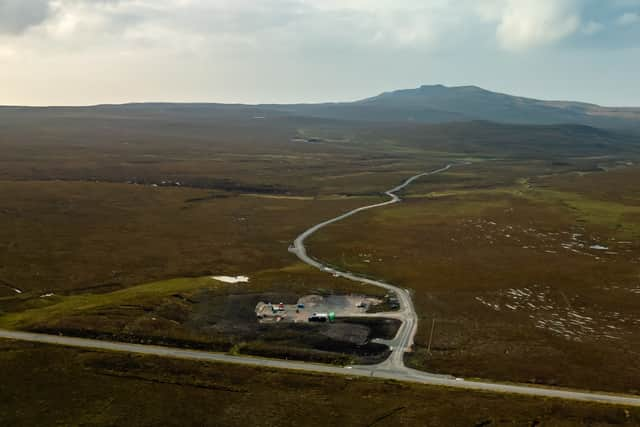
All of this only works if it works for communities. Years ago, a community leader near one of our emerging spaceports told me they were struggling to field a school football team. She was asking for a future that doesn’t require young people to leave home for a career.
That’s the heart of this for us. Space can seem glamorous and there will be iconic moments. But what matters is decent jobs, apprenticeships, contracts for local firms, and a pipeline that runs from school through college to a skilled career at home.
Sir Humphrey might caution, predicting the exact timing of launch is a “courageous decision”. Reality often humbles the over-confident.
So, we’re building test by test, permit by permit, supplier by supplier. We’re working with regulators, range providers and international partners so that when the countdown hits zero, we’re not hoping, but knowing. It may not make for Hollywood trailers, but it makes for launches that work and businesses that last.

There’s also a cultural point here. The Highlands and Islands is a region that does things with others and for itself. Space pulls through digital connectivity, advanced manufacturing, skills, tourism and education. It encourages ambition. It shows a teenager in Wick, Uist or Unst that physics can be a ticket to an interesting life.
This month Highlands and Islands Enterprise turns 60. We began life in 1965 as the Highlands and Islands Development Board [HIDB], with a mission to tackle chronic out-migration, low wages and lack of prospects.
Today the region is increasingly a source of Scotland’s confidence. I wish I could borrow a time machine and whisk the first chair of the HIDB, Sir Robert Grieve, to a modern rocket factory in Moray, or to a mission control room in Machrihanish. I like to think he would be impressed at the transformation.

Space is sometimes caricatured as escapism. The truth is it’s a way to look after what we have. It’ll help our emergency services, our crofters and fish farmers, our ferries and forests. It’ll widen horizons for young people without narrowing their choices about where to live. And if it also lets a few of us indulge our childhood dream of blasting off to the final frontier. Well, that’s a bonus.
Next year should see the Highlands and Islands move from promise to performance with space flight in a series of careful steps that add up to something new for Scotland.
And next month the global space industry will come to Glasgow for Space-Comm Expo welcoming over 2,300 delegates and cementing Scotland as a space to do space business.
So watch this space. More importantly, watch what it does for Scotland.
- Pete Guthrie is head of space at Highlands and Islands Enterprise. He works across the region on space sector development and partnerships.
Comments
Want to join the conversation? Please or to comment on this article.