
Why D-Day still has a sobering relevance for us all today - Scotsman Leader

In the United States, they call them “The Greatest Generation”: those souls born in the early 20th century, who lived through the Great Depression and fought in the Second World War, and to whom we owe so much.
Watching the 80th-anniversary commemorations of D-Day today, we will be reminded once more of the fading of that generation, only brave few still able to join the services and concerts. Many speak of their enduring sense of duty to fallen comrades. The horror of what they saw, and fought through, will stay with them until the end.
With every commemoration, then, the obligation is passed to younger generations not to forget. To listen to those stories, perhaps for the last time, and remember as if our lives, and the lives of our children, depend on it. Because they do.
For decades we hoped those veterans would be the last to face such sacrifice, necessary to save us from tyranny. We hoped those horrors of war would exist in a more real sense only in dimming memories, and that the fruits of their successful fight – of liberty from despots, oppression, the systematic murder of innocents – could be maintained for ever.
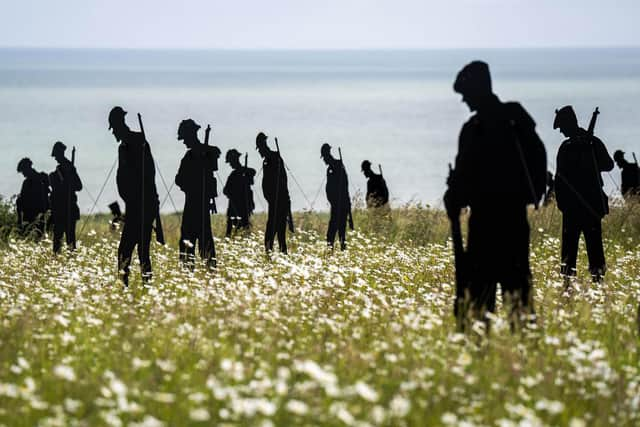

Thanks to the work of historians and Hollywood we get to think we know something – only a little, but something – of what they faced. Of towns and cities being levelled by artillery, of soldiers being horribly maimed and killed by gunfire. That should be enough for us. And for generations since the war, it is all we have had to confront. The thought of anything more warlike on European soil – anything more than keenly contested football matches – has receded like dark clouds in the rear view mirror.
We know, now, those hopes have been shattered. There is war on European soil: Russia’s murderous invasion of Ukraine has brought us contemporary images of death and destruction that rival the historic. The Donbas Arena, a magnificent stadium in Donetsk, Ukraine, designed by the British company Arup and host to sparkling, celebratory Euro 2012 matches, lies empty and shattered by artillery, one of countless grim monuments to the ending of a peace that enveloped Europe for decades.
The war lies at the heart of a great shift in the European outlook, but is not the sole contributor to the darkening of our skies. The continent in which we live is, now, a less certain place than at any point since the mid-20th century, with the rise of nationalist populism a direct threat to the liberal consensus that enabled peace and prosperity for years.
Some opportunistic voices would have us raise our borders, retreat from defending our friends against tyrants, and give the like of Putin free reign to take what he wanted of Ukraine and, inevitably, the Baltic states.
Nothing would be more sure of leading us back to those dark days of the 1930s and ‘40s than a retreat from intervention against those who will gladly use military means to extend their corrupt power. Walking back on decades of deterrent would shorten the odds, dramatically, on us having to face the terrifying choice the Greatest Generation faced in the 1930s: take up arms to defend ourselves and our way of life, or accept tyranny.
Today we remember their heroic decision to stand up to evil, and give thanks they did. Today, in particular, we remember all those who fell on the beaches of that Channel coastline 80 years ago, to the moment. The job they started then remains just as urgent, and as unfinished, today. Lest we forget.