
The secret to enjoying The Traitors is to embrace the ridiculousness of both the show and ourselves
Contestants must adhere to two cardinal rules: take the game seriously and entertain the audience



The enormously popular reality gameshow The Traitors has been entertaining UK audiences for four years. The second series of the celebrity version, which concluded last Friday, had record viewing figures, with BBC One reporting an audience of 11.6 million at its peak.
This, despite various howls of online outrage about perceived problems with this year’s series, from the wrong mix of celebrities, to disappointment with pacing and editing. There was also the significant problem caused by one of the Traitors, actor Richard E Grant, outing himself in the very first episode.
Despite this, producers dragged out his appearance on the show until the opening of episode 3, when he was inevitably ousted at the ‘roundtable’, which traditionally takes place far earlier. To be fair to Grant, his ‘unguarded excitement’ about being made a villain – as he put it – was at least titillating.
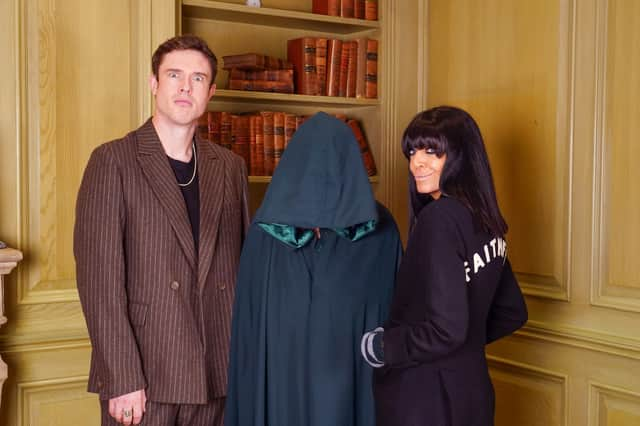
The secret to enjoying The Traitors is to revel in both its – and our own – ridiculousness. Despite his enormous faux-pas, Grant certainly did. There was delightful absurdity in his enthusiastic admission he was a Traitor within minutes of being made one, with the subsequent impossibility of him backtracking convincingly.
But it broke a crucial reason for the show’s overall success. The genius of the formula is we – and we alone – are in on it with the Traitors, while the flailing Faithful have to scrabble in the dark.
Whether on their various madcap missions to contribute to the prize pot, or collaborate on which player to banish, they have to simultaneously keep in mind it’s just a game, but also take their role deadly seriously. As must the Traitors. They must hide their identities to the bitter end and relish their deceit.
READ MORE: Euan McColm: Andy Burnham has put John Swinney and SNP on back foot with devolution drive
Alongside the Richard E Grant debacle, therefore, the reluctance of recruited traitor, comedian James Acaster, to embrace his treachery to its fullest, has been the top reason for viewers’ grumbles. His refusal to take part in one of the Traitor’s open acts of sabotage during one of the missions was a real low-point. From the minute he was recruited, he’d struggled.
He admitted to fellow traitor, TV personality and Love Island presenter, Maya Jama, that he couldn’t stop thinking as a Faithful, and had promised himself he’d never lie on the game. His ‘problem’, he said, was he still wanted ‘to protect everyone.’
Jama – one of this year’s standout contestants – was visibly, understandably, frustrated. It’s a game! Some welcome relief came when they recruited King Kenny, a YouTube prankster turned successful influencer, who most of us oldies had never heard of. Along with Jama, he seemed to thoroughly enjoy himself. With devious charm, he threw himself into trying to cause the required levels of Traitor chaos.
READ MORE: Brian Cox and Shirley Manson among stateside Scots backing Democrats in US mid-term elections
He made a convincing Faithful, as did Acaster and Jama. A Traitor win thus started to feel inevitable. The companion show, The Traitors Uncloaked, where presenter Ed Gamble reveals who the Traitors are to the recently banished and murdered Faithful, thus became more entertaining in some ways than the main show.
As the series progressed, Acaster’s discomfort seemed to grow. Meanwhile, news stories about the comedian’s struggles with anxiety and panic attacks started to be published, with allegations he became distressed while filming.
That’s not entertaining at all. For fans of the comedian, it’s rather upsetting. Others – as Acaster should’ve predicted given he’s a performer – reacted as audiences tend to. The worst thing to reveal to those seeking entertainment is your heart not being in it. Whatever sympathies they may have, if you demonstrate you’d rather be anywhere else they tend to recoil.
To be fair: he wasn’t the only contestant for whom actually winning seemed to be an afterthought. Of the five comedians in the castle, only one – Joanne McNally – fully embraced the spirit of the game.
The others, particularly Rob Beckett, had a ‘take it or leave it’ attitude that twanged my ire a bit. Problems arise in taking the game too seriously, but also in not being fussed what happens either way.
Being on the biggest show on television can’t be a walk in the park. Most contestants attest afterwards to the high-pressure environment created by being under suspicion, aware one false move or unguarded statement might be their undoing.
But, we viewers demand to be entertained! What we love about The Traitors is the communal experience of watching – the rarity of a show that appeals across generations and class.
We pick our favourites – I was rooting for Maya and Kenny – and enjoy the silliness and drama. This year, becoming invested was undeniably harder.
The penultimate episode saw Acaster confess to being a Traitor at the roundtable – against the rules – making for an anti-climactic finale. It was melodramatic, the scene seemed suspiciously edited. He offered zero defence of himself or cover for his fellow traitors – quite the opposite.
Comedian Romesh Ranganathan and actor Sebastian ‘Bash’ Croft subsequently scooped the win for the Faithful. But, Acaster’s two fellow Traitors triumphing would’ve been better telly, had he not scuppered them. They’d played a stronger game, enthusiastically, in a series that was otherwise a tad lacklustre.
The BBC released a statement in response to the swirl of news stories about Acaster. Their ‘highest priority is always the safety and welfare of everyone taking part’, with ‘dedicated and experienced’ support for contestants.
Very good. But, next year, the BBC must remind celebrities – far more prone to self-absorption than on the civilian version of the show – of two cardinal rules. First, take it seriously enough, but not so much you forget the game. Second: please, dare to entertain your audience. Richard E Grant and James Acaster broke both rules badly, for different reasons: too much wild excitement and reckless abandonment of the required subterfuge, and the glum-making, dispiriting opposite.
Comments
Want to join the conversation? Please or to comment on this article.