
On the eve of the UK Budget, Scots want more than just promises
Scots want a UK Budget that stabilises lives, writes Susan Murray
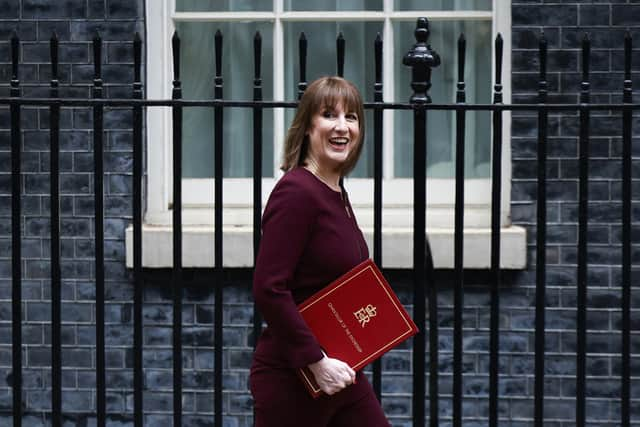
On the eve of the UK Budget, Westminster is gearing up for the usual theatre: last-minute briefings, nervous ministers making the morning rounds, and a Chancellor poised to unveil yet another plan to “restore stability” and “deliver for working people”.
But if the UK government wants to know what Scots actually want to hear on Wednesday, they should read the latest Understanding Scotland Economy Tracker very closely. It paints a picture of a country that is not merely cautious or concerned — but exhausted, anxious and rapidly losing confidence that any budget will change their fortunes.
The report shows that nearly three-quarters of Scots believe the economy will worsen in the next year. That is not a mild warning; it is a damning vote of no confidence in the economic direction of travel.

If the Budget does not address this pessimism head-on, the problem will not simply be economic — it will be political.
What’s driving this mood?
Start with the everyday realities facing households. Over half of Scots have cut non-essential spending, reduced leisure activities and cut their heating, even before winter bites. A quarter have lost sleep over money.
Nearly a third report impacts on their mental health. These aren’t abstract indicators — they are the emotional and psychological toll of a cost-of-living crisis that did not end when inflation peaked.
The Chancellor will undoubtedly point to signs of macro-economic improvement in this week’s Budget speech. But macro-recovery is meaningless if the micro-reality of people’s lives is still deteriorating.
And according to this report, almost half of Scots say their own financial position has worsened in the past year, with women, people in deprived areas and those with no formal qualifications hit hardest.
Any Budget claiming to “help working families” must start from this truth: for too many, austerity and the cost-of-living crisis never went away.
Then there’s the NHS — still the top public concern in Scotland, cited by almost half of respondents. While health is devolved, its pressures are not.
Inflation, energy costs and workforce migration all sit squarely in the UK government’s court. If Wednesday’s Budget ignores the system-wide funding pressures facing health services across the UK, it will confirm what many already suspect: that short-term political optics continue to trump long-term investment.
One of the most striking findings is the rise of immigration as a major public issue, sitting third on Scotland’s priority list — remarkable for a country long viewed as more welcoming than its neighbours.
This trend is not simply about culture or borders; it is deeply connected to economic insecurity. When people fear stagnating wages, limited job opportunities or overstretched public services, anxiety about immigration tends to grow. Any Budget that fails to address underlying economic vulnerabilities risks pouring fuel on this fire.
And that brings us to jobs. Only one in ten of Scots believe more job opportunities are coming, and a majority think they would need to retrain to secure new work.
Businesses and politicians obsessed with growth and improving productivity should be worried that one in five employees (22 per cent) have not received any training beyond their initial induction.
Investing in employee skills is not a luxury, but a prerequisite for competitiveness – a workforce that cannot adapt limits a company’s capacity to innovate, grow and survive.
Ultimately, this report offers a simple message to the Chancellor: Scots no longer want reassurance — they want results.
They want a Budget that doesn’t just stabilise markets, but stabilises lives. One that restores belief that the future can be better than the present.
- Susan Murray is the director of the David Hume Institute, an independent research institute based in Scotland.
Comments
Want to join the conversation? Please or to comment on this article.