
Readers' Letters: What Scottish Labour needs is a new Jimmy Reid
Candidates for Scottish Labour leadership lack what’s really needed, reckons reader
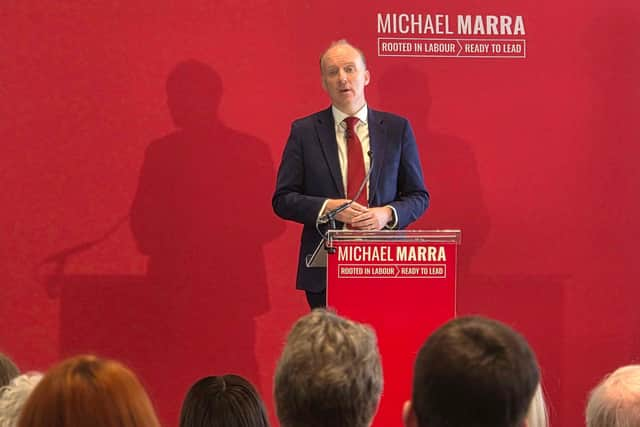
Michael Marra claims “Labour will rediscover its soul” under his leadership (24 August). I think it might be too late for that, regardless of who replaces Anas Sarwar as leader.
Whether Labour in Scotland can recover its long-lost soul would require them to know what they actually believe in. And where they stand on the political spectrum as they continue to occupy former Tory ground, while those Tories move ever further rightwards in an attempt to recapture votes lost to Reform UK.
The root of Labour's problems in Scotland go back to what the late Jimmy Reid (of Upper Clyde Shipbuilders work-in fame) once said: “When New Labour came to power, we got a right-wing Conservative government.”
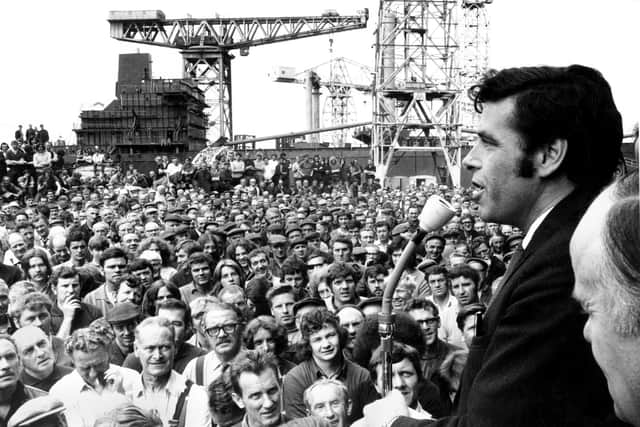

That was when Jimmy himself “realised that voting Labour wasn't in Scotland's interests any more!”.
When we look at the way successive Westminster governments – now supported wholeheartedly by Labour's Scottish branch office – have behaved towards Scotland; continuing with a hard Brexit and having (yet another) Secretary of State who behaves like a Viceroy instead of representing Scotland in Cabinet, Labour has been no better than the Tories. And nobody now in contention for leadership of “Scottish” Labour seems up for challenging that?
Perhaps Labour in Scotland would be better served if it had more folk like Jimmy Reid; and fewer of those who aspire to the House of Lords.
Ian Waugh, Dumfries, Dumfries and Galloway
Bad return
The Scottish National Investment Bank says it has invested £1.2 billion since it started and “supported more than 3,300 jobs across Scotland” in five years. That works out at over £363,000 per job – around ten times the average median salary in Scotland. Are we sure that's a good return for taxpayers?
J Lewis, Edinburgh
Having a laugh
Speaking at the Edinburgh Fringe, MSP Stephen Flynn said: “Very soon a third of the Calmac fleet will be brand new and therefore less likely to break down.”
Er, wasn't the Glen Sannox brand new when it entered service for a few days? Where is it now? Tied up at some quayside in Stornoway where it is being kept as a “standby vessel”. Almost £300 million for a standby vessel?
What is the daily expenditure to keep Glen Sannox and its crew in a state of readiness should the need arise?
It should come as no surprise that John Swinney had no qualms about spending a mere £40,000 on flights to America to watch the football. After all, it's only taxpayers’ money.
Bruce Proctor, Newtonhill, Stonehaven
Hybrid is healthy
Stephen Jardine (Perspective, 22 August) suggests public sector workers get back to the office. His plea comes as only 36 bothered to come into the Scottish government’s 2,200 capacity Victoria Quay office in Leith one day last week. It’s been a similar story in the public sector since Covid.
Angela Rayner was recently challenged as to why over 70 of her departmental colleagues had not been in an office for more than a year. She argued that “people work extremely hard” and not being present in the office was not “a productivity problem”, citing research showing working from home can boost productivity and reduce sickness. This is something Mr Jardine would challenge, given on average Scottish government staff are off sick 11 days a year.
Research suggests it depends on the individual. Some benefit from not having a long commute, reduced interruptions and improved concentration. Others from immediate interaction, better collaboration and being in a social environment for coaching and learning.
It also depends on the role. A call centre worker has different needs from a lawyer, for example, and the trend to come in midweek and eschew Fridays completely can cause capacity issues, so hybrid working needs to be carefully planned for each role type. Overall the model is becoming common, with employees asked to come in two or three days a week. This seems the best of both worlds but an arbitrary approach can have its flaws. The hybrid trend means roads are busier midweek but benefits shops in local centres.
Modern technology will ensure we never go back to presenteeism for a five-day week but home working all the time has its flaws. A hybrid approach, if managed carefully, is a healthy balance for better productivity while preserving choice.
Whether the government can manage this, however, is a moot point.
Neil Anderson, Edinburgh
Net zero notes
Clark Cross writes that the UK should abandon the net zero carbon reduction targets so some of that money can be contributed to the Disasters Emergency Committee (DEC) to respond to natural disasters including fires and floods (Letters, 22 August). He then cites unattributed figures which he hopes will be persuasive in this argument.
The response at COP was a failure to agree specifics, but with the exception of a few countries (notably the USA) most countries are pursuing a course of reducing carbon emissions and moving to renewables.
The £116 billion cost for net zero he cites is close to the Climate Change Committee’s (CCC) estimate of cost for the UK.
This is roughly £4bn per year or a tiny 0.2 per cent of GDP, virtually a rounding error. It is also a figure which ignores the benefits of setting net zero; the CCC estimate that every £1 spent on replacing fossil fuel usage will result in £2-£4 of other economic benefits.
Finally, it needs to be restated that it is uncontested (apart from among fossil fuel lobbyists and some fringe scientists) that the current heating of the planet is largely influenced by the burning of fossil fuels and that this heating is causing widespread and dramatic increases in extreme and damaging weather events, the very events to which DEC can be called to respond.
So in fact, not proceeding to achieve net zero will make the problems for DEC greater.
David Morris, Dalkeith, Midlothian
Write to The Scotsman
We welcome your thoughts – NO letters submitted elsewhere, please. Write to [email protected] including name, address and phone number – we won't print full details. Keep letters under 300 words, and in the body of the email – no attachments – and avoid 'Letters to the Editor/Readers’ Letters' or similar in your subject line. If referring to an article, include date, page number and heading. No poems.
Comments
Want to join the conversation? Please or to comment on this article.