
Readers’ letters: The case for renationalising UK’s electricity network is strong
A reader says state ownership would lead to lower bills and boost national security
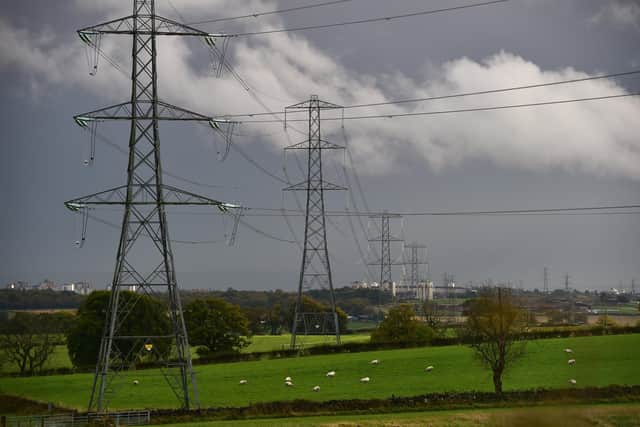
When Margaret Thatcher and John Major fully privatised the electricity network in 1990 and 1991 it was sold off to various private companies. Now the largest shareholder of the National Grid (formerly the Central Electricity Generation Board) is the American giant BlackRock. The total compensation package for National Grid CEO Zoë Yujnovich is worth some £7 million a year.
ScottishPower is owned by Spanish company Iberdrola, whose largest shareholder is the Qatar Investment Authority. The largest shareholder of SSE is BlackRock, again.
Since privatisation, electricity bills have steadily increased in real terms. Compared with France whose electricity generation and transmission network is state-owned, the UK's network is quite inefficient. While it is true that renewables, which now supply 60 per cent of electricity generation, have increased the cost of UK electricity by a third, I think that ownership may also be a factor. In France electricity prices are around 16.5p/kWh compared with ours at 28p/kWh. Not having to pay shareholders vast sums reduces bills and if you add in the advantages of owning a vital national security asset there's a strong case for renationalising the entire British generation and supply system.

William Loneskie, Lauder, Scottish Borders
Crushing blow
George Herraghty hits the nail on the head (Letters, 24 July) with his criticism of the crushing Scottish Power Renewables (SPR) plan to repower the Whitelee wind farm. For local residents who had hoped to live long enough to see the landscape returned to its former glory, this is devastating news.
SPR proposes replacing the current 110m and 140m turbines with a smaller number of colossal 250m structures. This will not only increase the visual impact for surrounding communities, but greatly multiply the distance at which they are visible.
Furthermore, the environmental claims behind this repowering are highly questionable. The existing turbine bases – the vast majority of which sit on peat up to 12 metres deep in some areas – will be left in the ground. Completely new, even bigger and deeper foundations will have to be constructed, destroying a crucial part of Europe’s largest carbon sinks.
Wildlife, which may have only just returned to the moor, will be driven from their homes once again, and larger blades will put even more species of bird at risk. It is difficult to see how the large-scale industrialisation of a moorland ecosystem could be construed as “saving the planet”.
Aileen Jackson, Scotland Against Spin, Uplawmoor, East Renfrewshire
Sarwar’s elevation
To paraphrase the latest BBC advert, what has Anas Sarwar ever done for Scotland? Brian Wilson provides no evidence of anything positive, instead praising Sarwar as a man of “calibre and political principles” (Perspective, 25 July). Would a man of such integrity choose to accept a seat in the House of Lords having previously suggesting it be scrapped? Sarwar rejected he would join the Lords as recently as May, declaring his commitment to “serving the great people of this country”. Scottish Labour in the event won just 17 seats out of 129, its lowest ever number at Holyrood.
Mr Wilson claimed defeat wasn’t Sarwar’s fault yet Sarwar had distanced himself from UK Labour by calling Keir Starmer to resign, something some political commentators argue has rewarded him with a ministerial post. Moreover, Sarwar’s YouGov polling was -40 in April, by far the lowest of all Scottish party leaders. Surely his leadership was a factor in Labour’s humiliation.
It’s hard not to disagree with Scottish Greens co-leader Gillian Mackay’s comment that Anas Sarwar is a “chancer”, given he has “gone from promising to scrap the House of Lords to taking a seat in it”. Brian Wilson disagrees, suggesting a second chamber here. Instead of a costly “wee Scottish senate”, start by rectifying the existing election system so seats reflect vote share.
Governing through consensus is what the parliament was meant to achieve. At least Scottish Labour has an opportunity to elect a leader that really does want to serve the great people of Scotland.
Neil Anderson, Edinburgh
Second chamber
Brian Wilson suggests that a second chamber for Holyrood would be a good idea. Really? It would seem that there is not enough talent for the existing one, so what would another one be like? Politicians will love the idea but this could be a disaster.
William Ballantine, Bo’ness, West Lothian
Fighting fires
Last Tuesday the smell of burning from Glenmore reached into the Angus glens. So bad, the fire brigade were called. Speed at the very outset, as every firefighter knows, is the key to success. Years ago major culprits in runaway hill fires were farmers. Unlike gamekeepers who required small isolated patches, allowing grouse a short distance to run to cover, farmers wanted as large a skelp as possible of rank heather burned in order to encourage young palatable growth. Over the years I have attended several such runaway fires. The whole community was called out, with shovels if proper beaters were not available. In its early stages there is not generally the intensity or size of fire to make this the danger that we see hours or days later.
There is good (and pricey) training available, which I hope several of us here will collaborate on. But stopping a fire before it gets out of control is, I believe, the duty of every one of us. Of course there may be some risk, but are we all too stupid or lazy now to assess that for ourselves?
Hector Maclean, Kirriemuir, Angus
Write to The Scotsman
We welcome your thoughts – NO letters submitted elsewhere, please. Write to [email protected] including name, address and phone number – we won’t print full details. Keep letters under 300 words, and in the body of the email – no attachments – and avoid ‘Letters to the Editor/Readers’ Letters’ or similar in your subject line. If referring to an article, include date, page number and heading. No poems.
Comments
Want to join the conversation? Please or to comment on this article.