
Readers’ letters: Scottish Greens are right – it’s time to legalise drugs
A reader says the Scottish Greens’ new policy supporting the legalisation and regulations of drugs is the way forward
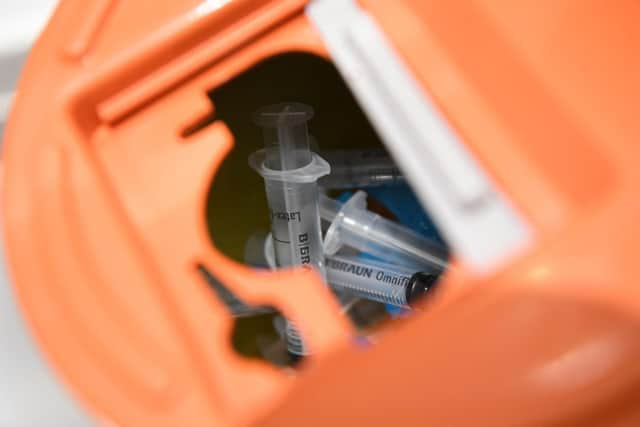
As a founder/early joiner, but then disaffected ex-member, of the Green Party I am delighted to be able to at least reconsider that desertion now that the Scottish Green Party is beginning to free itself from the shackles of irrelevant dogma by facing up to the truth that the most promising way to deal with the drug menace is to render it unprofitable. No profit? No pushers. No sales. No supply.
It is a crying shame that so many lives have and are still being destroyed because such an obvious fact of economic wisdom (supply struggling to match demand/demand being deliberately created by advertising and the unscrupulous and deceptive temptation of cheap entry costs) has been overlooked.
Commonsense regulation is essential, so to begin with the new system should apply only to registered users who turn up at drug rooms. This should encourage registration and accompanying health monitoring. There is even a case where addicts pay a small sum to help cover public expense. In parallel, the punishment of suppliers should increase as a further disincentive to the current open marketing.

It’s not an overnight remedy, but at least the light at the end of the addiction tunnel will no longer be an oncoming heavily-laden drug express.
Tim Flinn, Edinburgh
Covid lessons
Another winter approaches, the flu and Covid season, along with more newspaper headlines saying that the NHS and hospitals are “at breaking point” (your report, 20 October). As I recall, not very long ago, there was inquiry after inquiry into the Covid pandemic, which was so mismanaged by governments here and elsewhere that many thousands died unnecessarily, or contracted chronic health conditions, wrecking the lives not just of the victims but of their families too. The inevitable conclusion of all these inquiries was that this must not be allowed to happen again.
So, could the politicians in charge of our healthcare explain to me why, this autumn, Covid vaccinations are only to be made available to those who are over 75 or immuno-suppressed? Unlike in previous years, those not in these categories, even if they have major health issues such as respiratory problems, are refused vaccinations. If you feel that you are vulnerable and at serious risk if you do get Covid, your only option is to pay privately for the vaccine at a pharmacy. The current price for this is around £85.
What if your health is not good, and you fear Covid, but you are one of the many thousands of Scots living in poverty and cannot afford to pay for the vaccine? Simply this – when, as is likely, Covid sweeps through the population this winter, your chances of becoming seriously ill or dying are much higher, because of a political decision not to vaccinate you. Once again, the NHS and hospitals face being overwhelmed.
When the final toll of illness and deaths is counted next year, I don’t want to hear any of our political leaders say “lessons will be learned”. Lessons haven’t been learned yet, and it doesn’t look like they are going to be.
Julia H Scott, Roslin, Midlothian
Enemy of the state
According to political satire Yes Minister “our real enemies are the French” rather than then Soviet Russia. According to MI5 supremo Sir Ken MacCallum, “China is the biggest state-based threat to this country’s economic security”. Tik-Tok, is thought to be hacked by Chinese state security, and thousands of jobs here are at stake through Chinese investment.
This includes 1,500 making turbine blades near Inverness yet the Scottish Government seems committed to seeing through closer economic ties in a proposed £1.5 billion green energy investment (your report, 21 October). Maybe it feels it has no choice in order to meet its net zero commitments. Labour too remains committed to Chinese investment with deals being agreed at the UK-China economic summit in January. In all China is expected to pump £47bn into the UK energy industry and help create 100,000 jobs.
It seems China has the UK over a barrel, even its new embassy is reportedly situated over key communications infrastructure and the recently collapsed spy case revealed that Labour and the Tories were concerned state secrets from inside the government were being leaked to Chinese intelligence. That case was shelved through lack of evidence, but elsewhere UK interests, it seems, have been well and truly outfoxed by clever Chinese state actors.
While much has been made of Europe’s reliance on Russian energy, causing gas prices to spike, the UK should be more wary of relying on investment from a country our intelligence chief described as a daily national security threat. The next time I watch the Edinburgh to Beijing plane flying over my house I will wonder who is looking down on us.
Neil Anderson, Edinburgh
Double agent
Is Donald Trump a double agent? He speaks with Vladimir Putin, receives his instructions and comes back with a lame excuse why Volodymyr Zelensky can’t have Tomahawk missiles.
Trump needs to decide which side he’s on. His latest suggestion to Zelensky “that he may have to trade land for peace” is absolutely not an option for Ukraine. Too many Ukrainian soldiers and civilians have died to make any concessions to Putin, who is now initiating cyber and AI attacks in the United Kingdom and Europe, where war with Russia is now a major threat.
Trump absolutely must supply the Tomahawk long-range missile to Ukraine. No ifs. No buts. As Britain found in 1940: There are some wars you simply cannot walk away from. Mr Zelensky knows that.
Doug Morrison. Tenterden, Kent
Pension lies
It is hard to believe that Scottish nationalists still claim that HM Treasury would continue to pay their pensions in an independent Scotland, yet Ian Waugh (Letters, 20 October) does just that. It’s almost as if he doesn’t believe that his separate Scotland could pay its own pensions.
He quotes Alex Salmond’s 2013 White Paper which correctly says that “Future Scottish governments would be responsible for the pensions system in an independent Scotland” but he goes on to claim that “the UK would remain responsible for funding our state pension to the level earned by each of us by our past NI contributions”. Dream on.
Calling the state pension system “a Ponzi scheme” ignores the fact that, in 1909 when the state pension was introduced, for those aged 70 and over, there was no fund to pay for it. The principle of today’s workers paying for today’s pensions was established then and still persists. How, pray, should successive governments have built a “pension pot”? In the century of two world wars?
I would refer Mr Waugh to the Department of Work and Pensions’ response to a Freedom of Information request dated 3 March 2017: “The statement ‘If Scotland does become independent this will have no effect on your state pension you will continue to receive it just as you do at present [sic]’ was misleading and factually incorrect.” It refers the enquirer to the 2013 White Paper’s statement, above, and adds: “Therefore any questions about entitlements in an independent Scottish state should be directed to the Scottish government.”
Please will Scottish nationalists, in their perpetual quest for something for nothing, desist from telling lies about pensions?
Jill Stephenson, Edinburgh
Sound of silence
In his retort to Dr Richard Marsh (Letters, 20 October), Ian Waugh has much to say about why England would have to pay Scottish pensions in the event of separation.
However, it’s interesting that no answers are forthcoming to Dr Marsh’s other warnings about the catastrophic consequences of secession, including budget deficits, borrowing, share of national debt, capital flight, set-up costs for a new state, closure of military bases, the end of naval shipbuilding and bearing defence costs alone.
Since Mr Waugh mentions he’s an ex-serviceman, it is particularly surprising that no counter-arguments are offered to these last three points.
Then again, despite its highly strategic location, the Republic of Scotland (like Éire) would be a neutral friend to everyone in these uncertain times so wouldn’t really require much in the way of armed forces anyway, would it?
Martin O’Gorman, Edinburgh
Biq question
If, heaven forbid, the nationalists in Scotland ever managed to weary a far-in-the-future UK government into a referendum that the separatists won, there is one question I would like to see answered.
What would the separatists do should things get very tough – most likely if not certain – and Scotland is in economic meltdown, pensions and welfare cannot be paid and the people demand a referendum to return to the status quo of the UK? Hypothetical it may be, but it is a question that needs answering.
Alexander McKay, Edinburgh
Mapped out
In your report “Biggest change to Scottish air routes for 70 years” (20 October) you give information that changes to air routes are to be considered to improve efficiency. Your report states: “More efficient routing is possible because of technological improvements such as navigation.”
It is of great credit to air traffic controllers and pilots that they have to date been managing so well!
Graham Winchester, Edinburgh
Write to The Scotsman
We welcome your thoughts – NO letters submitted elsewhere, please. Write to [email protected] including name, address and phone number – we won’t print full details. Keep letters under 300 words, with no attachments, and avoid ‘Letters to the Editor/Readers’ Letters’ or similar in your subject line – be specific. If referring to an article, include date, page number and heading.
Comments
Want to join the conversation? Please or to comment on this article.