
Readers’ Letters: Is Kirk the author of its own misfortune?
A reader reckons the Kirk has gone downhill
For any community in Scotland to retain its identity and social cohesion it requires a parish church, a public library, an independent stockholding bookshop, a well-run traditional public house, and a family owned cafe.
The dire prospect of the dissolution of hundreds of parish churches throughout Scotland will curtail access for baptisms, marriage ceremonies, Holy Communion and funeral services. Why should parishioners be compelled to drive or rely on infrequent Sunday-timetable public transport to attend a church 20 miles away?
The closure of a “redundant” church (and, often, an adjoining graveyard) is not to be viewed in the same light as the closure of a bank branch. A church service viewed online by an individual does not offer up the same resonance as collective worship and praise in a church
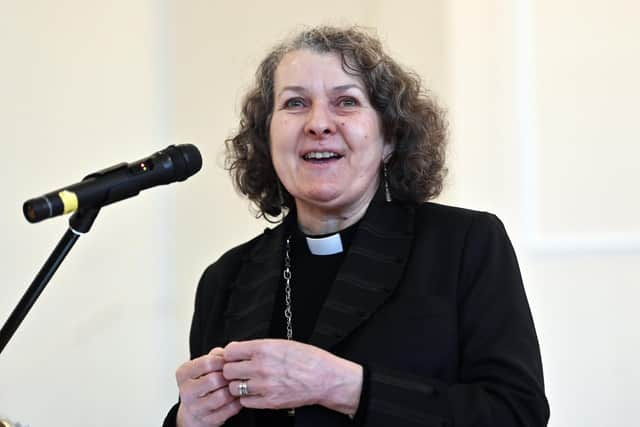

Perhaps the Church of Scotland, like other long-established denominations, over the decades has been the architect of its own misfortune. For many older members of congregations the gravitas of a church service has been diluted by anodyne liturgy, coffee-house-style seating and trite, cod-Celtic “songs" in place of CH3 (Church Hymnary, 3rd edn) hymns. Formal worship has been watered down to accommodate “inclusivity” and “diversity”.
In addition to Historic Environment Scotland, charities such as Scotland’s Churches Trust and Historic Churches Scotland are to be commended for the conservation expertise they offer. But the elephant in the room – or, rather, the vestry – must trumpet the question: which purchasers are going to take on the immense responsibility of maintaining these intricate, function-specific structures?
In the meantime, members of committees and sub-committees drafting sales prospectuses might re-acquaint themselves with such poignant poems as Philip Larkin’s “Church Going” or John Meade Falkner’s “The Last Church”. And recite them to each other during coffee-break.
Duncan McAra, Bishopbriggs, East Dunbartonshire
Ferry failings
The Scotsman reports that the Glen Rosa should have been finished eight years ago and is four times over budget (31 January). The Tories, Labour and the Liberals rightly criticise this but they miss the essential point. The reason the Glen Sannox and Glen Rosa were years late in build and four times over budget is quite simply the decision to use supposed “green” liquified natural gas (LNG) as a bi-fuel instead of tried and tested marine gas oil (MGO), which is similar to the oil used in domestic gas boilers and is low in particulates and other pollutants.
Unlike LNG this is a safe fuel to store; LNG has to be stored at -162C and it takes three times as long to refuel a ship with LNG as MGO. The fuel is imported from Qatar, over 7,000 nautical miles away, taking weeks, to the Isle of Grain on the Medway and then transported by road to Greenock. Transporting LNG by sea is incredibly complex and the vessels themselves are difficult to build, service and maintain, and of course they use diesel propulsion, as do the road tankers on their weekly 800-mile round trip.
The decision to use Finnish company Wartsila's complex bi-fuel diesels in the ferries made the construction of them on time impossible. For example, the engineers had to install 12,500 pipe sections and 186 miles of wiring in Glen Sannox. If the contracts for Glen Sannox and Glen Rosa had specified tried and tested marine diesels they would have been launched years ago. So who decided they should be powered by a supposed "environmentally friendly" fuel?
Calmac didn't want it. So who did? Who are the guilty men or women? I suspect this was a political decision by a cabal in the SNP government as part of their misguided policy of decarbonisation which makes things less efficient, often less reliable and hugely expensive. And as often happens with failed political projects, no-one is ever held accountable.
Just as the drive for net zero has resulted in our hills being plastered with wind farms, tracks, power lines and millions of tons of concrete, and too much of our fertile farmland with substations and dangerous battery yards in the childish claim of “saving the planet", so the islanders of the West coast have been let down by the deluded philosophy of trying to reduce Scotland's miniscule carbon footprint further. When will they ever learn?
William Loneskie, Oxton, Lauder, Berwickshire
Young need luck
Predictably, the proximity of an election has sent the SNP into freebie overdrive in their efforts to buy votes. How many times between now and May will we hear them bang on about baby boxes, tuition fees, the scrapped two-child benefit cap, free bus fares, breakfast clubs, free school meals, prescriptions, wraparound childcare and their “Child Poverty Delivery Plan”, to name but a few.
Much of this is designed to appeal to younger voters, with the cost to be borne in future by “those with the broadest shoulders” via increased taxation on anyone managing to earn a decent income.
Let’s hope that declining education standards under the SNP have not already eroded the reasoning powers of the young to the extent they can’t see the trap that awaits them. They may study hard, and through their own efforts and decisions land themselves a reasonably well-paid job. However, instead of enjoying advantages for their efforts they will suddenly realise they are now the ones with the broadest shoulders and will spend the rest of their lives paying for what they thought was free and wishing they hadn’t bothered.
This surely will disincentivise people from the effort and entrepreneurial risk taking that is required to build a prosperous country.
Mark Openshaw, Cults, Aberdeen
Time for unity
Only recently, in non-committal speeches, have the Prime Minister and Chancellor suggested that Brexit “may have harmed” the British economy. Well hello!
Yet with Labour and Tory sticking to their forlorn mantra that, eventually, Brexit will prove to be good for the UK, there is little the devolved Celtic countries can do within this broken Union.
However, with unity of purpose the Scottish, Welsh and Northern Irish May elections will prove a vital factor in unifying the SNP and all Yes campaign groups for independence, along with Plaid Cymru and Sinn Fein, for the future happiness and success of all their people.
Grant Frazer, Newtonmore, Highland
Who lied?
It’s a bit much when a Scottish nationalist accuses others of telling “lies”, given that the entire separatist project is based on lies – about the past, present and future. Peter Ovenstone (Letters, 31 January) goes for broke, accusing pro-UK politicians of telling lies in 2014. He doesn’t detail these alleged lies, beyond talking about promises of “change”. Perhaps Mr Ovenstone missed the activity after the referendum vote, in the form of the Smith Commission and the Scotland Act 2016. These brought change, and not for the better, particularly with the devolution to Holyrood of new social security powers and the Scottish rate of income tax which penalises even modest-earning Scots compared with their UK cousins.
He doubtless would add the alleged promise of a No vote keeping Scotland within the EU indefinitely, a standard separatist lie. In 2014 we all knew prime minister David Cameron had pledged, in January 2013, that, if he won the 2015 election, he would hold a Brexit vote by the end of 2017. That was in the public domain, yet separatists still lie about it.
And what separatists do not acknowledge is that a victory for secession would have taken Scotland out of the EU when it left the UK. The EU Commission told Holyrood that in writing on 20 March 2014.
All this faux grievance mongering derives from a separatist feeling that they should have won in 2014, that they were robbed. It really is time they admitted that Alex Salmond’s “It’ll be all right on the night” bluff scared voters off. The SNP had no practical plan for secession – something they still lack.
Jill Stephenson, Edinburgh
SNP success
David Millar’s “delusional” response (Letters, 31 January) to my letter confirmed the point expressed therein by again diverting from discussion on fixing broken Britain with another rant against the Scottish government and independence. With regard to his request for a response to points made within that rant, Mr Millar might consider the following.
Contrary to his claim, significant projects such as the Queensferry Crossing have been delivered on time and within budget by the Scottish government, and without the cronyism, fraud and huge scale of wasted public funds associated with UK government projects such as PPE Procurement, Covid Test/Trace and HS2.
To my knowledge there are no FOI requests of the Scottish government that have been outstanding as long as the request of the UK government to reveal the results of its pre-referendum polling, which revelation is still being refused, despite court orders, after more than a decade.
If the SNP is “utterly incompetent”, as Mr Millar claims, what does that say about Tory and Labour governance from London and Cardiff, given that most public services, while struggling, are functioning better in Scotland than in the rest of the UK?
Perhaps not all political parties in the UK are incompetent but the current system of government is actually broken and we do need to make a “fresh start”, not take another “change in direction”?
Stan Grodynski, Longniddry, East Lothian
Write to The Scotsman
We welcome your thoughts – NO letters submitted elsewhere, please. Write to [email protected] including name, address and phone number – we won't print full details. Keep letters under 300 words, with no attachments, and avoid 'Letters to the Editor/Readers’ Letters' or similar in your subject line – be specific. If referring to an article, include date, page number and heading. And please do ensure any names mentioned are correct.
Comments
Want to join the conversation? Please or to comment on this article.