
Readers' Letters: Inflation is rising, and interest rates will be next
A reader says the economic news is grim, and the new cohort of MSPs will be able to do little or nothing to help
According to figures just released by the Energy and Climate Intelligence Unit, food inflation post-Covid is expected to have increased by 50 per cent this year, as we face yet another inflationary cycle, courtesy of the Gulf war.
Imported energy price increases affect everyone; higher energy prices will be passed on by businesses to consumers, (around 80 per cent of businesses practice cost-plus pricing); workers and employees may be expected to push for above-inflation wage increases to protect falling living standards; in turn, businesses will pass on any increased labour and employment costs to hard-pressed customers.
This familiar merry-go-round can easily run for 18 months, or more. Why so? Cost-price adjustments are “sticky” – to use the economic jargon (i.e. what goes up seldom comes down and may do so only slowly, if at all). While a one-off energy price shock is the initial stimulus, it’s the secondary knock-on effects that carry the risk of “embedding inflation”. And embedded inflation above 2 per cent is the great fear of the Bank of England.
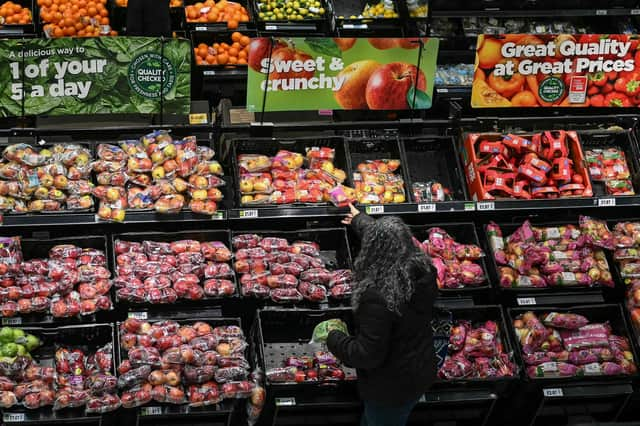

The BoE is expecting inflation to rise this year – possibly reaching a peak of 6 per cent under a worst-case scenario. The base rate, however, remains unchanged for the moment. But the reductions forecast earlier this year have now evaporated in the smoke and dust of the Gulf war. Unsurprisingly, the general cost of borrowing, the cost of mortgages, and the cost of borrowing for a government already heavily indebted – are now all on an upward trajectory.
The pinch everyone’s feeling is set to intensify. This may be good for the sale of worry-beads, but it could bring a nation – already bent double under the accumulated strain of the cost-of-living crisis – further to its knees. Unfortunately, this week’s Holyrood elections will do little or nothing to change this sorry picture.
Ewen Peters, Newton Mearns, East Renfrewshire
The scunner factor
Much is made of the ‘scunner factor’ in Scottish politics in 2026. This, however, isn’t entirely new. We are routinely told that the 1997 devolution vote showed Scots’ enthusiasm for it. After all, 74 per cent voted for devolution – about three-quarters of those who actually bothered to vote. Only 60 per cent of those entitled to vote, while 2 in 5, or 1.6 million, did not.
In the Holyrood elections of 1999, 2003, 2007 and 2011, the turnout was even lower than in 1997, and all the others were lower than the 58 per cent reached in 1999. In 2003, the turnout was a mere 49 per cent, but then it rose to the dizzy heights of 56 per cent in 2016. In the 2011 alleged ‘landslide’ win for the SNP, only 50 per cent stirred themselves to vote. The SNP won 45 per cent of the vote on a 50 per cent turnout. In any other circumstance, that would be called a ‘mandate’ for nothing.
Perhaps there has been a change, with the 2021 election enticing 63 per cent to vote. The SNP won 44 per cent of the vote. Turnout at general elections had been higher, at 68 per cent in Scotland in 2019, but then only 59 per cent in 2024.
Up to 1997, the UK turnout was at least 70 per cent in general elections. Now, evidently, many would agree with the title of Ken Livingstone’s 1988 book: If Voting Changed Anything, They’d Abolish It. Political analysts tell us that the 2026 election will result in a low turnout. We have a few days left to wait to find out how scunnered people really are.
Jill Stephenson, Edinburgh
Apathy reigns
Christine Jardine MP talks at length in her article (Scotsman, 4 May) about voter apathy. Yet her party has been sending me letters and stuffing leaflets through my letterbox almost exclusively trashing the present government and telling me who not to vote for. As for solutions to all the present ills in the country, there is scarcely a word. This attitude is replicated by other parties, although I think the Lib Dems are the worst.
There, in a nutshell, is the clear reason for the voter apathy she rails against. Negativity breeds apathy. As no-one is prepared to reveal what their party would do in office, the electorate responds by staying at home and wishing a plague on all their houses!
Brian Bannatyne-Scott, Edinburgh
Shattered dream
When I was a young recently qualified solicitor in the 1960s the annual report of the Law Society of Scotland always concluded with a comment from the Society’s president that as in previous reports, owing to pressure of time on the (Westminster) government it had not been possible to introduce legislation reforming the law on succession to deceased persons.
When some years later the opportunity was presented for Scotland to have its own parliament I voted for it because I thought at that long last Scotland was going to get a fair crack of the whip to pass its own legislation.
Instead we have ended up with some worthwhile legislation but a lot more half-baked legislation that has not been properly thought through and has ended up with court cases trying to make some sense of it.
Let us hope that the new government we are about to elect will be an improvement on its most recent predecessor (not that this will take much doing).
David Elder, Haddington, East Lothian
Target practice
I appreciate that with an election looming, articles and interviews with the First Minister are part and parcel of the coverage. However I’m getting fed up seeing pictures of John “lecturing hands” Swinney jumping out at me, sometimes twice in the one edition.
Please save us from this overkill or I can see me cutting them out and reaching for my darts.
Fred Chrystal, Haddington, East Lothian
Good example
In what has been a tortuous set of elections, thank you Reform UK’s Zia Yusuf for the radical suggestion that areas voting for the Green Party should get all the migrant detention centres they so desire put into their council wards and parliamentary constituencies.
The unbridled meltdown that followed was a joy to behold, particular from Zak Polanski’s deputy Rachel Millward, spouting specious cultural enrichment platitudes whilst hypocritically opposing the proposed camp in her leafy Crowborough backyard.
Granted, it’s an old idea that those keen on contentious policies should set a practical example (Health Minister Enoch Powell famously bounced down Belgravia on a pogo stick on January 23, 1962 to quash attempts to ban the popular child’s toy on “safety” grounds), and governing parties have long been guilty of dumping unpleasantries in the safe seats of rivals, but a wilfully frivolous electorate is long overdue getting exactly what it votes for – good and hard!
Mark Boyle, Johnstone, Renfrewshire
The write stuff?
As the election looms and along with it the possibility of another referendum on Scottish independence, I am reminded of what three famous Scottish writers had to say on the matter…
“There has been in England a gradual and progressive system of assuming the management of affairs entirely and exclusively proper to Scotland as if we were totally unworthy of having the management of our own affairs.” (Sir Walter Scott)
“I have often said to myself what are the boasted advantages which my country reaps from a certain Union that counterbalance the annihilation of her Independence, and even her very name!” (Robert Burns)
“Putting a case against independence is contrary to nature. Most of the world’s peoples belong to independent nations, and I know of none of them clamouring to give up that independence. Most of them literally fought to retain it, or, where it had been temporarily lost, recover it.” (Hugh MacDiarmid)
Food for thought.
Gordon Wright, Edinburgh
End licence fee
A female spectator was ejected from the Crucible Theatre after jumping over the barrier and shouting in protest against the television licence during the World Championship final between Shaun Murphy and Wu Yize.
The BBC licence fee is an outdated, regressive levy that must be abolished.
In a modern media landscape dominated by choice, forcing households to pay £180 annually for services they may not use is inherently unfair. The current model acts as a “poll tax”, hitting the poorest families hardest, yet the BBC has admitted that “irreversible” trends mean it will not survive without a major overhaul as fewer people pay.
Furthermore, the threat of criminal prosecution over this fee is draconian, having disproportionately affected women.
As streaming services like Netflix provide tailored content, the BBC should switch to a subscription or voluntary model, allowing it to serve viewers who value its output, rather than coercing payment from those who do not.
The BBC must become accountable to its users, not to a state-mandated fee.
Doug Clark, Currie
Antisemitism
Prime minister Starmer was right to assert that any attempt to stir up hatred and division in the UK will not be tolerated.
The resurgence of anti-Jewish attacks on our streets is worrying and malign.
The reprehensible policies of the Israeli government that manifested in genocide and ethnic cleansing in Gaza in recent times should not be conflated with Jews, the overwhelming majority of them are noble champions of Palestinians’ inaliebable rights to freedom, sovereignty and independence.
If the Holocaust has taught us anything enlightening, it is that demonstrating stamina and resolve in the face of adversity is not only the right thing to do but the most effective way to defeat terror wherever and whenever it rears its grotesque head.
Dr Munjed Farid Al Qutob, London
Comments
Want to join the conversation? Please or to comment on this article.