
Readers' Letters: How about an unwanted visitor levy in the Highlands?
The arrival of the visitor levy has inspired a reader who’s sick of something in the air...
So, SNP Highland Council think we need a visitor levy?
As a lifelong local resident, I most definitely do not want an extra tax to holiday in my own country. Here’s a much better idea – could we have an “unwanted visitor levy”?
The wind industry has routinely parked thousands of their giant, infernal machines, permanently, on our cherished landscapes almost always against the express wishes of local communities without paying a penny. In fact, since 2002 the Subsidy Clock shows the public have unwittingly forked out a staggering £228 billion in green levies, so far, to encourage them to do so. This is, incomprehensibly, supported by our idiotic politicians!
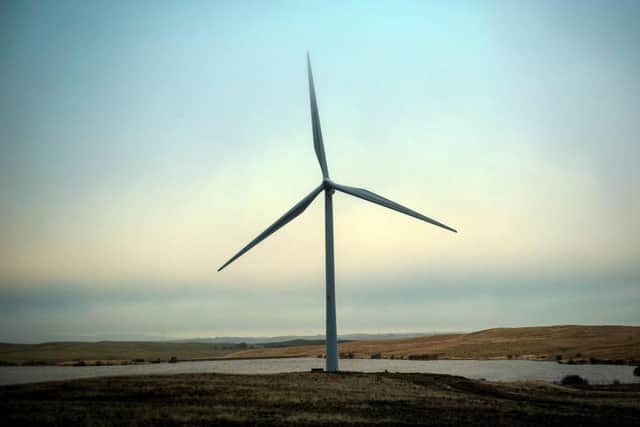

The wind industry then has the cheek to bribe us with a pittance in so-called community benefits comprising a tiny, tiny fraction of our very own cash extorted from our energy bills, and expects us to be grateful!
What exactly are the “community benefits” of the highest electricity bills in the world? Isn’t it time these unwanted multinational visitors paid their fair share?
Just think how those extra billions could improve our facilities and infrastructure. They could be used to prioritise pothole repair, road improvements and essential services like toilets, car parks, campsites, and so on.
Let’s have an unwanted visitor levy!
George Herraghty, Lhanbryde, Moray
Democracy swerve
With Edinburgh’s tourist influx currently at its zenith it seems appropriate to consider what we wish for our future.
Our city centre maintains a healthy resident community but few among us would disagree with the commonly held view that the city is already over-touristed. Yet still more hotels are under construction and to the dismay of the vast number of objectors, the Scottish government has granted permission for over 500 backpackers to be accommodated in pod-style accommodation in the former office buildings at 14-17 Atholl Crescent.
By any standards this is a hostel in nature yet the planning reporter deemed this a hotel despite, taking just one example, the provision of token lounge/bar/catering provisions being clearly inadequate for the potential occupancy. One is left with the impression that the government thinks it knows what’s better for our city than the Council – the application had not reached Edinburgh’s planning committee – and residents themselves.
Scotland has been shockingly remiss in introducing a tourist accommodation tax but if I have any optimism for the city’s future, and retention of a strong resident community, then anticipation of the issue is key, and funds raised must be applied solely to address the embarrassingly abject state of our streets/pavements, littering and refuse arrangements
Mike Dunsmore, Edinburgh
Home front
Prime Minister Andy Burnham says the UK is standing with Ukraine 100 per cent – and presumably will do so for Keir Starmer's 100-year partnership treaty – to say nothing of the billions in British taxpayers’ money flowing in a steady stream to Kiev. Burnham has now spent more time talking to Zelensky than to the three First Ministers of the devolved nations put together. So much for his much-trailed commitment to devolution.
He should stop meddling in foreign wars and concentrate on the very serious problems the UK faces at home. If the UK's interest payments to foreign debtors were classified as a government department it would rank second as the most costly. The UK's economic indicators are flashing red.
Not only that, but numerous economists are predicting a crash similar to that of 2008. But this time I don't see anyone in Burnham's government of the stature of Alistair Darling or Gordon Brown who could respond as they did to protect our economy from disaster.
William Loneskie, Oxton, Lauder, Scottish Borders
Energy squeeze
The latest figures from UK Energy show customer debt now exceeds £6,000 million – yes £6 billion – which will be recovered from the customers who do pay their bills. It equates to £50 per year per paying customer. As the average outstanding debt is £1,800 it takes 36 paying customers to cover the cost of each person who does not pay their bill.
It is right that we help those genuinely in need, but anecdotally there are many who could pay but choose not to as there no consequences of not paying. If the UK government wants social tariffs, the cost of these should surely be borne by general taxation, not by a supplement on customers who do pay their bills, and if customers are seriously in debt, is it not time to put in pre-payment meters and have the benefits system providing top-ups for those in genuine need? This would ensure those who need it get help while stopping abuse of the system by those who could pay but choose not to.
Similarly with water charges, paying customers are increasingly funding lower bills for social tariffs when these, too, should be borne by the taxpayer rather than bill-paying customers. Scottish Water estimates the “subsidy” paid for by those pay their water bills is seven times as much as the subsidy given to customers in England who need help. Scottish Water needs to explain that difference.
Slowly but surely, those of us who do pay are being squeezed, but nobody seems to care. Funding these subsidies from general taxation would at least spread the costs more widely.
Brian Barbour, Haddington, East Lothian
Soul of Scotland
Following the recent untimely death of Irish singer Glen Hansard, I took the opportunity to watch the brilliant 1991 film The Commitments in which he played the guitar and sang as Outspan Foster. I was therefore delighted to see the headline in The Scotsman on 24 August stating “Labour will rediscover soul under my leadership says Marra”. As Joey the Lips said to Jimmy Rabbitte in the film; “Soul is the people’s music. Ordinary people making music for ordinary people. Simple music. Any brother can play it… Soul is democratic, Jimmy. Anyone with a bin lid can play it. It’s the people’s music.”
I’m not sure what the opposite of “soul” is in Scottish politics, but it feels like we’ve been living through it for most of this century. “Soul’ would definitely get my vote!
Paul Sewell, Peebles, Scottish Borders
Auxiliary aid
I have expressed concern previously on these pages about the lack of Civil Defence in Britain. With the sabre rattling in Eastern Europe getting louder, now is the time to act.
Furthermore, the Chief Fire Officer for Scotland’s Fire and Rescue Service has called for immediate action to assist in tackling large incidents such as the current spate of wildfires. A major part of the answer would be to reinstate the Auxiliary Fire Service (AFS), which was abandoned in March 1968. As a former member of that force, I can speak at first hand that we were given first-class training in tackling all types of incidents. However, the main purpose of the AFS was to move vast quantities of uncontaminated water to areas which had been subjected to nuclear blast. The “Green goddesses” used by the military during various firemen’s strikes were built for that purpose. Equipment also included five-inch piping which could be run for literally hundreds of miles, portable dams to hold water and even an inflatable raft with portable pumps on board, which could go into deep water and pump water ashore.
Had the AFS been kept on, after the disbandment of the Civil Defence, there would be a force of volunteers, trained and ready to help in tackling wildfires (in our day the call was to “whins alight on the Braid Hills”). What was referred to as a Mobile Column could be sent from the lowlands to the affected areas, with the specialist equipment described above, which would have added immensely to the equipment carried on modern appliance. There would also the trained personnel on hand to operate it and to assist the regular and retained firefighters.
As Civil Defence is a Westminster responsibility, the AFS would be a national force. This could have assisted in the recent incidents south of the Border.
J Lindsay Walls, Edinburgh
Dog days
I warmed to The Scotsman’s account of the rather fascinating story from Bernera of the American resident there suing the local charity running a cafe which won't allow her dog inside (“Island charity sued by daughter of Oscar-nominated actress launches fundraiser to 'save' centre”, 25 August). It's not just a dog, apparently, it’s some kind of “support dog”.
The important part of the story is not the basic dispute, but the fact that the American dog lover not only sued, but got legal aid to do so. It is like something out of an Ealing comedy.
I turned to the Times to see what they made of the story, which will probably run and run. They went for all that was trivial in the issue, backing dogs and dog-lovers, barely mentioning the plight of the charity and the legal complexities. The Scotsman won this one hands down.
Crawford Mackie, Edinburgh
Old name rules
In the Picture Gallery of 26 August, the writer of the accompanying words corrected himself over the name of the hotel.
Let’s understand that until the Edinburgh population is only comprised of those born after the North British Hotel was renamed, the Balmoral Hotel will be known by its old name.
Charles Lowson, Fareham, Hants
Write to The Scotsman
We welcome your thoughts – NO letters submitted elsewhere, please. Write to [email protected] including name, address and phone number – we won't print full details. Keep letters under 300 words, and in the body of the email – no attachments – and avoid 'Letters to the Editor/Readers’ Letters' or similar in your subject line. If referring to an article, include date, page number and heading. No poems.
Comments
Want to join the conversation? Please or to comment on this article.