
Readers' Letters: Greens south of the Border are the future of UK politics
The rising force in UK politics isn’t Reform, says reader
We are witnessing a seismic shift in UK politics before our very eyes. The collapse of the Conservatives, once described as the most successful political party in history, may well be followed by the demise of Labour.
Elected by a landslide just over a year ago, Labour's steady drift to the right has seen their popularity tumble. The political agenda has been set by Reform UK, meekly followed by both the Tories and Labour, not least in immigration.
The new kid on the block is the Green Party of England and Wales, under the newly appointed leadership of charismatic Zack Polanski. At a time when the right is overcrowded with three parties, the Conservatives, Reform UK and now Labour, it's refreshing to have a genuine party of the left.
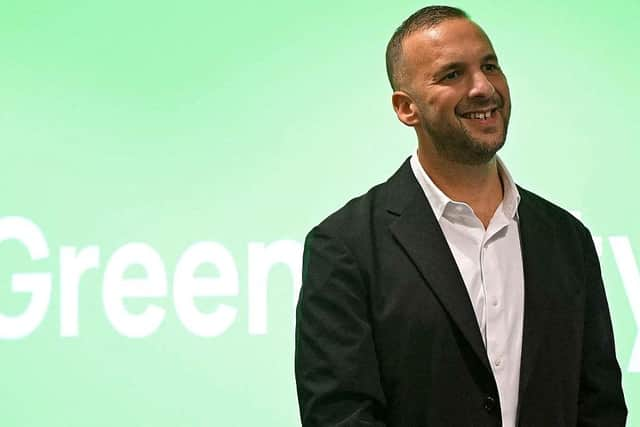

The next election may well be contested by Reform UK and the Greens, the latter having a compassionate and realistic view on immigration, free from all scaremongering. Both of the so-called major parties seem tired and jaded, showing their age. There's a freshness to both the Green Party and sadly, even tragically, Reform UK, which appeal to the better and worse side of human nature. May the better side win!
Ian Petrie, Edinburgh
Odd environment
The voting figures for the Scottish Green Party leadership election suggest that almost 90 per cent of their declared membership did not vote for any of the candidates on offer.
Such record levels of political apathy are simply off the scale, and particularly difficult to explain when that party is supposedly full of young, driven activists, all supposedly at war with one another. You would think they would be motivated, but apparently not. Perhaps if they were discussing environmental policies, people would be more interested, but, looking in from the outside, it is very difficult to know what that particular party is actually about any more.
Victor Clements, Aberfeldy, Perth and Kinross
Scorched earth
Neil McKinnon laments the fact that the new leader of the Scottish Greens, Ross Greer, described the Scottish landscape as “desolate and sterile” (Letters, 2 September). To finally have a leader of a political party state the obvious, that one of the most nature-depleted countries in the world doesn't look too great, is in fact very positive.
Some of Scotland’s bare and barren hills may well be “world renowned and magnificent” but try to imagine how they would look covered in a variety of fauna, with birds in sky and fish in the rivers. The most tragic aspect of wind farms is the rewarding of those who, along with their ancestors, made their hills so windswept and repellent.
It sounds like the Scottish Greens are back on track; another refreshing step would be for them to care less about who gets to poo in which toilet and more about where that poo goes.
Ben Douglas, Galashiels, Scottish Borders
Empty promises
Mairi McAllan, the SNP Housing Secretary, has pledged to build approximately 36,000 affordable homes in the next five years (your report, 2 September). Homeless applications have risen from (ironically) 36,000 in 2014 to just short of 41,000 in 2023. The trend is going up – 4 per cent between 2022 and 2023 – and is unlikely to drop, so how high will this figure be by 2030?
Of course, we’re in a pre-election phase so we can expect pie-in-the-sky pledges. Ms McAllan clearly hopes we’ve forgotten the pledge given in the 2021 Scottish Parliament election that they would delivery 110,000 affordable homes by 2032, an average of 10,000 a year. To 2023, the Scottish Government could only report on 11,578 completions, well below the progress required.
As we have come to expect from the SNP, it’s broken pledges and the vulnerable in our society being let down.
Jane Lax, Aberlour, Speyside
Target gangs
Your editorial of 3 September rightly advocates that, to reduce drugs deaths, Scotland needs a combination of safer drug consumption facilities, treatment, rehab and “anything else at all that might help”. What would certainly help is stopping the drug pushers you describe as “truly evil drug gangs”.
My latest search for “county lines” on www.scotland.police.uk brought up their July 2025 press release: “Sixth man sentenced in Edinburgh for involvement in county lines drug network”. He was sentenced as part of the cross-border Operation Galvanize, in which “officers targeted addresses in Edinburgh and London in a county lines operation”.
There should be more press and media coverage of drug gangs, which would help UK police forces, alert members of the public to report suspicious activity to Police Scotland and the British Transport Police, and assist in the jailing of drug gangs.
E Campbell, Newton Mearns, East Renfrewshire
Who’s to blame?
I wonder if Gerald Edwards (Letters, 2 September) read the headline on the preceding page, “Gaza strikes kill at least 31 as Israel accused of genocide”. This from The International Association of Genocide Scholars, a worldwide group including Holocaust experts, joining Israeli groups in condemnation of Israeli atrocities.
It’s not a case of Holyrood backing “those countries attending the conference in China” or “Anti-Western sentiment” or “left wingers here” that are on the wrong side of the argument, as Mr Edwards suggests.
It is he that is one of an increasingly tiny minority that believe Hamas and Iran are to blame for over 60,000 of deaths and over 160,000 injured in Gaza, not Israel or its arms supplier, the US.
Neil Anderson, Edinburgh
Not genocide
Lewis Finnie has one question, was the fire bombing of German cities during the Second World War a genocide? (Letters, 3 September) No it wasn't. But they were war crimes, widely regarded as in breach of international law, and acts which shamed the Allies.
In the more contemporaneous scenarios Mr Finnie is disingenuously trying to draw parallels with, his contention that the IDF are not targeting civilians is a) incorrect and; b) offensive. Even if you subscribe to the flat-out racism of the “all Gazans are terrorists” narratives, can we at least agree that the 50,000 children Unicef says have been killed or maimed are non-combatants? Or can we agree that the 105 journalists slain were non-combatants?
So no, the fire bombings weren’t a genocide. The Holocaust going on at the same time, wiping out six million Jews and a million others from the “wrong” political, ethnic, sexual or other form of characteristic not to the Nazis’ liking, was the genocide of that particular moment. Something which we were all rather hoping international law, co-operation and human decency would prevent happening again. No such luck.
If I did have one tip for Lewis Finnie it might be this: if the International Association of Genocide Scholars, Oxfam, Save the Children and a UN Special Committee all find that Israel’s warfare in Gaza is consistent with the characteristics of genocide, then perhaps I'd try to understand that I am on the wrong side of history here.
Peter Newman, Edderton, Highland
Yes and no
On oil and gas, I'd say Murdo Fraser is right, and wrong (Perspective, 3 September). Gas is a relatively clean transition fuel on the way to 100 per cent renewables (where our tidal potential is huge). But oil should be exploited sparingly due to the environmental cost of extraction, refining and combustion. Fortunately gas usually lies above oil in an anticline, so it can be tapped without much oil as a by-product.
George Morton, Rosyth, Fife
Dig for gas
Offshore Energies UK (OEU), a trade body representing the oil and gas industry, says there are more than two billion barrels of oil and gas in the North Sea, which would add up to £150 billion to the UK's economy (your report, 3 September). There are 200,000 UK jobs at risk with Energy Secretary Ed Miliband's ban on gas and oil exploration. Norway generates 99 per cent of its mainland electricity from renewables.
No, not wind turbines, not solar panels but from reliable hydropower plants. Norway has just made one of the biggest North Sea oil finds in a decade – 134 million barrels just 100 miles from Shetland. They will sell this to other countries. Contrast this with the UK where Ed Miliband has banned new fossil fuel licences and is making it extremely difficult for those with licences to start drilling. No wonder the UK is haemorrhaging workers and the economy is in freefall.
Meanwhile, most of the rest of the world is ignoring Net Zero as they drill and harvest oil and gas to drive their economies. Does "Drill, Baby, Drill” ring a bell?
Clark Cross, Linlithgow, West Lothian
Boiling row
Steuart Campbell is not entirely correct (Letters, 30 August). Many people who overfill their kettle throw out the excess water and use fresh water for their next cuppa. Also, as in most industrial processes, water is often used in making electricity; we need both.
John Birkett, St Andrews, Fife
Simmer down
Both John Birkett and Steuart Campbell (Letters, 2 September) should know it is better to put any remaining heated water in a flask to use later.
Martha Dickson, Edinburgh
Write to The Scotsman
We welcome your thoughts – NO letters submitted elsewhere, please. Write to [email protected] including name, address and phone number – we won't print full details. Keep letters under 300 words, with no attachments, and avoid 'Letters to the Editor/Readers’ Letters' or similar in your subject line – be specific. If referring to an article, include date, page number and heading.
Comments
Want to join the conversation? Please or to comment on this article.