
Readers' Letters: Burnham's big promises have a familiar ring
Readers react to Andy Burnham’s hopes and dreams for the UK
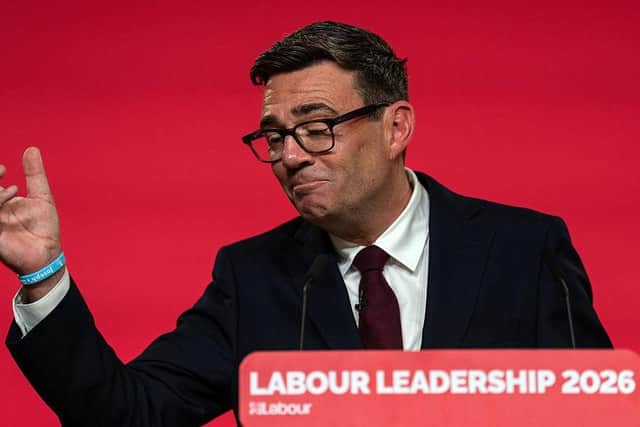
Reading the report of Andy Burnham’s address to the party faithful reminded me of 1947 when a new Labour administration came in on a programme of nationalisation and a promise of a new deal for the “working man”.
It all eventually collapsed to dust and ashes then and I wouldn’t be surprised if the same thing didn’t happen again.
S Beck, Edinburgh

Starmer 2.0?
I'll believe in – and welcome – Andy Burnham's plan for the UK – more drilling, a properly funded and organised National Care Service, council houses for the most deserving, hardworking young families and reform of welfare cost and administration, and focus on the truly deserving – when I see that the likes of Pat McFadden and John Healey get key jobs, and the likes of Bridget Phillipson and Lucy Powell lose theirs, and Ed Miliband is promoted to Governor General of the Chagos Islands.
Otherwise it's Starmer 2.0.
Allan Sutherland, Stonehaven, Aberdeenshire
Dream is dead
In spite of the late Alex Salmond's cry: “The dream will never die”, Scotland remains an integral part of the UK, as a majority of folks believe it should.
The incoming prime minister at Westminster, Andy Burnham, has made it quite clear there will be no second Scottish independence referendum during his watch.
Not that First Minister John Swinney will acknowledge that such a statement from the prime minister is acceptable; perhaps he should spend some of his leisure time studying the contents of the Scotland Acts?
Back in 2014 many people were somewhat surprised when prime minister David Cameron agreed to a referendum on Scottish independence; perhaps it was based on the fact that historically people with his surname had been prominent followers of the Jacobite cause.
However, let us well remember that 2,001,926 Scots voted against independence, resulting in Salmond resigning in a fit of pique.
Even if another referendum should ever be agreed to by the UK government, it is highly unlikely Swinney would sweep all before him in a glorious win for the Nats.
It just won’t happen, and it is high time that those still supporting the SNP realise it!
Robert I G Scott, Northfield, Ceres, Fife
First Pride...
A photograph of Nicola Sturgeon with a rainbow painted on her cheek brought home the sayings with which I, for one, was brought up.
Ms Sturgeon wore the rainbow flag while attending a “Pride” march in Glasgow on Saturday. However, for many of us, pride is the first of the seven deadly sins. Ms Sturgeon should also note that pride goes before a fall.
Andrew HN Gray, Edinburgh
Be responsible
John McLellan raises concerns about free speech (Perspective, 18 July), but it overlooks the most important aspect of the Heather Herbert incident. Herbert’s comments were cruel and must have been deeply distressing for close family and friends, but the deepest harm – and the pressure that led to the arrest – came from the media amplification.
Freedom of speech isn’t just a legal issue, it is a moral one. Responsibility is something we all –individuals and corporate entities – have to take seriously. In moments of fresh grief, choosing to amplify someone’s cruelty is not a neutral act; it compounds the suffering of those already in pain. It is a responsibility to think before you speak or, as in this case, post.
Judith Campbell, Portree, Isle of Skye, Highland
Use your voice
Every few years the same election debate returns: turnout is low, voters say there is too little choice, and many feel they had no influence over who stood on the ballot.
One question is rarely asked: who decided which candidates would stand for election in the first place?
The answer is simple: party members. I write this as a councillor, not to promote any one party.
Long before polling day, parties choose their candidates. Local members play a central role in deciding who represents them. If you have never joined a party, you have never had a say in that decision.
That matters more than it once did: party membership has collapsed.
Around 2.4 per cent of the Scottish electorate now belongs to a party, meaning a small number of people decide who appears on the ballot for everyone else. Staying out does not avoid that choice – it just means someone else makes it for you.
Selection also decides whether sitting councillors stand again. If members feel a representative no longer reflects their values, they can choose someone else – a check which most voters never get to exercise.
Whatever your politics, the most effective way to get better local representatives is to join the party closest to your values and take part in its selection process. That is where the choice gets made – long before anyone reaches for a ballot paper.
(Cllr) Liz Allan (SNP), North Berwick Coastal, East Lothian
Tickled pink
That Scots were so influential in the development of Argentina that we actually introduced the game of football there, and even founded the original National Argentinian Football League tickles me pink (Alex Orr, Letters 18 July).
But then I remembered my neighbour in 1960s Leith had previously been minister of St Andrew’s Kirk in Buenos Aires, which was established way back in 1887.
And now I discover that on 9 May 2008 The Scotsman reported “Long-lost Scots returned to Leith to re-trace their roots.”
(Rev) Jack Kellet, Innerleithen, Scottish Borders
Write to The Scotsman
We welcome your thoughts – NO letters submitted elsewhere, please. Write to [email protected] including name, address and phone number – we won't print full details. Keep letters under 300 words, and in the body of the email – no attachments – and avoid 'Letters to the Editor/Readers’ Letters' or similar in your subject line. If referring to an article, include date, page number and heading. No poems.
Comments
Want to join the conversation? Please or to comment on this article.