
Readers' letters: Abolish political parties to revitalise democracy
Readers suggest the party system is failing voters and the country
Political parties have evolved from democratic tools into rigid machines that prioritise power over people, turning governance into a toxic, perpetual campaign. Abolishing them in favour of individual candidates would revitalise democracy by forcing accountability back onto representatives rather than anonymous party platforms.
Currently, voters often select “colours” rather than qualified individuals, leading to a parliament of interchangeable units obedient to party whips rather than constituents. A party-less system, where candidates run on individual merit, breaks this gridlock and reduces partisan polarisation, fostering pragmatic solutions over ideological dogma. It removes the influence of corporate funding often funnelled through central party structures, allowing for a more diverse, transparent government.
Without the safety net of a party, representatives would need to innovate, speak their own minds, and build direct, trustworthy relationships with constituents to secure re-election. Shifting to a system of individual candidates removes the “package deal” of politics, enabling voters to hold representatives truly accountable for their specific actions rather than the failings of a collective, national party.

Doug Clark, Edinburgh
Stick a pin in it
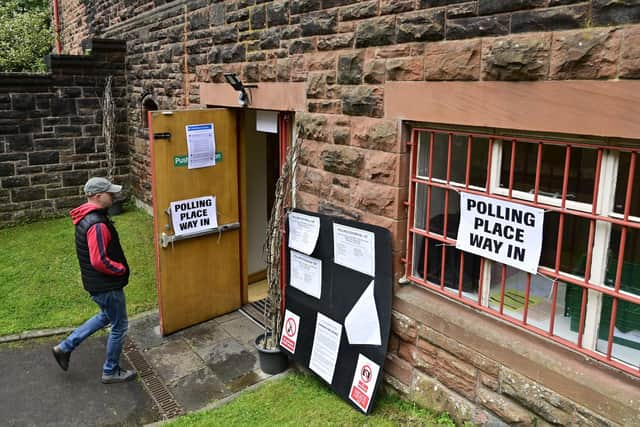
Like many of my neighbours, I’m in receipt of an election ballot paper containing some two dozen candidates/parties, most of whom I’ve absolutely no knowledge about.
If I am to exercise my democratic rights, then the only way open to me that’s equally fair to all contenders is to use a pin, thus invoking the Almighty’s assistance, knowledge and infinitely superior wisdom.
It is not lost on me that this situation is remarkably like one in ancient Athens. That caused them to abandon democracy in favour of sortition: the selection of MPs and councillors by qualified lot in much the same way as we’ve successfully been using juries for trials since forever. Sortition instantly removes all career MPs and political parties, by instead enlisting for a few years the services, common sense and decency of willing and able persons. Surely its time to distinguish between those who make the law and those who finally approve it as in, say, a referendum? The very fact that the present crowd dislikes sortition is certain proof of its benefits. Recommended.
Tim Flinn, Edinburgh
Looming farce
William Ballantine (Letters, 17 April), like millions of others, now regrets voting Brexit. Many Scots who voted SNP at the last Holyrood election regret voting for them if the polls are to be believed. Currently around 35 per cent are expected to vote SNP in the constituency vote and 30 per cent in the regional vote yet in 2021 the SNP vote share was 48 per cent and 40 per cent respectively. The SNP at 64 seats fell short of a majority but are expected to win 67 seats, according to polling experts, in May. Hundreds of thousands of former SNP voters are turning to other parties yet the SNP are set to form a majority this time. Is this democracy?
Adding an additional main party in the form of Reform and constituency boundary changes seem to have rendered the Holyrood Additional Member voting system a farce. If the polling is correct there will be millions of angry voters on 8 May, and a new SNP government could be as unpopular as the UK Labour government, both on a third of the vote.
There would be calls to ditch the Additional Member System for failing to provide a proportionate seat share to vote share. Maybe then the balancing system of regional MSPs would finally be ditched? Few show their face on election media and have a questionable mandate to serve. Failed Westminster candidates shouldn’t be allowed to get in through the back door to safe regions they have no connection to.
Neil Anderson, Edinburgh
Big mistake
The worst financial decision I ever made was to buy my family home in Scotland. I envisaged many happy holidays enjoying the fabulous scenery and friendship of the Borders country. But, no, the Scottish authorities decided I had to be punished for such greed with ever-increasing council taxes imposed on my wee but ‘n’ ben.
The policy, of course, is short-sighted as I spend in local shops and restaurants and employ local tradesmen for maintenance. That spending must now be cut so I can meet the ever-widening maw of the council.
Perhaps I should’ve gone to Specsavers before signing up to the land of my birth. Or, better, followed the lead of many London friends and invested in property in France or Spain where I could also spend my hard-earned money on local services.
Rodney Pinder, London
Deflating Swinney
You quote the First Minister as saying “inflation has come down, but prices have not” (17 April).
It is worrying to think that he may believe what he said. Reducing inflation (unless it goes negative) does not result in reduced prices. It simply means the rate of increase in price is reduced. His statement shows a worrying lack of financial understanding.
Assuming he well knows his statement in wrong, he must think it will be accepted by the bulk of the population. He obviously has a poor opinion of the population’s intelligence.
Philip Ewart, Edinburgh
Familiar faces
I was on the verge of cracking open the Saturday breakfast champagne as I’d managed to read The Scotsman without seeing a photograph of Alan Cumming or Brian Cox. Imagine my distress when I reached page 12 of the magazine to discover a (small, for once) photo of the thespians.
Alastair Carmichael, Tyninghame, East Lothian
Write to The Scotsman
We welcome your thoughts – NO letters submitted elsewhere, please. Write to [email protected] including name, address and phone number – we won't print full details. Keep letters under 300 words, and in the body of the email – no attachments – and avoid 'Letters to the Editor/Readers’ Letters' or similar in your subject line. If referring to an article, include date, page number and heading. No poems.
Comments
Want to join the conversation? Please or to comment on this article.