
How do you legally claim asylum in the UK? For most refugees, it's impossible
Asylum is a legal right, a human right, but without safe routes it is a hollow promise, writes Robina Qureshi. Ukrainians were welcomed; Palestinians — like so many others — are caught in a bureaucratic siege of red tape and bombardment.
How do you claim asylum in the UK? In theory it is simple: you arrive, you apply, and you are protected while your claim is assessed.
In practice there is no safe way to reach Britain. For most refugees, it is impossible.

The first barrier is entry. There is no visa designed for claiming asylum from abroad. You must be physically on UK soil, which means finding some other way to get here – a visitor visa, a student visa or an irregular journey. Only then can the right even be claimed.
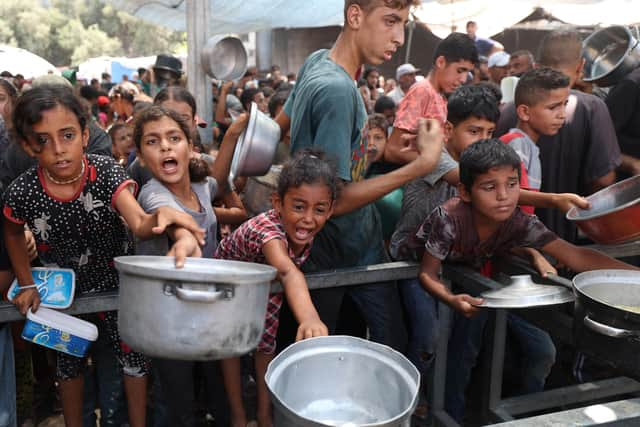
If you have written to your MP about creating a safe route for Palestinians trying to leave Gaza, they may mention using “existing routes”. In reality, there are none. To call them “existing routes” is to tell refugees: stay and die.
The only people offered safe routes are Ukrainians and Hong Kong BN(O) status holders. Afghan schemes once existed, but are now closed to new applicants. For everyone else, there is no legal way to travel here to claim asylum.
In 2024, nearly a million people migrated legally to the UK, mainly for work or study, while only around 37,000 arrived by small boats – a fraction of the total. The government calls irregular arrivals “illegal”, but the truth is unavoidable: to claim asylum you must already be in the UK, and no safe route has been created.
Our charity is supporting 75 Palestinians applying for family reunion or student visas, and trying to get biometrics deferred. Because of conflicting advice and Home Office procedures, it took us days in an emergency to decode how to request deferrals and prepare evidence. Even immigration lawyers have confessed they don’t know the new processes. The Home Secretary still gets the final say.
By contrast, over 200,000 Ukrainians were able to arrive in the UK without biometrics, with airline-funded free tickets and free onward travel in the UK, without the “national security” concerns that are used against Palestinians, who are left waiting in an active combat zone.
Palestinians have been killed trying to get here because the process is tortuous and slow, with no regard for the risk to life. It amounts to a bureaucratic siege. It leaves a bitter taste of double standards and deliberate neglect.
Once someone does reach the UK and claims asylum, they face the official process: an initial screening interview to register their details, followed by a substantive interview, often months or years later, to test their story. Try proving your case with a bombed-out home or a family scattered in exile, with patchy interpreters and limited legal aid.
While they wait, claimants are banned from working and survive on about £7 a day, or under £10 a week in hotels. For decades, governments have thrown billions at private contractors to provide accommodation instead of building homes for everyone who needs it, including refugees.
At the same time, they have lost billions in taxes by banning asylum seekers from working and contributing. Government policy doesn’t just damage refugees, it destabilises this country. Racism isn’t just immoral, it is self-destructive.
It is also obvious in who gets protection and who is left to die: white refugees are waved through, while brown and black refugees are trapped in red tape. Despite this, many claims do succeed: 48 per cent were granted at first decision in the year to June 2025, and more succeed on appeal.
This matters because asylum is not charity. It is a right rooted in the 1951 Refugee Convention, signed in the aftermath of the Holocaust.
Then, Jewish refugees had been turned away from safe countries and forced back into danger. The Convention was meant to ensure that never again would people be denied protection simply because they lacked papers or arrived the “wrong” way. If Ukrainians had no safe routes, they too would have been on boats.
People move: if governments refuse to create safe routes, human smugglers will step into the breach. For Ukrainians, the UK stripped away red tape so families could find safety.

For Palestinians under bombardment, the UK insists on paperwork that cannot be completed, interviews that cannot be attended, and borders that cannot be crossed.
The double standard is glaring. So how possible is it to claim asylum here?
Legally, the right exists. In practice, the UK’s system shuts the door. How do you leave a genocide? The answer, for most brown and black refugees, is: you can’t.
- Robina Qureshi is CEO of Positive Action in Housing, a refugee housing and human rights charity based in Glasgow, which pioneered Room for Refugees, the longest running refugee hosting programme in the UK.
Comments
Want to join the conversation? Please or to comment on this article.