
With 850 churches at risk, Scotland's sacred heritage faces a real crisis
Political parties must come up with a plan to avoid the loss of a large part of our religious and architectural history
In a speech largely focussed on immigration, Zia Yusuf, Reform UK’s spokesperson for home affairs, last month announced the development of policies to protect and preserve church buildings. The major feature was a legal restriction on churches being repurposed as places of worship of other religions, such as mosques. Automatically granting listed status to churches was also mentioned.
Action on the future of church buildings is urgently needed as their closure and sale is occurring across Scotland at a rate few realise. Reform’s suggestions apply to English planning law and would see churches removed from what’s called the “Learning and Non-Residential Institutions” designation and given their own category. As a result, a church would not be allowed to be adapted into a mosque or temple, nor could it become a museum or school, without planning approval.
Scotland’s churches are grouped under ‘Class 10’, along with even more types of buildings, including clinics and health centres, so applying or copying the proposed changes here would be an even bigger shift.

Religious intertwining
The conversion of churches into mosques, such as the Hagia Sophia in Istanbul, or mosques into churches, like the Mezquita-Catedral of Córdoba, has been part of the rivalrous intertwining of Christianity and Islam throughout the centuries.
Because these transitions have taken place at moments of conquest, and because religious buildings are seen as emblematic of the thoughts and values of whole civilizations, the conversion of churches into mosques or gurdwaras or temples is more neuralgic than renovation into flats or fitness studios (even when these require planning permission).
Sales of religious buildings have therefore often included restrictive covenants preventing their use as worship places for other faiths, although this policy has been relaxed by the Church of Scotland. While there have been only a few such conversions, there is a case to be made that restricting them will aid community integration and prevent flashpoints which extremists could exploit.
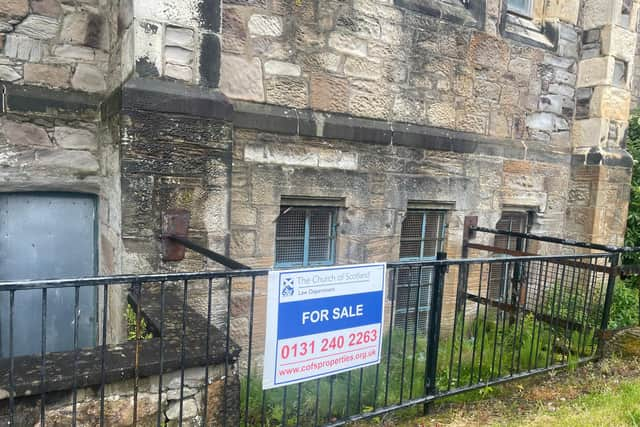
The real crisis, however, on which all parties especially in Scotland must formulate policy and the government must act, is the unprecedented rate of closure and sale of church property across the country. Our built environment is undergoing a major transformation, which has been the focus of the Sacred Landscapes Project I direct at the University of St Andrews. Long-term decline in both attendance and income has put the maintenance of numerous church buildings in conflict with other priorities and church bodies’ mission plans.

Listed churches at risk
The weight of maintaining Scotland’s historic buildings has fallen disproportionately on the Church of Scotland compared to other elements of civil society, and some retrenchment is necessary and inevitable. Nevertheless, current sales amount to a national crisis of heritage on scale alone.
The Community Ownership Support Service has found that, nationwide, there are approximately 850 churches with uncertain futures, of which 100 are A-listed and 389 are B-listed.
It is hard to see how an issue of this size could be addressed without state involvement, but with time short, all parties must formulate potential responses. Those so far presented by Reform would not contribute to alleviating the larger crisis.
For one thing, without discounting the cultural tensions noted above, use as a worship space for another religion is a relatively benign preservation outcome. For another, listed building status only protects against infelicitous changes, but does nothing to support a struggling congregation trying to hold on to its building, heritage, and history.
Very importantly, the Sacred Landscapes Project’s research suggests that conversion to other use (for example, accommodation) is far from a guarantee against eventual dereliction or demolition of our historic churches.
Stained glass windows, fonts and church organs
Even in the best outcomes for church buildings, heritage loss is still possible, with great risk to church contents, such as stained glass, fonts, wood carvings, funerary sculpture, and other items significant components of the nation’s heritage. Church organs are particularly threatened since their size complicates building conversions. The Sowne of Organe project, a partner to Sacred Landscapes, records and seeks solutions for Scotland’s world-class but vulnerable instruments.
What is urgently needed is a coherent set of policies that addresses the problem at several levels. First, the most historically and architecturally significant churches should be kept in public hands wherever possible, ideally retaining their original function as places of worship.
Secondly, the cost burden borne by those who keep churches open for public use must be reduced, whether they are congregations, denominational bodies, community purchasers, or other long-term custodians committed to preservation and access.
This could involve more flexible insurance arrangements, recognising that exact reconstruction may not always be feasible after serious damage, or the restoration of VAT rebates for routine repair and maintenance previously available under the UK Listed Places of Worship Grant Scheme, discontinued in January.
Beautifying the common life
Finally, where church buildings are sold, church authorities should be supported and, where necessary, required to ensure that disposal is undertaken responsibly: designs and contents should be properly recorded, with common protocols for documentation in place and funding available to carry them out.
Museums and heritage centres should be prepared to receive (or if necessary purchase) outstanding movable items; some furnishings might be relocated to other public buildings where they could continue to beautify the common life.
Disquiet about the cultural and heritage elements of this transformation is sure to grow, and Scottish political parties will wish to address this urgent issue before a major portion of Scotland’s religious and architectural history is entirely beyond recovery.
Dr Brendan Wolfe is a historical theologian at the University of St Andrews and the principal editor of the St Andrews Encyclopaedia of Theology
Comments
Want to join the conversation? Please or to comment on this article.