
With 600% rises, Scotland’s business rates crisis feels like ‘extermination’ for some – Patrick Colquhoun
Scottish Land & Estates, CBI Scotland, the Federation of Small Businesses and the Association of Scotland’s Self-Caterers are all calling for urgent reform of business rates
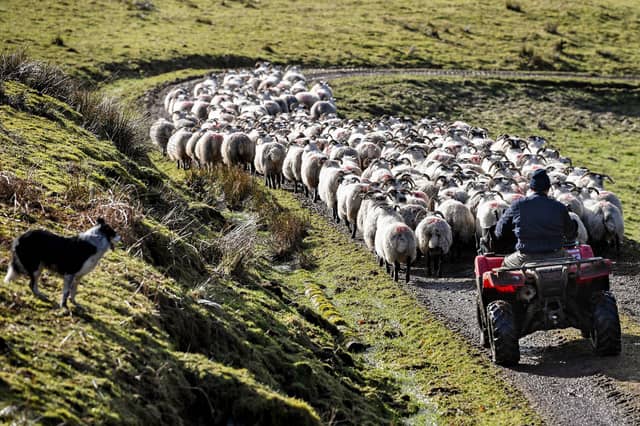

Summer in rural Scotland is in full swing. The weather may not always play ball, but hotels, self-catering businesses, restaurants, cafés and visitor attractions are welcoming tourists. Their contribution goes beyond a memorable holiday or day out. They sustain jobs, support local supply chains, keep communities vibrant and generate value for Scotland’s economy.
Yet many are grappling with a pressure: the growing burden of business rates. When letters from assessors began dropping through mailboxes late last year, the scale of the problem became clear. Businesses received revaluations that posed an existential threat.
One business in Argyll faced an increase of almost £50,000. Another in Aberdeenshire reported that, after losing eligibility for small business relief, its rates would rise from £360 a month to more than £2,500. The Association of Scotland’s Self-Caterers reported that some providers were facing increases of up to 400 per cent, whilst Alba Energy has said that some small-scale hydro schemes have seen increases of over 600 per cent.
A system that penalises investment
The Scottish Budget brought targeted relief for retail, hospitality and leisure premises, easing some pressure. But short-term relief within a three-year revaluation cycle amounts to kicking the can down the road on a rates framework that is fundamentally broken.
Relief may buy time, but it does not provide certainty. What happens when those reliefs end? What happens when a rural business invests, grows its income, and then finds itself pushed over a threshold and stripped of support? A system that penalises investment cannot be the foundation for sustainable economic growth.
In June, Finance Secretary Jenny Gilruth said the Scottish Government would undertake a rapid review of anomalies arising from the 2026 revaluation process, increase tribunal capacity, and examine wider reforms to the non-domestic rates system.
That was a welcome recognition that businesses are navigating a system no longer fit for purpose. But recognition alone is not reform, and it did little to reassure businesses that root-and-branch change will be tackled head-on.
There has been no shortage of diagnosis, from the Barclay Review in 2017 to the now-delayed Gill Review and the 2026 Revaluation Rapid Review. What is needed is action. Where the system can be simplified, it should be.
Some firms pay no tax
There is also a wider question about reliefs. Many businesses pay no rates at all, not because they contribute nothing to the economy, but because the system has placed them on one side of a threshold. Many could pay, and would be willing to pay, if increases were gradual, proportionate and predictable.
What they cannot plan for are cliff edges, where reliefs expire or eligibility changes and a manageable bill suddenly becomes unsustainable.
This issue is particularly acute in rural areas. For years, government and its agencies have encouraged rural businesses, particularly farming ones, to diversify to strengthen their financial resilience. Traditional agricultural income is often too low and too volatile to sustain a business on its own.
According to the most recent government statistics, the average business income for ‘less favoured area’ (LFA) livestock farms was just £28,600. However, with more than 70 per cent of LFA farms dependent on support payments to remain profitable, it is little surprise the Farm Advisory Service reports that 60 per cent of Scottish farms have now diversified beyond traditional agriculture, earning an average of £32,600 more than their non-diversified counterparts.
Punished for success
Yet this is where the contradiction becomes clear. Businesses have done exactly what they were encouraged to do, investing in farm shops, cafés, accommodation, glamping pods, campsites, motorhome pitches, saunas, watersports and clean energy schemes.
These are the kinds of enterprises rural Scotland has been told it needs: innovative, resilient, locally rooted and capable of supporting jobs. But too often, the rates system treats growth not as something to be encouraged, but punished.
Cairngorm Lodges & Bothies in Aberdeenshire is a perfect example. Its owner, Gordon Drummond, invested in a rural enterprise that brings visitors to the area and helps sustain the rural economy.
Yet when his revaluation letter dropped through the door, he was facing a 618 per cent increase in rates. In his own words, it felt like an “extermination”. Reliefs may have provided temporary respite, but they do not solve the underlying problem.
A simpler, fairer and more predictable system
Scottish Land & Estates (SLE) is developing proposals which we believe can help simplify the rates system and make it fairer. We plan to share those proposals with MSPs and policymakers after the summer recess. But the need for action is clear.
From SLE to CBI Scotland, the Federation of Small Businesses and the Association of Scotland’s Self-Caterers, there is a chorus of voices calling for meaningful reform. As an organisation, we are ready to work with anyone serious about delivering it.
The strength of feeling is not confined to representative bodies. Sir Tom Hunter has offered to fund an artificial intelligence system to help the Scottish government process business rates appeals more quickly and transparently, and even joked that ministers and assessors should be banned from their local pubs and restaurants until they sort out a policy no longer fit for purpose.
That may not be a conventional approach to policymaking, but it speaks to the urgency felt by businesses. The opportunity now is for government, assessors and business organisations to work together on a system that is simpler, fairer and more predictable.
For rural Scotland, that matters enormously. Businesses should be encouraged to invest, diversify and grow with confidence, not left fearful that success will trigger an unaffordable bill. Scotland’s rural economy has the ambition and resilience to thrive. It now needs a rates system that matches that ambition.
Patrick Colquhoun is chairman of Scottish Land & Estates
Comments
Want to join the conversation? Please or to comment on this article.