
Why you better hope you never need an ambulance in SNP's Scotland
After nearly two decades of SNP rule, the ambulance service is struggling

Not long ago, Norman Quirk found his wife, Lesley, an 80-year-old retired nurse, lying in a pool of her own blood. Realising she had a head injury and was bleeding profusely, he called 999 – but the response was far from urgent.
Instead, after some time, he managed to speak to an operator, not in his local area of Helensburgh but in London. Clearly the 999 call centre was overwhelmed if the call was diverted to London.
The operator assured him that an ambulance would be sent, but half an hour later, no ambulance had arrived. After two more calls, an operator in Dundee told Norman an ambulance could be two to four hours’ wait.
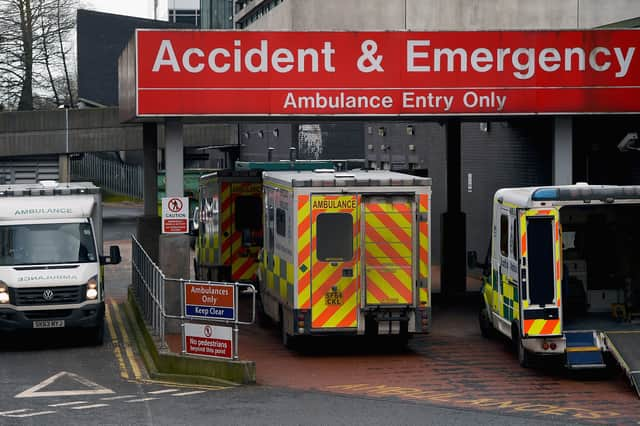

Long ambulance waits not unusual
Fearing his wife, who was on blood thinners, would not survive without treatment, Norman drove his wife to his nearest hospital, which immediately referred Lesley for a CT scan.
Thankfully, Lesley is now recovering, but the couple are appalled at how long they could have waited for an ambulance if Norman hadn't stepped in.
Sadly, their experience is not that unusual – the BBC reported earlier this month on the case of an 87-year-old great-grandfather who spent seven hours lying on the floor of a garden centre with a broken leg while waiting for an ambulance.
Meanwhile, the First Minister recently had to apologise in parliament to two footballers who, in separate cases, were left waiting five and ten hours respectively for ambulances despite suffering severe injuries.
This is not the fault of hard-working paramedics, who will be doing long shifts over the festive period when others get to spend time with their families. But it does show how the ambulance service is struggling after nearly two decades under the SNP.
Lack of hospital beds
In 2008, then Health Secretary Nicola Sturgeon pledged to “eliminate” the practice of single-crewed ambulance shifts, but instead, by 2025, the practice had risen to a six-year high. Meanwhile, the lack of hospital beds is forcing ambulances to queue at hospital gates rather than respond to emergency call outs.
This is the SNP’s crumbling status quo – where ambulances, even when understaffed, no longer turn up quickly to rescue pensioners bleeding on the floor. And however many times the First Minister apologises, John Swinney’s government seems to be losing its grip, with latest internal projections suggesting it will take another three years before A&E waits can be reduced – in documents that Health Secretary Neil Gray signed off and later seemed to have forgotten.
The reality is the only way to change it is a whole-system approach. The SNP promised to end delayed discharge, but in fact it is at a record high. Nearly 2,000 hospital beds a day are occupied by someone who cannot leave hospital because there isn’t the right support in place for them at home.
Scottish Labour will invest in social care, so that discharged patients can safely leave hospital. The knock-on effect will be to free up hospital beds, lessen the need for corridor care and have more paramedics doing the jobs they trained to do.
Thankfully, for most of us, calling an ambulance is a rare occurrence. But if we do call it, we want to know that it will come.
Jackie Baillie is MSP for Dumbarton, Scottish Labour’s deputy leader and her party’s spokesperson for health
Comments
Want to join the conversation? Please or to comment on this article.