
Why the unpleasant fantasies of illiberal politicians are so dangerous
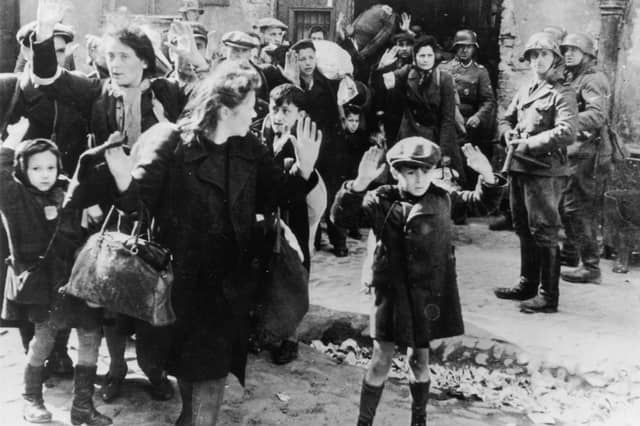
The Universal Declaration of Human Rights was a historic reaction to the worst horrors of illiberalism and nationalism during the First and Second World Wars


Liberalism is a philosophy based on a simple idea that everyone knows to be true: we are all individuals. Or, as the late poet Norman MacCaig put it in his 1973 poem, Patriot: “My only country/ Is six feet high/ And whether I love it or not/ I’ll die/ For its independence.”
This concept has profound consequences. If the only thing known about a group of people is that they are individuals, there is no way to rank one above the other. Therefore, at a fundamental level, we are all equal.
It then follows that we all have the same right to freedom of expression. Indeed, we are worthy of all the same human rights as anyone else (unless we do something, like committing a crime, that warrants their curtailment). And no one can tell us what to do unless we’ve collectively agreed that they should be put in a position of power – so democracy is the only legitimate form of government and all tyrants are usurpers.
READ MORE: Why we should beware silver-tongued right-wing politicians who want to take away our human rights
A telling definition of patriotism
However, as a species, we seem curiously receptive to the idea that some people, usually not ‘us’, are not individuals but people who can be dismissed as members of a demonised group. There are also those who subscribe to ‘patriotic’ or ‘nationalistic’ ideas about their country being the best in the world. And, of course, they usually have a particular antipathy for a neighbouring nation. Sound familiar?
George Bernard Shaw’s pomposity-puncturing definition of patriotism as “fundamentally, a conviction that a particular country is the best in the world because you were born in it” remains a powerful liberal antidote.
Some insist that humans be divided into ‘classes’ like Karl Marx’s proletariat and bourgeoisie or other similar categories, such as the virtuous ‘many’ and the source-of-all-our-troubles ‘few’. In reality, life is more complicated.
Others adopt even more sinister views about different groups defined by ‘ethnicity’ and ‘race’ – both ideas that, again, exist only inside our heads and not in reality. Under this category of illiberal types can be found white supremacists, Vladimir Putin, whose pseudo-historical justification for attacking Ukraine includes the claim that its inhabitants and Russians are “one people”, and the Nazis. The Holocaust could not have happened if the Nazis had recognised their victims were individuals.
Human rights under attack
The United Nations’ Universal Declaration of Human Rights was a historic reaction to the worst horrors of illiberalism and nationalism during the First and Second World Wars. In recent years, some people appear to have forgotten how bad things were in the past or perhaps just take liberalism’s achievements for granted and do not believe it’s possible to return to those times if it is abandoned. The very idea of ‘human rights’ has been coming under attack.
However, the march of progress does not happen simply because time passes, it requires intelligent, hard-working and compassionate people to drive it forward. It is entirely possible for human civilisation to regress, as has been demonstrated repeatedly in the past.
Economic liberalism – everything from left-wing social democracy to right-wing ‘neoliberalism’ – helped build the modern world. Taking advantage of a period of relative peace, the post-Second World War capitalist economies of the world boomed, while neofascist dictatorships went backwards and the communist ones gradually imploded under the weight of their own contradictions. ‘Communist’ China only started taking off after adopting capitalist practices and plugging itself into the global economy.
The link between liberalism and science should also not be under-estimated. In the Soviet Union, if a scientific finding clashed with communist ideology, there was only one winner. The scientific method is based on competing ideas that are subject to criticism and debate – it necessarily requires free speech.
Democracy, freedom, equality, peace, prosperity, science and medicine – all rely heavily on solid liberal foundations.
Liberalism in retreat
Election defeat for Hungary’s arch-populist Viktor Orban, after 16 long years and despite US Vice-President JD Vance flying to Hungary to campaign directly for him, was a welcome rejection of his brand of illiberal politics. However, in much of the world, liberalism is still in retreat, with hard-right and far-right populism, nationalism and hard-left socialism on the march. These are trends to which Scotland is clearly not immune.
The 2008 financial crash shattered the public’s trust in liberal politics, as espoused by both the right and the left. But, for all the problems caused by that cataclysm, it would be folly to ignore the fact that, up until then, the combination of liberalism and capitalism worked. It created societies that were the richest, healthiest and most free in all of human history. And it remains the only route back to sustained progress with a proven track record.
In the US, the term “dual haters” has come to mean voters who dislike both the Republicans and the Democrats and tend to vote to get rid of whoever is in power. ‘A plague on all your houses’ could be a slogan for our times.
However, as the past shows, embracing the deeply unpleasant fantasies of illiberalism – the dangers of which our parents and grandparents understood so well after two brutal wars – will only make our troubles much, much worse.
Comments
Want to join the conversation? Please or to comment on this article.