
Why Scotland is such a good place to build data centres (and why we should embrace it) – Professor Ana Basiri
Data centres can help grow Scotland’s economy and create skilled jobs but we need to make sure they have a positive impact on the environment
Scotland has recently become one of the more attractive places to host a rather unattractive part of the AI revolution: data centres. Across Scotland, 24 hyperscale data centre projects are at various stages of planning or pre-planning.
At the same time, the Scottish government has just introduced new rules requiring councils to tell ministers within seven days when an application for a data centre using more than 50 megawatts of power lands on their desks.
These are signs that something big is happening, and happening quickly. As director of the University of Glasgow’s Centre for Data Science and AI, I’ve been paying close attention to these developments. So what has spurred these developments, and what questions still remain to be answered about Scotland’s data centre boom?

Scottish wind power
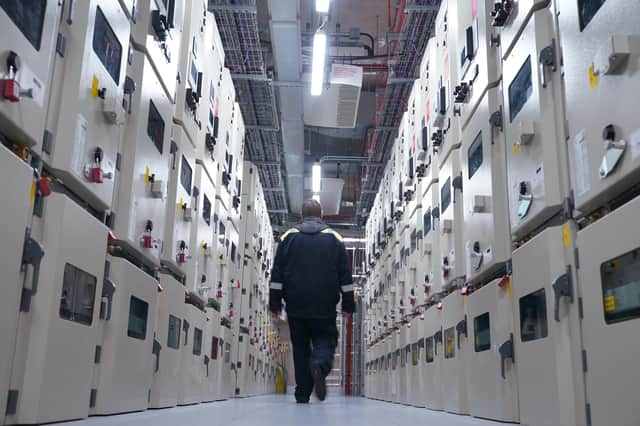
Let’s start by defining just what a data centre is. In simple terms, data centres are warehouse-size buildings packed with computers, storage and networking equipment, running around the clock. When you send an email, post on social media, or stream a film, the behind-the-scenes computing is handled in a data centre.
The explosion in AI in recent years, however, has changed the scale of the data centre game. Data centres no longer just support our everyday digital lives – they also train and run today's most powerful AI models, and that requires a lot of computing power.
So what makes Scotland an attractive place to build data centres? Firstly, the cold and windy weather we all endure is a potential advantage. Scotland is a leader in renewables, generating a record 38.4 terawatt-hours of renewable power in 2024. Wind power produced more than 30TWh of that total.
We actually generate more than we need, so we export electricity to England, Wales and Northern Ireland. At times, Scotland produces more renewable electricity than the grid can take, meaning wind farms are sometimes asked to turn down or switch off.
Large new electricity users like data centres could help us make better use of that surplus generation. The National Energy System Operator has identified Scotland as an attractive location for energy-intensive users such as data centres.
Thousands of powerful computers also produce a lot of heat, and Scotland’s cooler climate means less energy may be needed for mechanical cooling.
Old industrial sites and scientific expertise
Secondly, there is space. Scotland has former industrial sites, large areas of land and places with existing electricity infrastructure. That is valuable when you are building facilities that can occupy an area measured in football pitches rather than rooms.
And we already have the expertise. Scotland has been a centre for high-performance computing for decades, and Scottish universities have built considerable strengths in AI and data science expertise.
Taken all together, and Scotland’s unique climate, geography and industrial and knowledge base make it an attractive home for data centres. But it’s not quite as simple as that.
If all 24 projects were built to their full potential, they could require between 4.5 and six gigawatts of electricity to run. Scotland's entire winter electricity demand peaks at a little over 4GW. Of course, these are proposals, not 24 finished data centres, and many will never be built at their maximum size. But the numbers show why this deserves proper scrutiny.
Water is particularly important. Cooling technology has improved, with newer systems able to recycle water in closed loops, rather like the cooling system in your car. So if they are built efficiently using newer technologies, they may not need as much water as some data centre opponents suggest.
Harder to deal with is the noise they make. Their low, constant hum, like a large fridge or a fan, runs 24 hours a day, which can disturb the sleep of people living nearby. According to regulations, the noise is below the legal threshold for action, and there is absolutely no direct link to specific illnesses because of this noise, but still it needs acoustic engineers to work on mitigation plans.
Environmental concerns
But while there may be solutions for water use and noise, there is currently no independent verification of the environmental impacts of data centres.
In 2024, the UK government classified data infrastructure as critical national infrastructure, intended to strengthen security against cyber and physical threats. This meant data centres could apply for ‘national importance’ status, letting some projects fast-track through central government in ways that can reduce local planning scrutiny.
The Scottish government’s introduction of new rules is a response to this issue. Now, when councils report an application for a new data centre, we can look into what their power and water efficiencies are, what their environmental impacts will be, and determine the impact on the local community.
There is a difference between claiming a facility can use limited amounts of water or power and knowing for sure how much it actually uses once it is operating. We need much greater transparency about that to assuage concerns and encourage community buy-in.
The higher level of scrutiny the new rules encourage will help ensure we can build data centres in the right way, because the opportunity for Scotland is significant. Data centres can bring investment, construction and skilled jobs, strengthen our digital infrastructure and support Scotland's growing AI sector. Their waste heat could even be captured and used in local heating networks.
Scotland can have a genuine competitive advantage. We should use it. But we should also make sure that the wind, land, climate and expertise that make Scotland attractive to the AI industry remain national assets, and that these data centres help us to grow the economy, provide more efficient public services, and create more skilled jobs while their environmental impacts are positive to our communities and our climate targets.
Professor Ana Basiri is director of the University of Glasgow’s Centre for Data Science & AI
Comments
Want to join the conversation? Please or to comment on this article.