
Why Scotland, and its fishermen, need Marine Protected Areas – Phil Taylor
The Our Seas Coalition is going to the Scottish Parliament today to call for modern protections for Scotland’s inshore waters
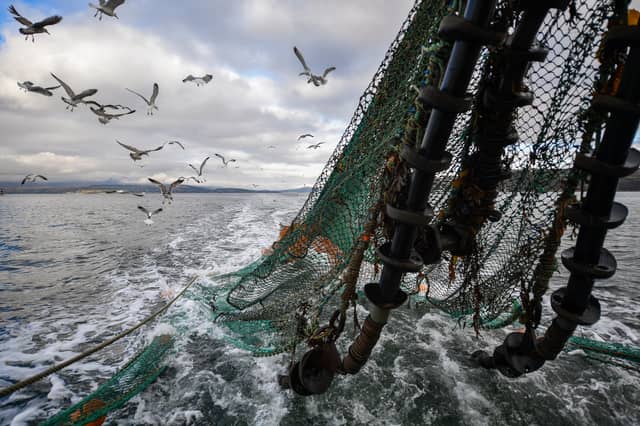

Around seven years ago, a fishing boat illegally dredged the Wester Ross Marine Protected Area (MPA), around the Summer Isles, just a short boat ride from Ullapool.
Fishing for scallops, and running a heavy-metal dredge over the ground at a few metres per second, the boat caused huge damage to the seabed. Divers, who visited the site shortly afterwards, found it had been flattened, with long plough marks left by the metal teeth of the dredge. A previously healthy habitat – home to several protected species and playing an important role in the local ecosystem – was destroyed in a matter of hours. “It's a motorway,” one fisherman friend told me.
The incident was illegal because the site had protected status. Ministers designated the Wester Ross MPA in 2016 to protect wildlife and glacial features from the last Ice Age. Home to maerl, a hard purple-pink seaweed similar to coral, flame shell reefs and other protected habitats and species, the Scottish Government’s decision was not without controversy at the time.
Slow progess
It took political bravery for ministers to act and ensure management measures were in line with the local ecosystem. But a decade on, the results are becoming clear, with wildlife returning to Loch Broom and the Summer Isles, and growing fish populations bringing a spate of whale sightings.
Unfortunately, though, in the story of Scottish marine management, Wester Ross MPA represents the exception, rather than the rule. Despite the Scottish Government drawing up a network of supposedly protected areas over a decade ago, management measures were never introduced for many of them.
As a result, bottom-trawling and dredging are allowed within 95 per cent of Scotland’s inshore waters. The protections introduced so far have impacted just 1 per cent of the footprint of this fishery.
READ MORE: How environmentally friendly forms of fishing mean more money and more jobs for local communities
A call for action
That’s why the Our Seas Coalition is going to the Scottish Parliament today to hand in a petition, backed by over 16,500 people, calling for a new system of modern protections for inshore waters.
Made up of more than 160 different groups from all across Scotland, the coalition is an alliance of fishermen, scientists, tourism businesses, community groups and youth activists. Each of these groups has different reasons for demanding action, but they are united by the aim of restoring life to Scotland’s seas, with more protections for marine habitats, leading to more fish in the sea, and more jobs.
The Scottish Government has promised to deliver on those protections ever since it first drew MPAs on a map (and committed to protection for priority species and habitats in its marine plan). Yet time and again, when it came to introducing real protections, it has delayed – most recently, in December 2025, with Cabinet Secretary for Climate Action and Rural Affairs Gillian Martin postponing action until after the election.
Fishing industry needs healthy seas
Now the new government has been formed, and with Jim Fairlie being appointed as marine minister, our coalition is going to parliament to call on the Scottish Government to consult on the new measures within its first 100 days in office.
That consultation will give Scotland the chance to fix how we manage our seas, with different activities allowed in different places, based on evidence. That doesn’t mean shutting down fishing – far from it – and it doesn't even mean banning dredging and bottom-trawling everywhere. It means proper spatial management, with the right type of fishing on the right type of grounds, to avoid causing long-term damage to vital ecosystems.
Fishermen rely on healthy seas to survive, yet we know the heavy equipment used in dredging and bottom-trawling can cause huge damage to marine habitats, and the species which live there. Some species are caught as bycatch, while others are left damaged on the seabed.
While there is a huge catalogue of scientific evidence on the damage bottom-trawling and dredging does to marine habitats, you can also see proof from declining fish numbers, which has led to reduced catches. Scotland’s inshore waters are home to nurseries for juvenile fish, and as habitats go into decline, so too does the fishing industry.
This isn't a new idea. In the 1800s, when steam-powered bottom-trawling was invented, fishermen already knew about these issues, and in response Scotland restricted bottom-trawling and dredging, so only low-impact methods were allowed within three nautical miles of the coast.
But in 1984, under Margaret Thatcher’s government, that protection was lifted. Since then, with dredgers free to operate up to the coast, biodiversity, fish stocks and catches have declined, and jobs have been lost. That doesn’t just hit the fishing industry, but coastal communities too. Take any fishing port, and imagine what it was like in the 1980s compared to today.
We need a modern version of that limit, based on evidence of the areas that require protection. That means creating low-impact coastal recovery zones around our coasts, with decisions made based on local evidence, to help nature to recover, restore fish numbers and provide a sustainable future for communities.
Our research in Wester Ross shows that protection works. Each year, we take our research boat back to the spot that was illegally dredged, to conduct surveys and chart how the habitat is responding. While the recovery is still not complete, there are clear signs that life is returning.
But it’s not just Wester Ross that can benefit from that sort of protection. Given time and space, nature will recover, even in areas that have been badly damaged.
We need the government to deliver on its promises, not just now but for the future. Scotland’s inshore waters belong to all of us and we need to protect them, not just for today, but for the future. As the Our Seas Coalition puts it: more protection, more fish, more jobs.
Phil Taylor is director of marine conservation charity Open Seas
Comments
Want to join the conversation? Please or to comment on this article.