
Why Prime Minister Andy Burnham could give Scottish unionism a much-needed boost – Martyn McLaughlin
The current mayor of Greater Manchester could pursue major reforms if he fulfils his political ambitions
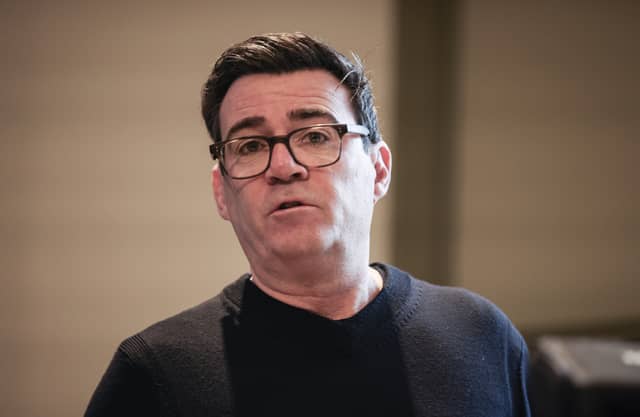


With the World Cup on the horizon, it is understandable that more Scots will be paying closer attention this month to the fate and fortunes of Andy Robertson and his teammates than they will to Andy Burnham. But the Makerfield by-election has the potential to shift the tectonic plates of Scottish post-devolution politics.
The 56-year-old Mr Burnham is odds on with the bookies to see off Reform’s challenge in the Greater Manchester constituency, and to ultimately succeed Sir Keir Starmer in Downing Street. In a febrile political climate, there will undoubtedly be surprises in store, but should that trajectory hold, it could well expedite generational constitutional reforms that reframe the debate around Scotland’s place in the United Kingdom.
Thanks to his tenure as mayor of Greater Manchester, Mr Burnham’s views on Scotland’s powers have altered over the past decade. As someone who advocated against independence during the 2014 referendum campaign, insisting that it would jeopardise the prospects of any future Labour government at Westminster, he remains a supporter of the Union.
But that continued backing is now qualified by a desire for systemic change. He has acknowledged the need for a greater redistribution of power, while also noting that the option of “status quo but with a bit more devolution,” an argument limply advanced by many pro-Union figures treading water, holds scant appeal.
Real constitutional change
Instead, as with Gordon Brown – arguably the last prominent Labour politician with a detailed understanding and appreciation of devolution – Mr Burnham wants to replace the House of Lords with an elected senate of the nations and regions.
Such a shift would not only provide greater representation of Scottish interests at Westminster; it would also have the potential to cut through the kind of intergovernmental intransigence that has severely hampered relations between successive administrations in Edinburgh and London in recent years.
He is also likely to back calls for an expansion of regional authorities like the one he presided over in Manchester, a move that would likely go down well with swathes of voters in urban Scotland, and accelerate demands for a regional mayor system in Glasgow, and perhaps Edinburgh too.
Other priorities and apathy
Many in Scottish Labour would happily endorse such goals; Anas Sarwar, for one, has spoken out against the “sucking up of local power” in Scotland. But there would be significant barriers to overcome elsewhere.
At a UK level, there would be greater opposition, and indeed, apathy, to such a reform agenda, even within his own party. Coupled with this, there would also be pertinent questions asked as to whether such a structural overhaul should be a political priority. After all, a Burnham premiership would inherit a precarious economy at a time of significant ongoing global instability.
Even so, I suspect that would not dissuade him from pursuing his mission, and at a time when First Minister John Swinney is gearing up for a renewed independence push, the knock-on effects could be far-reaching.
Some in the SNP may well support the idea of Mr Burnham entering Downing Street on the basis that he would have no reasonable grounds to deny further devolution. But many others will be nervous, given his vision of reform could advance the kind of positive and constructive arguments that have been conspicuously absent from unionist politics for decades.
Comments
Want to join the conversation? Please or to comment on this article.