
Why Musselburgh's Brunton Hall, an outstanding example of modern architecture, must be saved from demolition
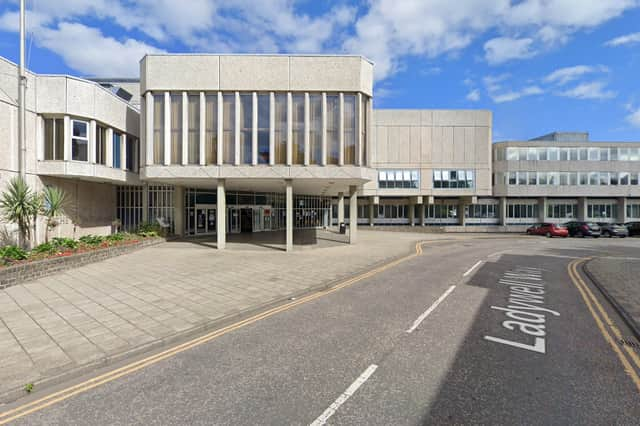
The elegance of Brunton Hall’s design remains so fresh and clear that it is easy to forget the building is well over 50 years old
Outstanding examples of modern architecture are rare in Scotland. Brunton Hall in Musselburgh is one of them. However, as things stand, there is a danger that it will be demolished without a thought for its importance.
Last year reinforced autoclaved aerated concrete – the infamous, dangerous RAAC – was discovered in its roof and East Lothian Council decided the only financially viable solution was demolition, followed by redevelopment. The Brunton Theatre Trust made no objection, but argued for a firm commitment to replace the theatre which forms a key element of the existing building.
The Architectural Heritage Society for Scotland, whose national conservation committee I chair, became concerned at the persistent absence in the council’s deliberations of any mention of the architectural merits of the Brunton.

A leading light of modern architecture
The building is an excellent example of mid-20th-century public architecture, a type which is rare in Scotland. When the Rev David Gray, a Musselburgh native who previously worked in architecture, suggested listing it to Historic Environment Scotland, we debated the matter with our local cases panel and decided to support him.
We considered the building to be a fine example of the work of one of modern architecture’s leading lights, Sir William Kininmonth, a friend and colleague of Sir Basil Spence, another Scottish great.
READ MORE: 'Extreme concerns' for crumbling Scottish college buildings as Raac pushes repair bill towards £800m
Knighted for service to architecture, Kininmonth was justly admired for his love of combining Scottish features with modern architecture. His masterstroke at the Brunton was to clad the building in Skye quartz.
This has kept the elegance of the design – another quality for which he was admired – so fresh and clear that it is easy to forget it’s well over 50 years old. The mannerly way in which the Brunton fits into an awkward site and relates sympathetically to neighbouring buildings is another quality we greatly admire and mentioned in our support of listing.
Theatre’s excellent acoustics
It is important to recognise that the theatre itself was also designed by a titan of modern Scottish architecture, Ian Appleton, who taught for many years at Edinburgh University, where I was one of his students.
Theatre design was central, but not exclusive, to Appleton’s distinguished career, starting with work on the London South Bank, taking in the Gulbenkian Centre in Hull and the Macrobert in Stirling, and culminating with his magnificent Leeds Playhouse, frequently described as the National Theatre that London never built.
His early work at the Brunton is notable for excellent sight-lines and acoustics. To us, it is self-evident that it should be saved. Yet the council appears uninterested in the case for conservation.
Ignorance is bliss
The attitude of the Labour group which controls East Lothian Council is particularly illogical. In an impressive display of unity, they mustered their local MPs, MSPs and councillors to urge Historic Environment Scotland not to list the building.
Their grounds? It would have “a detrimental impact”. Ignorance is bliss, they seem to be saying. Yet the better the Brunton is understood, the better their decision about its future is likely to be. They should be supporting listing, not running scared.
We hope the public will become involved. We understand councils have problems. But East Lothian should not take the path of least resistance. They should remember the time when they led Scotland on conservation issues.
Jocelyn M Cunliffe is chair of the Architectural Heritage Society for Scotland’s national conservation committee
Comments
Want to join the conversation? Please or to comment on this article.