
Why I'm proud to call Ayr, dubbed 'Scotland’s worst seaside resort', my home
After loving life in Edinburgh, Jenny Lindsay explains why her move to the ‘serious beauty’ of Ayr has worked out well

“Are you doing Edinburgh this year?” It’s a question asked of many performers, meaning “are you doing the Fringe this August?” When I lived in the city, involved in the performing arts for most of my adult life until 2020, it tickled me to be asked this annually.
I ‘did’ Edinburgh every day. I planned to for the rest of my life. Sure, her drinks were extortionate, her rents became alarming, and the old architecture looked down on the shiny glass of yet another student accommodation block with understandable disdain.
But I loved her. She was a privilege to know – yes, a little difficult to – but worth the effort. Our relationship felt permanent, despite others finding her a mere ‘base’ or a transient city, to be studied in, ‘done’, or visited, before leaving.
I’d served her tourists, extremely incompetently, as a waitress in my late teens. I’d dropped out of one of her universities in a hail of failure in the year 2000. I’d pulled pints in her clubs, performed on her stages from the noughties onwards.
READ MORE: Scotland’s best seaside town has been crowned – and it scored 5 stars for its breathtaking scenery


Privilege of life in Edinburgh
I’d cleaned her apartments and ferried distraught, often angry, newly homeless individuals and families into temporary accommodation, all over the city, as a homelessness warden in 2008/09. I eventually taught in three of her secondary schools, from coastal, diverse-intake comprehensives, to a posher state school in the leafy suburb of Barnton.
I knew her – as many writers have noted – to be a city of enormous contrasts. “All roads lead to Princes Street,” the saying goes, but I was well aware that the city centre, with the arts hubs I was working towards making a full-time living in, didn’t reflect her full story.
Nevertheless, until my final year in Edinburgh, by which point I’d been a full-time, freelance poet/performer and literary events programmer for a few years, I felt an enormous privilege living somewhere that people loved to visit. Edinburgh was proud of herself, of her culture, her history.
Breaking up with her was traumatic. But, frankly, by the time I left she really hadn’t been behaving herself.
Amongst other antics, her most eminent university caved to shouty activist pressure in 2020, renaming David Hume Tower the bland ‘40 George Square’. On the basis of complaints over one footnote in one essay, which, as poet Don Paterson pointed out in a recent polemic for the Irish Pages is entirely at odds with everything else Hume ever wrote, contemporary Edinburgh decided to put the boot in, declaring ‘problematic’ one of her most famous philosophers and influential sons.
No regrets about leaving
Edinburgh had started to feel hostile. The increase in ‘cancel culture’ activism across the arts, and a subsequent change in finances, meant divorce was necessary. I packed up my scuffed memories, moving to the seaside town of Ayr, near where I grew up spending my teenage-hood dreaming of leaving for a life in Edinburgh.
Ten days later, the Covid lockdown, 2020 was discombobulating... Five years in, however, I’ve no regrets. Apart from anything else, my writer’s income wouldn’t get me a mortgage on a letterbox in Edinburgh.
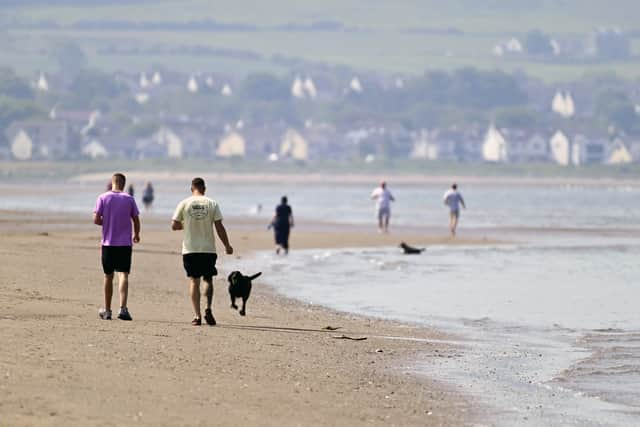
I’m now in the nicest, most affordable apartment I’ve ever lived in. Yes, the seagulls are boisterous: one of them in particular should be on the stalking register for the way it eyes my cats through the window. But the salt cure of being next to the sea is priceless.
My neighbours are friendly. The skies seem huge after the cramped, no-sunlight tenements of Tollcross. And, if I can thank those pesky Edinburgh arts activists for something, I experienced the otherwise bleak isolation of Covid in a place of serious beauty.
The River Ayr, where I used to go when skiving school 25 years prior, was a particular source of solace in those early days. Coming to terms with successfully escaping Ayrshire, only to be chewed up and spat out by the city, returning as someone then pushing 40, wasn’t exactly the life-plan.
‘That’s my girl’
But, in confirmation that my wee town truly is home now, I enjoyed my reaction to a recent headline. “‘Scotland’s worst seaside resort’ revealed as locals blast ‘ghost town’ full of empty shops that’s ‘only getting worse’” led the story in The Sun. According to a survey of 3,800 Which? magazine readers, Ayr failed to impress many tourists, with residents also eager to point out the obvious decline of the town over the last three decades. My response? A chuckle and a “that’s my girl!”
Like the early philosophers urged, Ayr knows itself. As with Edinburgh, it has a rich history worth exploring. But nobody denies the grim state of this once-thriving holiday town; nobody tries to put a shine on the stark situation. While there are pockets of affluence, like many Ayrshire towns there is serious rural poverty, a lack of affordable housing, and schools that struggle to improve educational attainment.
While some have responded to the Which? survey by extolling the virtues of good transport links to Glasgow, the plentiful family-oriented activities and beautiful countryside (all true), as a resident it’s unavoidable: Ayr is tired, needing more than sticking-plaster solutions to solve its problems.
Nevertheless, I’m certain residents wouldn’t indulge activists trying to rename Burns Statue Square, denigrating the celebrated Ayrshire-born poet’s entire work, despite his arguably ‘problematic’ utterances. While the town struggles, it’s characterised by real potential; people trying to improve things – alongside those who rightly chuff about the seeming lack of vision from local authorities.
Much as with Edinburgh, Ayr’s taken some getting used to, particularly after so long away from her. Despite the divorce, Edina and I are also back on – albeit cautious – speaking terms. But Ayr is, proudly, home, for the foreseeable.
It’s worth ‘doing’ a visit. Despite the stalky seagulls.
Comments
Want to join the conversation? Please or to comment on this article.