
Why flag-waving right-wingers are just the latest sign that the UK is falling apart
Instead of opposing Reform UK, Labour seems politically mesmerised by their success

It’s often been said, by wise heads around Scotland’s independence movement, that the task of breaking up the UK would finally be one for Westminster, rather than any of the smaller constituent nations; and I thought of that old argument again, this week, as I watched the slow obliteration from the wall of the Royal Courts of Justice of Banksy’s powerful new artwork, showing a bewigged judge beating up a protester holding a small placard.
It’s not the fault of the justice system, of course, that Keir Starmer’s bewildered-looking government chose to outlaw a small group called Palestine Action for throwing red paint at some war planes, thereby, under the Terrorism Act of 2000, also designating everyone who shows support for it as possible accomplices to terror.
Yet in the weeks since that decision, it has become overwhelmingly clear that its consequences are ridiculous, and seen by most people in Britain as unacceptable in their impact on freedom of speech and the right to protest. In that sense, Banksy’s artwork spoke for the people; and as one online voice observed, by removing it, the authorities effectively transformed it into a piece of live performance art, demonstrating their growing intolerance for anything that expresses strong dissent.

Last refuge of a scoundrel
Nor is the Banksy incident the only sign of a government losing the plot and the argument, not least in the effort to meet the growing electoral threat of Nigel Farage’s Reform. Cabinet minister Yvette Cooper’s desperate interview performance a couple of weeks ago, where she claimed that her house was positively bursting with Union Jack knick-knacks and bunting, was a case in point; a few years ago, such garish, over-stated displays of “patriotism” would rightly have been regarded by most people in the UK as, in Dr Johnson’s words, the last refuge of a scoundrel, or at best a sign of insecure identity and emotional disturbance.
Now, though, in this age of political monsters, these meaningless displays have become mandatory for all ambitious British politicians; and Cooper, rather than being advised to take a break from frontline politics, is now Foreign Secretary. Nor are these florid displays of poor judgment unrelated to the government’s other problems, from the resignations of Angela Rayner and Peter Mandelson, to their floundering economic policy.
The questions therefore arises of just where this latest Westminster meltdown leaves the political landscape of Scotland, in its 19th year of SNP government; and the truth, it seems to me, is that it is playing into John Swinney’s hands to an extent he could scarcely have imagined, when he stepped up as First Minister just 16 months ago. Two months later, he led his battered party to a stunning defeat in last year’s UK general election, losing all but nine of their 48 Westminster seats, as Labour soared towards a huge Commons majority.
Calm, experienced and skilled
Yet Starmer’s first 14 months in government have been strikingly unsuccessful, dogged by a series of decisions – on both domestic policy and the Gaza crisis – which have infuriated and alienated natural Labour supporters, while also failing to win the support of Britain’s right-wing opinion-formers, who continue to rage and opine as if Starmer and Rachel Reeves were instigating some kind of red revolution.
The result is an atmosphere of crisis to which a First Minister like Swinney – calm by nature, highly experienced, and famously skilled in handling the multi-party politics of the Scottish Parliament – is well placed to provide a positive contrast. And a single glance at recent Scottish polls confirms that although there is no great surge of support for the SNP, the party is gently recovering from the low of 30 per cent it scored in the 2024 general election; and, more importantly, that it can expect, if there is no drastic change in the next eight months, to remain by far the largest party in the Scottish Parliament, with opposition now deeply fragmented among a failing Conservative party, Labour in the doldrums, and an insurgent Reform.
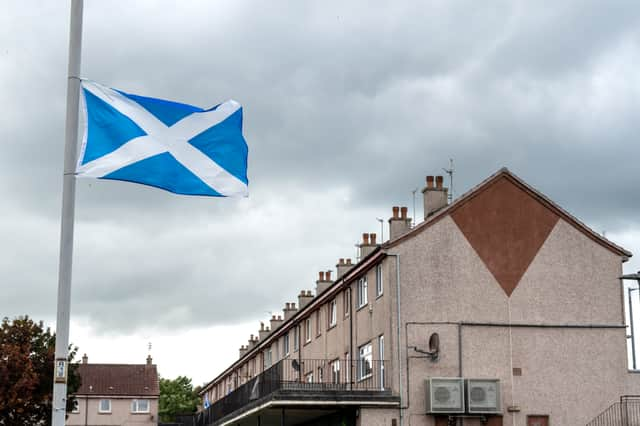
It’s not, of course, that Scotland is unaffected by the political upheavals and riptides currently plaguing Starmer; this week some right-wing activists, having adopted the English and Union flags as badges of racism and intolerance, even set about trying to taint the Saltire with the same reactionary cause.
Popcorn time for nationalists
On the whole, though, it looks to me as if this is a phase of history when independence supporters could perhaps afford to take a longer view, order in some popcorn, and spend at least a little time watching history continue to evolve in their direction. The task of unravelling or recasting a powerful 300-year Union was always, after all, likely to be a long one, subject to events and forces far beyond Scotland’s shores.
And at the moment, the UK looks like a state in political crisis – bent on replacing those grand old survivors, the Conservatives, with a new hard-right grouping of chancers and hate-mongers who can be relied on for nothing, in terms of support for basic rights and democratic institutions – and burdened with a Labour government that instead of boldly opposing Reform, seems politically mesmerised by their success.
We in Scotland would therefore be well advised to hold fast, for now, to the government we have – steady, cautiously left-leaning, and somehow able, as Swinney demonstrated in Washington this week, to schmooze Donald Trump with golf-based small talk, while remaining vocally committed to basic democratic and internationalist values; while at the same time campaigning as hard as we can, at home and abroad, against the global rightward lurch of politics that in the end can only damage us all.
We should also, though, perhaps be making time, when we can, to recognise and appreciate whatever peace and comfort we have, and to try to remain calm, amid a sea of troubles that may bring profound change to our doorsteps, far sooner than we think.
Comments
Want to join the conversation? Please or to comment on this article.