
Why a third national park would transform a stunning but forgotten corner of Scotland
Establishing a national park in Galloway will not solve all the area’s problems but, without it, things will only get worse
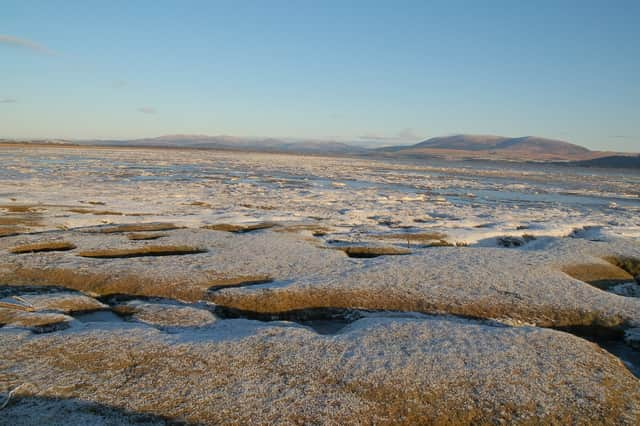
Galloway is a stunning but forgotten corner of Scotland which is also at the forefront of climate change. The landscape is under pressure and changing quickly; nature is getting squeezed between rising tides and more intensive land use. The area’s economy is fragile, and the population is declining at the fastest rate in mainland Scotland.
Despite almost 20 years of concentrated forestry activity, farm aggregation and large-scale renewables, the economy has declined by 20 per cent compared to Scotland as a whole and remains amongst the poorest rural areas in the UK.
For the past decade, there have been growing calls for the region to become a national park, which would bring in millions of pounds a year in government investment and create structures to help tackle these issues.

A popular idea
Scotland lags behind the rest of the UK in the number of national parks, which is ironic as the pioneering Scot John Muir gave the idea to the world. England has ten, and Wales three.
So, after the last Holyrood election the Scottish Government committed itself to the creation of at least one more by 2026. It’s popular idea – a 56 Degree Insight survey in 2022 showed that 89 per cent of Scots support creating a new national park.
Areas were invited to put themselves forward for the brilliant chance to sit beside the Cairngorms, and Loch Lomond and the Trossachs as Scotland’s third national park.
The Galloway National Park Association (GNPA) got together with the Unesco Galloway and Southern Ayrshire Biosphere and put in a joint bid for a park extending to the natural limits of the Galloway Hills and the coasts to the west and south (and so including parts of Ayrshire). The three councils involved supported our bid in principle.
Putting Galloway on the map
After a nerve-wracking wait, the government selected us as the preferred choice. It’s hard to describe the joy and optimism this decision brought for the GNPA, a charity formed in 2017, whose trustees have put in more than 25,000 hours of voluntary time.
We had begun by looking at the tests that have to be passed for national park designation and defined the widest area that would meet the criteria before setting off across the region, talking to over 2,000 people at over 100 events. The feedback gave a resounding “yes” to taking the national park idea forward.
People said that creating one would put us on the map. National parks have international kudos, attracting visitors who love nature, culture and outdoors activities. And, importantly for us, they attract younger people to live, work and raise families.
People saw it would give a stronger voice to a very rural area, allowing us to do more to determine our own future. This is because the strong local representation on park boards ensures they deliver for communities. This happens thanks to the national park partnership plans which set out what they will do for years ahead.
People want long-term commitments. So many good projects fail because the grants run out. National parks can support communities and nature for the long-run because they have guaranteed government funding, are great at leveraging money from the private and third sectors, and have an agreed strategic direction.
Creating new jobs
Young people in particular were keen on a park because of the job prospects, and a sense of pride. They know that where they live is special enough to receive international recognition and look forward to a time when everyone else does too.
Park jobs are created directly and indirectly. Some come through the ranger service which deals with issues on the ground, others are in nature recovery, carbon storage, active travel, sustainable tourism or through the general increase in activity across the communities.
A park could improve the viability of existing public transport and provide the impetus for new active travel routes and recreation opportunities which benefit tourists and residents alike and can deliver real savings for the health service.
Affordable housing is something that was raised and is a major issue across Scotland, especially in rural areas. The Cairngorms National Park has risen to this challenge with ambitious targets to create affordable homes to rent or buy and restrictions on short-term lets in key areas.
Working towards the best possible park
Along the way, more than 1,100 members, businesses and young people have signed up to support the GNPA and we have over 6,000 followers across social media. It shows what can be achieved by committed volunteers relying on small donations, with no money from government, NatureScot or big private interests.
The position now? NatureScot has conducted a public consultation giving residents, councils, businesses, charities and many others the chance express their views. We hope this will be a stepping stone to final designation. Key to this will be more consultation, information and certainty about what a park will bring.
Helpfully, the draft Natural Environment Bill has confirmed that the purposes and governance model for parks will remain unchanged. The GNPA hopes the next consultation can be conducted in an amicable and open way. Everyone deserves to be able to consider the proposal on its merits and without outside influence.
A national park will not solve all our problems but without it, things will get worse – those are the findings of the government’s own assessment of the region’s prospects. Galloway has waited a long time for this opportunity – let’s work together to make it the best possible park for Galloway.
Rob Lucas is the chair of the Galloway National Park Association
Comments
Want to join the conversation? Please or to comment on this article.