
The shocking dirty tricks from election history

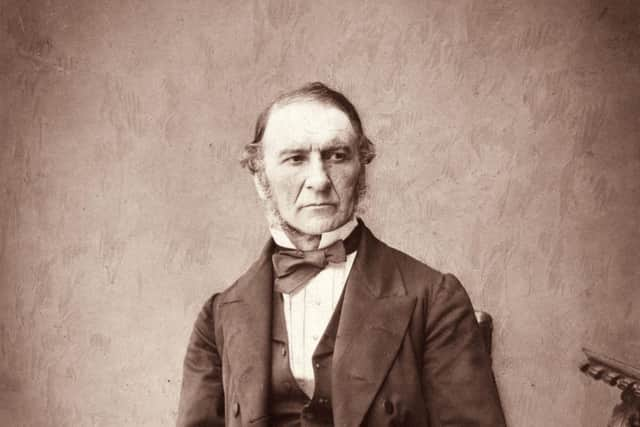
After losing a vote in parliament, William Gladstone called an election and stood in two seats so he could oust a Liberal party rebel. He won both, but lost the election
The actual mechanics of British general elections, the voting, counting and collating of the results, are extraordinarily smooth. There are sometimes suggestions of underhand dealing but they rarely amount to much. Re-counts can be requested, but again, they rarely change the outcome. It is a steady and sober affair.
It's not always been this respectable. Elections in the 18th and 19th centuries were awash with skullduggery and shenanigans. Violence, voter intimidation and bribery were all considered part and parcel of a good campaign.
Voter ID is a recent development in our elections, but challenging voters’ rights isn't new. In William Hogarth’s 1755 series of paintings, ‘Humour of an Election’, a soldier is trying to swear on a bible that he has the right to vote, but lawyers are raising objections. He must be denied the franchise, they argue. That’s not actually his right hand he is placing on the bible. It's a hook, presumably replacing the limb he had blown off in the service of his country.

Scotland didn’t fare any better, particularly in the 18th century, when burghs were rotten to the core. There were few voters, and they could be easily bought. At least one would-be legislator pulled out of an election when his opponent’s wife suddenly came into a massive inheritance. The financial firepower was too much.
Duke’s carriage smashed
In 1832, The Representation of the People (Scotland) Act created a whole new constituency. Scotland now had a new electorate. Historian Iain GC Hutchison has estimated that, in pre-reform Scotland, there were 4,500 voters. The new act enfranchised 64,4447 people. By people, we mean men, of course. And they did not like the Tories. The Whigs had given these men this new right and they liked it.
Canvassing for Tories became a risky business. The Duke of Buccleuch had the windows of his carriage smashed in and a baker boldly shouted he’d give five shillings to see the duke hanged.
Still, there were ways to be creative with voters, or even create voters. Certain provisions for the property qualification in Scotland were lower, at £5. It meant that wealthy men could buy bits of houses, known as ‘half-flats’ for around £5, then register to vote in that county. Dozens of potential voters could be registered to one address in a practice known as “faggotting”, a Victorian term used to describe non-existent soldiers numbered on a muster-roll.
In 1868, Edward Craufurd of Ayr rose in the House of Commons during a debate into this questionable practice. There had been a scandalous case of manipulated votes in Peeblesshire where even bits of attics had been sold off to boost the electoral register. Fake votes had been created by a party of men from Edinburgh, Mr Craufurd asserted, who claimed residence in the notorious hotel, ‘The Fleece’.
The opposition found this necessary, he said, because “my countrymen were too honest to be bribed, and too independent to be bullied, but that in some constituencies they were not too numerous to be swamped by these fictitious votes”. It doesn’t seem to have occurred to anyone, during that long ago debate, that the best way to stop the rich buying votes was to expand the franchise to let everyone vote. Even the women.
Gladstone has his revenge
Elections started to become the headline news stories we know today. In 1886, William Ewart Gladstone, Prime Minister and MP for Midlothian, introduced the Irish Home Rule bill. The house debated for two months before voting. It was defeated, 341 nays to 311 ayes. Gladstone hit the button for a July election.
Today’s candidates are vetted and appointed long before the vote. It’s usually considered a bad move for a party to ditch a carefully chosen candidate. The Leith Herald was certainly most unhappy on Saturday, July 3, 1886. The front page thundered that the chosen candidate and sitting Liberal MP, Mr Jacks, had been undermined by local ‘wire pullers’ who had parachuted in a big beast of politics to fight the Leith Burgh seat in preference to the local boy.
It was no less than the ultimate king of the Victorian political jungle, Mr William Ewart Gladstone himself. Well, technically, he too was a Leither. There’s a little plaque in Leith’s King Street to commemorate the fact that the Gladstones started out on The Shore.
It was a spectacular act of political sabotage on the part of the grand old man of British politics. Mr Jacks had supported the Home Rule Bill and then switched sides. Gladstone took his vengeance for this disloyalty by strong-arming the Liberal constituency party into putting his name on the ballot and binning Jacks. Gladstone won both his own seat of Midlothian, and Leith Burgh. A few weeks later he stood down from Leith and a more loyal lieutenant, Ronald Ferguson, won the seat. The whole game of musical seats became known as the ‘Leith Dirty Trick’.
70-year-old minister arrested
Voting, counting and confirming MPs took from July 1 to 28. Things became restless. Rioting had been a feature in Dublin and Belfast even before the Home Rule vote, and outbreaks of violence popped up from Cornwall to Dundee.
The general election of 1886 was finally over when Orkney declared its results on July 28. Gladstone lost. Orkney was still dealing with the aftermath of an election riot in January arising from the 1885 election, when a stick-throwing stick-wielding mob assaulted the Hon Thomas Dundas and his election agent. A 70-year-old minister, the Rev Armour, was arrested for disorderly conduct.
The howl of the mob characterised so much of these scandalous, scurrilous and shambolic campaigns. It's far better to have today's results delivered by that very British voice of modern elections, the calm, sober tones of the Returning Officer.
Comments
Want to join the conversation? Please or to comment on this article.