
The big elephant in the room in SNP's plans to tackle misogyny crisis - Jenny Lindsay
We are living through the most profoundly misogynistic era in my lifetime
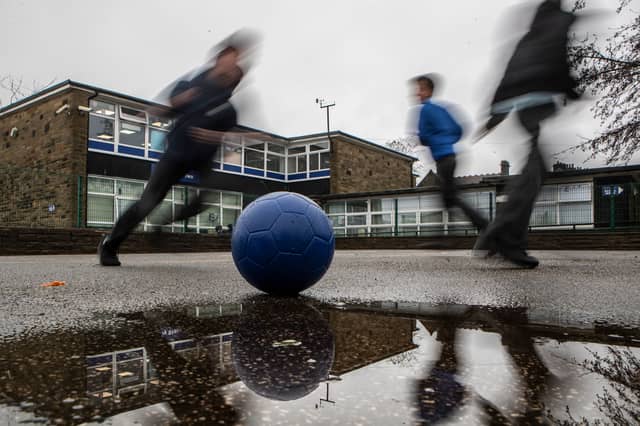


First Minister John Swinney has vowed to ensure “every school in the country is educating young boys about the dangers and risks of misogyny.”
In other words, a problem with which wider society – and political leaders - routinely fail to grapple is to be chucked on the Scottish curriculum, where it may be addressed very badly.
There’s certainly a spectrum of risks boys may face when becoming misogynists – from being thoroughly unlikeable right up to a jail sentence. But, there are rather bigger dangers to girls from male resentment and hatred, ranging from discomfort up to being victims of rape and murder. So, you’ll have to excuse me centring them in this.
We are living through the most profoundly misogynistic era in my lifetime, yet the denial is strong, the will to address it lacklustre. The massive elephant in the room, as always, is that it’s pretty hateful to say ‘woman’ is such a malleable concept – rather than a material reality for half of humanity – that any boy or man who cares to, for whatever reason, can lay claim to the word and demand inclusion in the category.
It’s also a catastrophic moral error to teach this as ‘kind’ or ‘progressive’, as has been done for over a decade. Many girls internalise a sense of shame for trusting the evidence of their own eyes about who is male and who is female when the opposite is demanded. But, protecting yourself from male violence as far as possible requires it. Teenage girlhood had quite enough upheaval already, without the added discombobulation of this reality-denial. But, such is the situation we’re asking our teens to grapple with, and until there’s more will to confront that as robustly culturally as it has been legally, they’re stuck with the contradictions. In truth, everyone but the thoroughly indoctrinated – including John Swinney - knows who boys, girls, men, and women are. Misogynists definitely do, and their actions reflect it.
That being the case, let’s temporarily assume a shared existence in the same, material world, rather than the tiresome oddity of those who claim to care about misogyny, but fail to see it in one of its most blatant, contemporary forms.
Swinney’s plans are not yet clear, but I suspect some pedagogically inept delivery mechanism for these ‘misogyny lessons’ will soon be forthcoming. Perhaps sitting in an assembly watching Netflix series Adolescence then having a discussion. This was the kneejerk response last year from former UK Prime Minister, Keir Starmer, after viewing the deservedly award-winning Netflix series.
The plot, in short: a young, sweet boy from a nice background turns out to be a raging misogynist to the horror of his parents who, like many, don’t understand the online ‘manosphere’.
Might we explore exactly why the main character of the series decides being rejected is so terrible he should stab a girl to death? Or ask how girls feel growing up in this era? Probably
not.
I imagine there will be handwringing lectures about how boys must monitor their screentime, not listen to Andrew Tate, and know how best to consume pornography ethically. ‘Boys will be boys, we know you’re all curious’, is the current, reckless stance about porn from notional adults. As if watching the sexual degradation of women is remotely normal. As if that isn’t having dire effects on sexual and emotional wellbeing in young adults. Speaking to boys isn’t enough. Girls, too, must be taught about misogyny. We – I refer to my former self - don’t enter the world naturally aware of just how much some men hate us.
Many men do so while also desiring us – even to be us. A complicated set of lessons to learn. We spend our entire lifetime navigating this, from the first early initiation. Coping mechanisms vary.
Aged 13 - until that day unaware I’d entered something of a danger zone – I was whistled at and had lewd comments shouted at me from a van by a man old enough to be my father. I was on my own, on the way to the train station.
He slowly trundled beside me on Smith Street, urging me to walk more quickly so he could see ‘more bounce.’ It was broad daylight, the street relatively busy. I was wearing a long black skirt and a red top I’d thought I looked nice in, having just started to be aware those kind of things mattered.
A humiliation so vivid I recall it 30 years later. Of course, my failure to respond, or acknowledge his catcalling meant his final comment was angry and derogatory. Failing to smile, to enjoy being objectified, or simply trying to ignore these men comes with a catalogue of possible consequences, all of them negative.
Like too many other 13-year-old girls, it wouldn’t be long before street harassment became the least of my problems dealing with the abusive entitlement that can spring from male desire.
The salve only came in later years, from something it’s never suggested should be chucked on the curriculum: feminist literature. Well, there’s an idea…
The first problem trying to teach ‘How Not To Be A Misogynist’ lessons in a school setting is that girls and boys generally learn that path by walking it.
Meanwhile, another core problem swishes its trunk and flaps its ears.
John Swinney may be serious about tackling woman-hatred. But his credibility is shot to hell by the political classes’ complicity in one of the most profoundly anti-woman movements this century: male demands for entry into the female category.
That elephant in the room remains sitting there, unacknowledged by those engaging in this doublethink. As if it has been of no consequence. As if it has played no role in the misogynistic circus of the past decade.
Comments
Want to join the conversation? Please or to comment on this article.