
SNP’s half-baked council reform plans already look set to collapse – Murdo Fraser
In stark contrast to the SNP’s rushed proposals, previous local government reforms were carried out after years of careful thought


The Convention of Scottish Local Authorities holds its annual conference in St Andrews later this week, and there is one item dominating the agenda: the SNP’s proposals for local government reform. These were announced by the First Minister in September as part of the Programme for Government, and ever since then local councillors, and officials, have been scratching their heads trying to work out what to make of them.
The SNP’s plans, which are premised on the claim that some councils are too large and others are too small, essentially propose a return to a two-tier system of local authorities. There will be potentially as few as six regional bodies, coupled with as many as 160 smaller councils.
Beyond that basic outline, we have had very little detail from the SNP as to what exactly this new structure will look like. We do not know what the balance of responsibilities will be between the regional and the local tier, we do not know how funds will be allocated, nor do we have any timetable for implementation of what appears to be a very complex new system.
Perhaps what’s most surprising about the proposals is that they appear to have come from nowhere. Previous local government reorganisations were the consequence of a process which took years, and involved considerable consultation.
Nine years vs a few months
The creation of regional and district councils in 1975 was based on the findings of the Wheatley Commission, first established in 1966. The Commission took three years to report, thereafter it was a further two years before the then Scottish Office published its response, followed by two years of consultation and two years of implementation.
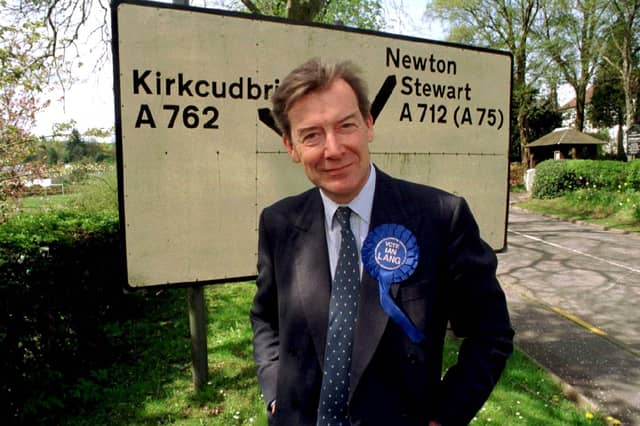
The most recent local council reorganisation, in 1996, which created unitary authorities, also had a significant lead-in period. It was in 1991 that the then Scottish Secretary, Ian Lang, announced local government reforms, and it would be five years before the plans were implemented.
And yet, now we have the SNP announcing in September a radical set of changes, with precious little detail attached, and only a three-month consultation period which runs out in just a few weeks. Councils and other interested parties are being asked to respond while still in the dark as to what exactly is proposed.
According to one media report, the First Minister spent just 75 minutes discussing local government before agreeing to put these reforms in his Programme for Government.
READ MORE: Here's a referendum 95% of Scots would vote 'yes' in, and the SNP would hate – Brian Wilson
Proposals make no sense
All political parties are currently in the business of trying to recruit individuals to stand as local councillors for the elections coming up in May. The Scottish government has suggested that local councillors could sit on both a regional and a community body. But there is no clarity as to what the responsibilities would be, or indeed the renumeration.
Potentially, the workload could be double what it is for local councillors at present, but individuals are being asked to stand without any clarity as to what exactly the hours they will be expected to work will be, or whether these might fit in with employment or other responsibilities.
Giving evidence to the Scottish Parliament’s Public Service Reform Committee on November 5, George Thorley, former chief executive of South Ayrshire Council, described proposals to have 160 sets of councillors as not making any sense. That is a view likely to be widely shared within Cosla.
The sad aspect here is that we are missing an opportunity for genuine reform of local government in Scotland. Over the last two decades of the SNP in power, councils have seen their budgets slashed, leaving them with no choice but to cut non-essential services such as libraries and leisure centres. They have become essentially local delivery offices for Scottish government policies, rather than centres for government in their own right.
Burnham’s success in Manchester
Any reform needs to start by addressing a fundamental question: what exactly is local government for? It should, in my view, be about empowering local decision-making, and ensuring that services are appropriately funded, with a formal mechanism (perhaps modelled on the Barnett Formula) that provides funding certainty around the shape and size of central grants from Holyrood.
There are councils which are keen to explore mergers in different parts of Scotland. There are others which already cooperate on a regional basis, for example in regional economic partnerships, and where joint working, or the sharing of services, could be developed still further.
This conversation needs to give serious consideration to whether Scotland should have its own metro mayors, as has been the case south of the Border now for many years. The very presence of Andy Burnham as Prime Minister is a testament to the success of that project, and there are those in Scotland who believe we are losing out by not giving communities here a similar opportunity.
READ MORE: Call for Swinney to embrace 'Manchester model for Scotland' without radical council overhaul
SNP will need to compromise
All that suggests we need a much more broad-based, considered conversation around council reform than the current rushed proposals from the SNP will permit.
It’s hard to see where the political support for any reform along the lines the SNP are proposing is going to come from. I cannot see any of the opposition parties at Holyrood providing the parliamentary votes to make it happen, which means that some form of compromise is essential.
The best thing that could happen at this stage is for the SNP to withdraw its half-baked plans, and instead engage in a proper conversation with local councils, opposition parties, and the wider public, around the future of local government.
That way we might find a consensus around a new model which properly gives local government its place in the Scottish political system, delivering good quality, value for money services and restoring civic pride.
Murdo Fraser is a Scottish Conservative MSP for Mid-Scotland and Fife
Comments
Want to join the conversation? Please or to comment on this article.