
Nuclear power costs billions. Here are seven better ways to use that money – Martin Roche
Given Scotland’s renewables capacity and reserves of oil and gas, opting for expensive nuclear is daft, argues Martin Roche
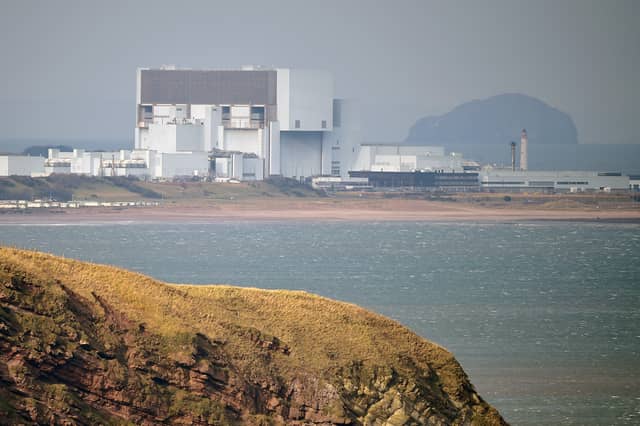

There’s an energy project in Britain that will take twice as long to build as originally planned. It will at least double its forecast construction costs and require a UK bill-payer subsidy of £1 billion a year.
It’s the nuclear power station being built by the French state-owned company EDF at Hinkley Point in Somerset. Begun in 2017, its opening date has been pushed back to 2030. The plant’s cost, unadjusted for inflation, stands today at £35bn but the final total may reach £50bn.
Since it became clear that Andy Burnham is to be our next Prime Minister, Westminster’s energy ministers have upped their efforts to persuade us that Scotland needs lots of new nuclear power. Burnham may have bought into the idea that Britain can be a global player in nuclear technologies, construction and management, but first it must commit to building its own new stations.
Desperate nonsense
The argument of the nuclear power lobby is that we must have wholly reliable ‘baseload’ energy for when the wind doesn’t blow and the sun doesn’t shine. I saw one nonsensical argument that nuclear would be there when renewable energy went into decline. This is desperate nonsense. The wind will continue to blow off Scotland’s coast and high places on most days of the year, for as long as there is a Scotland.
That’s not to say we should rely entirely on renewables. We must have wholly dependable sources of power. Scotland has options for both reducing its energy demand and building an energy economy that can have much more impact over decades than nuclear. We should be working to reduce energy costs for households and create a far bigger energy employment sector than anything nuclear can offer. And we can start now. No need to wait decades for new nuclear stations.
Nuclear generation may enrich some giant companies and provide jobs in operation and construction, but the numbers are modest when compared with smarter thinking. Labour’s policy may be good for US tech giants that want to gobble up Scotland’s abundant energy to drive data centres, but it’s not yet clear what’s in these facilities for the Scottish economy, jobs or the public purse.
READ MORE: Why investors are flocking to the energy powerhouse that is Scotland – Will Gardiner, Drax
Drones pose new danger
Nuclear is a naïve 20th-century solution to complex 21st-century problems. Nuclear power stations are also big targets and at the mercy of drones, as we know from Ukraine. So much for energy security.
Labour ministers have their eyes on Scottish sites that have a nuclear history: Hunterston, Torness, Dounreay and Chapelcross. Let’s be generous and assume only two new stations are built and each has an operating life of 40 years.
They’ll need public subsidy. Let’s assume £1bn a year for 40 years. That’s £80bn. Plus, of course, the centuries of costs to safely store the deadly nuclear waste. In a Scotland rich in renewables capacity and with oil and gas reserves, opting for nuclear is daft.
Tenements turned into energy factories
There is a far better way to spend our money than shovelling public cash into the board rooms of energy giants or the pockets of California tech bros billionaires. It’s called the broader public good. Here are some thoughts:
One, a ten-year programme to bring Scottish homes up to the highest possible thermal performance standards, so they are more efficient and cheaper to run in deep winter and high summer. Better homes at less cost and using less energy.
Two, all new buildings – homes, schools, offices, factories – to be built to the world’s most exacting energy performance standards.
Three, grid connection costs to be slashed so that small generation projects in rural areas, like mini-hydro and biogas, become economically viable.
Four, every tenement building in Scotland to be made suitable for solar panels, with owners benefiting from their share of the income to help maintain properties. Our tenement homes can become our own energy production factories.
Five, localised generation such as tenement solar means that a network of small battery storage facilities can be created across Scotland. Connected to the National Grid, they can be the first line of defence on the odd days when wind can’t do the job.
Six, some 12 per cent of Scotland’s energy comes from hydro power. We can double that.
Seven, all this will cost money. There are opportunities here to create new long-term projects and consumer finance products, perhaps with state guarantees (rather than being a cash cow for nuclear). Better ways can be found of encouraging community energy firms. A new Scottish private sector capital markets organisation can be established to provide start-up and growth capital for new energy sector businesses.
An electricity revolution
Labour has a great opportunity to revolutionise the electricity industry. The chance is there to reduce dependency on imported fuels and on giant corporations and make us a more globally competitive economy. If the first job of government is to defend the realm, what better way than by making its energy industry self-sufficient and highly diverse in its means of production, ownership, distribution and supply?
The political classes in democracies worldwide are waking to the realisation that millions of voters feel the world is not being run for them, that they are losing out and the people they voted for are blind and deaf to their concerns.
If ever there was a time for an energy policy that is for the people, it is now. Championing nuclear is to endorse the ways of the past. There is a better future.
Martin Roche had a career in international public relations, including clients in the energy and energy finance sectors in the UK and across Africa
Comments
Want to join the conversation? Please or to comment on this article.