
More power to Scotland's elbow with spread of LDES tech


Mark Macaulay says the country is well placed to become a major player in the development of long-duration energy storage
The move towards long-duration energy storage (LDES), which allows energy generated from renewable sources to be stored for when it is needed, is both logical and necessary.
As Great Britain transitions to a power system with a higher proportion of renewables, the role of flexible storage solutions in maintaining grid stability and security of supply will be critical.
Unlike traditional short-duration battery storage technologies (such as lithium-ion, for example), LDES technologies can store energy for eight hours or more, smoothing out the intermittency of wind and solar generation.
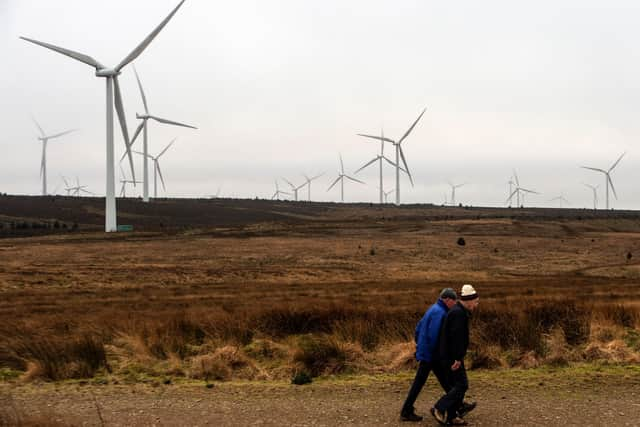
Commercially available LDES technologies include pumped storage hydropower (PSH), a type of hydroelectric energy storage that relies on moving water up and down between two reservoirs and compressed air or liquid air storage, where cold air is stored and warmed up again to drive an electrical generator to supply electricity as required.
Scotland shows great promise to become a major centre for LDES that will in turn help maximise and hopefully expand the use of Scottish-produced renewable energy.
LDES projects have been proposed across Scotland with the aim of helping to transform existing renewable energy clusters into even more significant energy hubs that are expected to dwarf Scotland’s existing battery storage capacity.
But while there has been enthusiastic and generous investment in renewable energy projects in Scotland and Britain more widely, LDES solutions have lagged behind, undermining progress on decarbonising Britain’s energy system.

One of the biggest barriers to LDES deployment is investment uncertainty – investors lack the confidence that their investments will pay off because revenues from LDES schemes are unpredictable, meaning developers have struggled to attract financing to build projects.
Floated solutions to this issue include the introduction of a ‘cap and floor scheme’, i.e. a guaranteed minimum revenue (floor) and limits on excessive profits (cap) from LDES projects. Such a financial framework aims to balance investor incentives with consumer protection.
The cap and floor arrangement provides a degree of certainty that should encourage investment, while still ensuring that LDES operators are incentivised to participate in commercial power markets.
It could also be used to underpin the cost of refurbishing and expanding existing storage assets to some extent, as well as supporting the construction of new ones.

Another challenge to successfully expanding Britain’s LDES network is the long delay most new projects (LDES and renewable energy) experience in securing a connection to the national electricity grid.
Grid connection is essential for the electricity these storage assets release to be channelled into domestic energy supplies – although some can be set up on a captive basis to directly supply energy-hungry standalone facilities such as factories or data centres via private connections.
The importance of LDES is fortunately well understood, and efforts are under way to bring much-needed structure to the UK’s strategy on LDES.
LDES developers and interested investors alike are hoping for prompt decisions and clarifications on financial parameters, cost eligibility, and post-regime arrangements for a cap and floor support scheme, as well as grid connection reform and market incentives, to ensure advances in this area are not held up.
The effectiveness of LDES is not solely dependent on financial support – it must be part of a broader strategy that includes market reform, infrastructure investment, and streamlined planning processes.
If these challenges can be overcome, Scotland could help Britain become a global leader in long-duration energy storage, ensuring a stable, flexible, and decarbonised power grid for decades to come.
Mark Macaulay is a Partner, Dentons
Have you got a story you want to share with our readers? You can now send it to us online via YourWorld at https://www.yourworld.net/submit/ It's free to use and, once checked, your story will appear on our website and, space allowing, in our newspapers.
Comments
Want to join the conversation? Please or to comment on this article.