
Labour and Tory politicians alike are turning into political zombies in their desperation to avoid hard realities
Labour’s period of grace after the election could be short if it sticks to its current plans
It’s been a funny old election. The party of change – Labour – intends to largely stick to Tory plans. The long-term incumbent party – the Conservatives – promise radical new ideas. And the party of independence – the SNP – has next to nothing to say about what that would actually mean.
Much of this evasiveness is based on the tricky finances that a slow-growing economy implies for struggling public services, when taxes are already at a historically high level. The Institute for Fiscal Studies (IFS) has been at the forefront of pointing out such inconsistencies. They highlighted that existing UK spending plans are untenable and that independence would make the position in Scotland even worse.
For Labour, a return to “fiscal prudence”, for electoral purposes, means that there is very little extra money available to reverse almost any of the “Tory cuts” that they objected to in the past. As Paul Johnson of the IFS put it, “public service spending increases promised… are tiny, going on trivial”, so too planned tax rises.
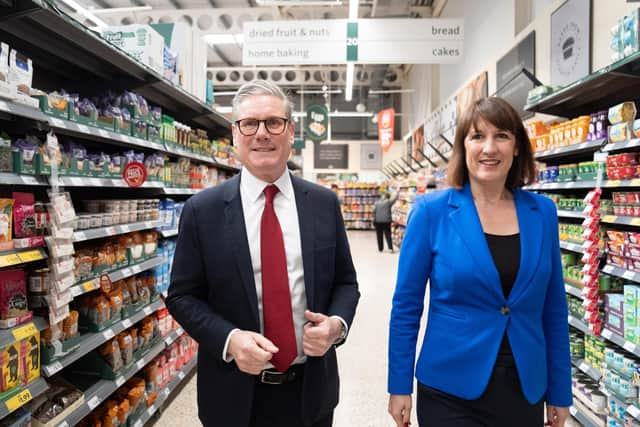

Labour’s ultimate saviour comes in the form of higher economic (GDP) growth. This will come about, not through higher public investment in infrastructure and research and development, but through better regulation, streamlined planning and new institutions. In other words, through sources that have been tried and tried again over the last few decades with little success. It might work, though not quickly, but you wouldn’t want to bet on it.

Usual dodgy suspects
For the Tories, their current overall spending plans are unrealistic, which is why they have avoided undertaking a Spending Review that would simply have highlighted the fact. But in the manifesto, by some miracle, new tax cuts were found that won’t further reduce spending on public services. This is because extra money is magicked up from the usual dodgy suspects – higher productivity and efficiency savings in the public sector, reducing tax avoidance, reversing the rise in benefits. All unachievable before the election but now eminently achievable, apparently.
For the SNP, the critical analysis of the IFS is used to berate Tory and Labour spending plans. Fair enough. Unfortunately, according to the self-same IFS, the alternative of independence would leave Scotland with an even bigger fiscal hole. John Swinney’s response to this? The IFS is right about everyone else but have got it all wrong about us. And his evidence for this? Well, no, he doesn’t actually have any figures, it just won’t happen.
At a general election, when the SNP should be talking about independence, as most public services are already devolved, we have next to no detail on the matter. There has been silence over the fiscal details of independence and tax-and-spend plans ever since the publication of the Growth Commission Report of 2018, which highlighted, even with a fair wind behind, the ‘tricky’ adjustment process and fiscal challenges involved. And this was before the Brexit deal. Economically, Scexit would be Brexit on steroids, according to most economists. Unless it was well handled, which seems far fetched.
The general public and journalists are exasperated by the lack of candour and ‘zombie replies’ when clear inconsistencies are pointed out. Labour can get away with it because people want a change from a Tory party that has gone above and beyond in terms of proving it is no longer fit to govern. And while it will take a devolved election before opposition claims of the SNP’s own venality and incompetence are properly put to the test, their irrelevance at a general election may be starting to prey again on the minds of Scottish voters.
Two-child limit
However, Labour’s period of grace could be short if it sticks to current plans. Pure luck aside, the economy will not be rebooted anytime soon and so Starmer and Reeves will have to face up to how to fund badly stretched public services.
For the SNP, rather than harangue all and sundry about ‘more money for everything’, they would be far more effective if they honed in on a few issues. For example, they would get widespread support for pushing a new Labour government to abolish the two-child limit on benefits, thereby freeing up some cash in the Scottish Budget. They would also get good support, cross-party and beyond, for a devolved migration strategy, in line with their previous proposals. Outright rejection of either would be difficult for Labour at both a Scottish and UK level.
Meanwhile, wish-fulfilment over public finances remains the order of the day, at least until the next Spending Review, although this too may turn out to be a one-year wonder. Eventually political parties will have to accept the reality of hard times in the public sector alongside high taxes. That means a choice needs to be made over whether the current scope of public services is reduced – in order to properly fund core services – or whether taxes go even higher, bowing to global and demographic trends.
Things are different from the past, because economic growth is different from the past. You can’t keep the same tax-and-spend policies as for the last half century when the pattern of economic growth has seemingly pivoted down and spending pressures pivoted up. The sooner that such a fundamental change in circumstances is accepted, the sooner we can begin to plan seriously for a new era of public finances.
So Labour will win and taxes will rise, but whether this is enough to to allow for public services to recover, never mind prosper, remains very much a moot point.
John McLaren is a political economist who has worked in the Treasury, the Scottish Office and for a variety of economic think tanks
Comments
Want to join the conversation? Please or to comment on this article.