
Iranians dying on the streets want democracy – not another Shah
An estimated 3,000 Iranian protesters have been killed by the regime in Tehran as it tries to cling on to power

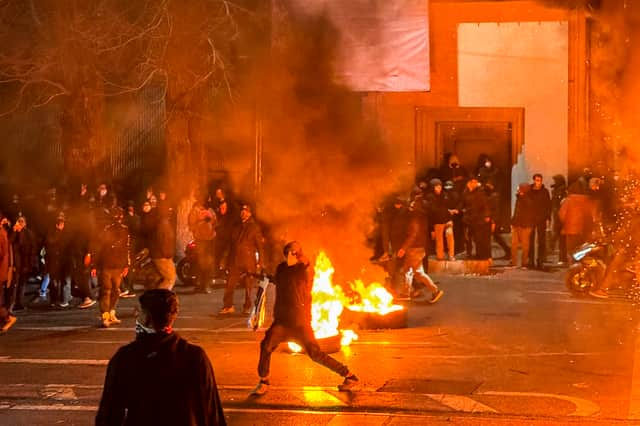
Iran is now in its 16th day of nationwide revolt. From Tehran to Tabriz, from Mashhad to the oil towns of Khuzestan and the western Kurdish cities, a furious, fearless population has taken to the streets.
Based on figures from local sources, hospitals, forensic and medical centres, and relatives across 195 cities, an estimated 3,000 protesters have already been killed. Thousands more have been dragged into prisons and torture chambers.
Internet access has been throttled. The regime is shooting into crowds. Yet still the protests grow, despite absurd claims by Supreme Leader Ali Khamenei and President Masoud Pezeshkian that the streets are now back under control.
READ MORE: I've experienced nightly attacks by Iranian drones and their despotic regime deserves no sympathy

A dangerous fantasy
This is not a factional quarrel or a palace coup. It is a revolutionary moment. And yet, as Iranians bleed, Western media and think-tank circles have become transfixed by a grotesque sideshow, the idea that Reza Pahlavi, son of the deposed Shah, might somehow return to Tehran as Iran’s saviour. This fantasy would be comic if it were not so dangerous.
Pahlavi has done little for 47 years except wait. He has no political organisation in Iran. No underground network. No resistance units. No trade unions. No youth movement. No women’s movement. No workers’ committees. No student organisations. No strike committees. No revolutionary infrastructure of any kind.
He’s not leading anything. He’s commentating from California. Yet he is treated by Western journalists as if he were a government-in-waiting, despite the absurdity of his statements.
He has openly said that if he were “restored” to power, he would not even move his family back to Iran. He has boasted that he would retain the Islamic Revolutionary Guard Corps, the killing machine currently gunning down protesters, to maintain “order” after the fall of the regime. That is the political equivalent of Churchill promising to keep the Gestapo to run Germany after Hitler.

Echoes of Iraq
Time Magazine’s recent profile of Pahlavi by Bobby Ghosh, a former Time foreign correspondent, unwittingly reveals how hollow he is. He issues statements. He gives interviews. He announces initiatives.
He claims vast secret networks of regime defectors. None of it is verifiable. It echoes the tragic case of Ahmed Chalabi, the Iraqi exile who was sold to Washington as the man who would lead Iraq after Saddam. Chalabi had far more than Pahlavi ever will. He had CIA funding, armed units on the ground, powerful allies in Washington, and a US invasion force ready to install him.
Yet when Iraqis were finally allowed to vote, they gave him nothing. The Iraqi people knew he was not one of them.
Pahlavi is Chalabi without the troops, money or organisation. Worse still, he’s burdened by a dynasty that Iranians remember all too well – the torture chambers, the censorship, the corruption, the grotesque inequality, the CIA-engineered coup that destroyed Iran’s democracy in 1953.
Millions of Iranians lived through it. Their children grew up hearing about it. When today’s protesters chant “down with the dictator”, they are not demanding the return of someone wearing a crown.
The Islamic Republic could not have designed a better propaganda gift than Pahlavi. Every time Western media present him as the face of the opposition, Tehran gleefully tells its people: “See? This is a royalist plot. A foreign conspiracy.”
Pahlavi’s photo-ops with Israeli Prime Minister Benjamin Netanyahu in 2023 did incalculable damage to the uprising. His calls for foreign intervention hand the regime exactly the narrative it needs to justify repression. Even Iran’s bravest dissidents know this.
The true face of the revolution
Instead of uniting Iranians, his supporters attack, smear and threaten anyone who refuses to bow to a dead monarchy. This is not leadership. It is sabotage. If Western journalists want to understand what genuine opposition looks like, they should stop interviewing Pahlavi and start looking at the National Council of Resistance of Iran (NCRI) and its leader Maryam Rajavi.
Unlike Pahlavi, the NCRI has an organised presence inside Iran. It has resistance units in dozens of cities. It has networks inside universities, factories and neighbourhoods. It has paid in blood, with more than 120,000 members executed by the regime over four decades.
Most importantly, it has a coherent democratic programme. Rajavi’s ten-point plan calls for free elections, separation of religion and state, abolition of the death penalty, gender equality, minority rights, a non-nuclear Iran, and peaceful coexistence with the world.
It is not a throne waiting to be filled. It is a blueprint for a republic. That is why Tehran fears the NCRI far more than it fears Pahlavi. That is why its prisons are full of their supporters. That is why its intelligence services run endless disinformation campaigns against them. Dictators do not waste time attacking irrelevancies.
A republic with a future
The regime is weaker than it’s ever been. Inflation is above 50 per cent. The currency is collapsing. Water shortages, power cuts and unpaid wages have radicalised millions. Its regional proxies are battered. Khamenei is old and ill. But it still commands guns, prisons and hangmen.
This uprising will succeed only if the people inside Iran are able to organise, coordinate and fracture the regime’s security forces. That requires structure, discipline and political clarity, not a YouTube monarch issuing proclamations from exile. Iran does not need a Shah without a kingdom. It needs a republic with a future.
The West must stop indulging fantasies about restoring a discredited dynasty and start supporting the only force that has both a democratic vision and an organised presence inside Iran. History will not be kind to those who mistake a crown for a cause. And the people of Iran, who are dying in the streets for freedom, deserve infinitely better than a naked emperor waiting for a throne that no longer exists.
Struan Stevenson, a former MEP, is coordinator of the Campaign for Iran Change. He is an author and international lecturer on the Middle East
Comments
Want to join the conversation? Please or to comment on this article.