
I’m Scotland’s National Chef. Here’s what’s holding this country back – Gary Maclean
Scotland's future depends on believing in ourselves as much as the rest of the world and shedding a lack of confidence that is at odds with our historic dynamism

Over the last 25 years, I have been fortunate enough to represent Scotland around the world. Most people know me as Scotland's National Chef, but my role as associate director of international at the City of Glasgow College has shown me just how valuable international relationships are for Scotland.
What has always fascinated me is that opportunities rarely start in a boardroom. They begin over a meal, at a Highland Games, during Tartan Week, or through conversations with people who simply have a love of Scotland.
Organisations such as Chicago Scots, the American Scottish Foundation and St Andrew's societies across North America do much more than celebrate heritage. They create networks that support education, business, culture and charitable causes on both sides of the Atlantic.
Many provide scholarships, mentorship programmes and funding opportunities that help young people access education and international experiences that might otherwise be beyond their reach. They act as conveners, bringing together civic leaders, entrepreneurs, educators and community organisations to build meaningful partnerships.
International goodwill
In many cases, these groups have become powerful advocates for Scotland, promoting trade, tourism and cultural exchange while strengthening people-to-people connections. Their impact is often quiet and understated, but the relationships they build deliver lasting benefits for communities both in Scotland and across North America.
Through these relationships I have seen partnerships flourish, opportunities created and horizons broadened. Whether it is working with colleges and universities in New York, developing links in Italy, engaging with partners in Singapore, or supporting Scottish events across North America, the common theme is that people around the world have a genuine affection for Scotland and they want to work with us.
Which brings me to an interesting observation: the world often seems to have greater confidence in Scotland than we have in ourselves.
Part of that stems from our recent history. Scotland bore more than its fair share of the pain of deindustrialisation in the 1980s and 1990s. Entire communities saw industries disappear and, in some cases, so too did the belief that they offered a future. Yet caution and self-limitation are not Scotland's natural state.
Lessons from the past
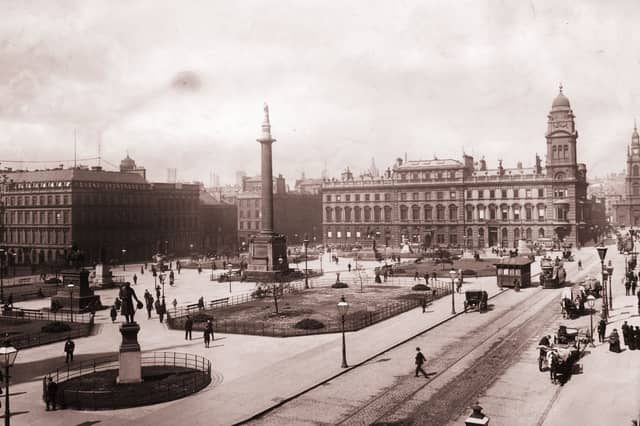
For much of our history, Scotland – and Glasgow in particular – was characterised by ambition, innovation and an outward-looking mindset. The Glasgow of the late 19th century was one of the fastest-growing and most dynamic cities in the world. It was a centre of engineering, shipbuilding, trade, education and culture that attracted talent, investment and ideas from across the globe.
That spirit is captured in Guy McCrone's classic novel, Wax Fruit, which tells the story of a city experiencing extraordinary growth and transformation. Fittingly, an ambitious effort is now underway to develop the story for a modern screen audience, with our creative industries students in the college playing a small part in helping bring that vision to life.
Executive producers Sarah Purser and Tommy Gormley share a deep belief in the creative potential of this country. Tommy has worked on some of the world's biggest productions – Mission: Impossible among them – but he remains passionate about creating opportunities here and harnessing the exceptional talent that already exists across Scotland, and then connecting it with the wider world. When Tommy addressed our graduates last year, his message was simple: Scottish talent belongs on the world stage.
I see the same thing with our students. Many culinary students arrive with a simple ambition: they want to become chefs. But when they have the opportunity to compete internationally, to benchmark themselves against world-class talent and to represent Scotland, something changes.
Their ambition evolves. The goal is no longer simply to be a chef. It becomes a determination to be the very best chef that they can possibly be.
Testing ourselves against the best
One of the most inspiring examples is our alumna, Chloe Oswald. Her journey began by baking cakes with her grandmother. She developed her skills at college and went on to take part in the WorldSkills competition, where she was exposed to an international level of excellence.
That experience broadened her horizons and helped shape her ambitions. Chloe went on to build a successful career in a Michelin-starred restaurant before establishing her own business. Today, that business, Chocolatia, supplies chocolate to some of the world's leading hotels.
Her story demonstrates what can happen when talent is matched with opportunity and aspiration. The same principle applies in sport, where we have supported students who have gone on to become Commonwealth champions and Olympians.
Confidence can be nurtured, but it can also be extinguished. That is why colleges matter. Our role is not simply to provide qualifications. It is to help people recognise their potential, connect them with opportunities and give them the confidence to succeed in a global marketplace.
As we look towards 2050, I believe we need to think globally while remaining proudly Scottish. The Scotland of 2050 will not be built by looking inward. It will be built through collaboration, curiosity and international engagement.
Scotland has never lacked talent. We have never lacked creativity. We have never lacked the ability to compete with larger nations. What we sometimes lack is the confidence to recognise our own strengths.
The Scotland of 2050 does not need to invent a new identity. It needs to rediscover something that has always been part of its character: the confidence to look outward, embrace opportunity and compete with the best in the world.
The world believes in Scotland. By 2050, we should make sure Scotland believes too.
Comments
Want to join the conversation? Please or to comment on this article.