
I'm a former headteacher and it’s a mistake to ban children from social media
Government should be cracking down on the harm that social media can do without banning something which also does a lot of good entirely

I was born and brought up in a village in West Lothian, but I was sent to an independent school in Edinburgh. This desire by my mother to turn my brother and me into solid middle-class professionals (both my grandfathers were coal miners) was a great success.
One side-effect, however, was a degree of alienation both from the young people of the village and – during the holidays – from my classmates. I lived ten miles from school, but during the summers of my childhood, it might as well have been a thousand.
This brief biographical glimpse possibly colours what is to follow, as I contribute my tuppence-worth to the discussions in pre-election Scotland on banning phones in school, and – more contentiously – banning access to social media for under-16s.
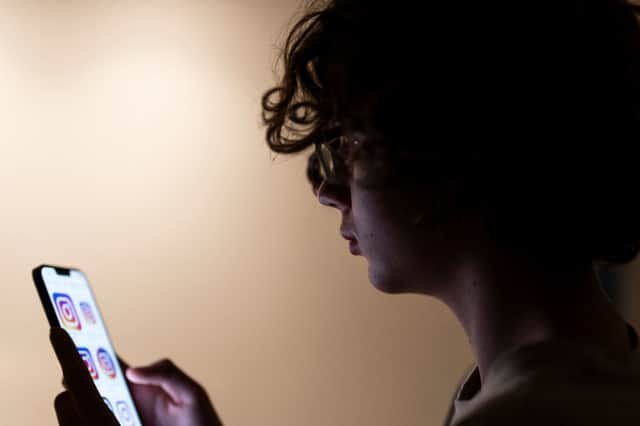

School phone ban
The first of these is fairly easy to dispose of, I think: the addiction of young people to their phones is a constant source of irritation and time-wasting in the classroom. It should be said that such addiction isn’t restricted to schoolkids: I’m constantly looking at my phone in a positively teenage way and I recently talked to a head who had actually disciplined one of her young colleagues for looking at her phone between classes(!)
There is, of course, an obvious middle ground on this issue, one which is broadly used in the independent sector: young people should keep their phones on them but switched off entirely during the school day. If they are caught using them, then they should be sanctioned.
However, we’re not very keen on consistently applied sanctions in Scottish state schools these days, so if the choice has to be made between banning them (or at least their being taken off the young people and held by the school during the school day) or the continuing chaos they cause, then ban ‘em I say!
Early indications are that several political parties will have this as a policy in their manifestos. Nice to see them taking at least a teeny bit of interest in schools (banning phones would be fifth on the Wyllie list of urgently needed policies, but one has to be grateful for small mercies).
Kind, thoughtful and informative
However, the idea of a total social media ban for under-16s is altogether different. Far too many adults live in the idyllic world of their own childhoods, where kicking a ball about in the park or having pillow fights or sitting down with a good book or messing about in bodies of water appear to have been de rigueur.
They view social media sites (the most important ones for the young being Insta and Snap, as they are adoringly known by their young followers) as dangerous ground. Young people can be bullied on social media sites, of course, as well as in parks, bedrooms and bodies of water. But the overwhelmingly vast majority of interactions are, at worst, harmless and, at best, kind, thoughtful, informative.
Yes, of course, parents (and teachers, though if we ban phones in school, it becomes much less to do with them) worry about their children watching endless silly videos on YouTube (is that even actually social media?) or TikTok. They worry about the effect of ‘influencers’ whether it’s some 21-year-old beauty adviser or Andrew Tate.
They worry about ‘disinformation’ and ‘fake news’, though a quick glance at Twitter/X demonstrates that many adults are just as susceptible. And yes, these things are dangerous and, very occasionally, contribute to terrible outcomes for young people.
Library books and crochet classes
But do we really believe that one day such a sweeping change can happen, and that a society in which almost all young people aged from say 12 to 16 depend at least in part on their phones for social interaction will suddenly see a return to library books, long conversations at the family dinner table where dad tells the kids stuff, and a spike in young people’s volleyball and crochet classes?
No, what will happen is that lots of clever young people will work out ways to get round the ban, which will lead to even greater secrecy on the part of teenagers upstairs in their bedrooms ‘revising’.
A ban will fuel resentment and increase social isolation (don’t say ‘there are other means of communicating with your friends’; young people know how they communicate and it isn’t – in the main – by phone calls). It will also cause further problems for the many young people whose psychological health has been stunted by Covid.
And, of course, those 16 and 17-year-olds joining the Scottish electorate might rather resent the random hand of adult authority cutting off their major sources of communication. In any case, by far the greatest curse of this phone-driven age isn’t any of these social media platforms – it’s the astonishing access of young people to pornography, which continues to be the great unspoken issue affecting our young people – particularly our (rather put upon) boys.
Back in my West Lothian village, wee Cameron would have very much liked the opportunity to see his friends’ holiday pictures and take part in group chats about the teachers at school.
Of course, access to social media needs to be controlled – in part this should be done by parents, who mayhap need to glance up from Facebook (now social media for geriatrics) and through personal and social education at school, where already great, albeit patchy, work is already being done.
Young people need to be involved in the discussion of social media, and government’s role – as in so many areas – should be to legislate about harms, not sweep away something which, across the piece, does a lot of good.
Cameron Wyllie is a former head teacher. He writes a blog called A House in Joppa and is the author of a book called Is There A Pigeon in the Room? My Life in Schools
Comments
Want to join the conversation? Please or to comment on this article.